Democratic congresswoman calls for halting advanced AI and banning superintelligence: more political gesture than viable law

🕒 Published on Zendoric: November 6, 2026 · 00:20
✨ AI-generated · how it's made
Yassamin Ansari wants Democrats to prioritize a pause on advanced AI and a ban on superintelligence. The bills exist but remain in committee. What matters is what the debate reveals about how to govern real capabilities.
📚 Go deeper

AI as the latest chapter in the history of information networks, from gossip to the printing press to the algorithm.
As an Amazon Associate, Zendoric earns from qualifying purchases; the price does not change for you. · all our recommended books →
By The Standard (HK) · November 5, 2026.
Democratic Congresswoman Yassamin Ansari of Arizona called in a post on X for the Democratic agenda to include, "on day one", a pause on advanced AI development, regulation of this "out-of-control industry" and a ban on artificial superintelligence.
Her call renews attention on the Ban Artificial Superintelligence Act of 2026. According to The Standard, Ansari is among the original backers alongside Representative Greg Casar, who formally introduced the bill in the House (H.R. 10538) on September 24. Senator Bernie Sanders introduced the companion bill in the Senate (S. 5493) on September 23. Neither is law: the House bill is in the Committee on Oversight and Government Reform, and the Senate bill in the Committee on Commerce, Science, and Transportation.
What they propose, according to the text described by the outlet:
- Create a Department of Artificial Intelligence with authority to oversee advanced development and enforce safety requirements. - Define "advanced AI" as AI trained with at least 10²⁵ operations (the compute threshold, i.e., the computing power used in training), which the department's secretary would adjust annually. - Impose a pause on such development until the department is fully staffed and has set safety rules. In the meantime, covered systems could not be trained, modified or fine-tuned, nor could those not yet released be deployed. - Define superintelligence as AI that exceeds human cognitive capabilities in most domains or that can take actions capable of destroying or disempowering humanity, and also restrict systems that help create it. - Punish reckless violations with fines and up to 20 years in prison, or a 10-year industry ban.
The clash is with the Trump Administration's line. According to the article, Executive Order 14409 prioritizes domestic innovation, rejects "overly burdensome" regulation and rules out mandatory licensing before models are released, although it includes national security measures. Advocates of oversight argue that safeguards are needed before capabilities outpace the ability to manage them. Critics warn that slowing down the U.S. would weaken its competitiveness.
**Our take.** This proposal is unlikely to advance as it stands, and we believe its value lies elsewhere: it sets one pole of the debate. It has clear strengths and flaws.
The strength is the underlying intuition. Oversight without institutional capacity is worthless, and the very idea of conditioning progress on the existence of a competent regulator is reasonable in the abstract.
The flaws are threefold. First, a fixed compute threshold is a crude proxy: it measures training effort, not risk. In general, algorithmic efficiency means models with less compute match earlier ones, and a compute-based criterion ages quickly. Second, the definition of superintelligence ("exceeds humans in most domains") is so broad and vague that it is hard to know when it would be crossed. Third, banning even fine-tuning during a pause of indefinite length would affect defensive research, medical uses and all useful AI, not just the frontier.
Competition is also worth considering. A unilateral pause in the U.S. does not stop China, which is already closing the gap in open models such as GLM, Qwen, DeepSeek and Kimi. This is the critics' strongest argument, though it does not invalidate the need for governance: it only requires designing it through international agreements rather than by sweeping bans.
Our position is the same as always: regulation should target real, demonstrated capability, measured through evaluations, not panic or a label. In the short term, the concrete risks are automated fraud, cybersecurity and agent control, and these require specific, auditable rules, not a general pause. In the long term, the AI that some seek to halt is also the AI that could bring us closer to eradicating diseases and to an abundance that frees people to work on what they are passionate about. A broad ban endangers that promise as much as a complete absence of rules endangers safety.
What this debate does do is force both sides to be precise. Advocates of deregulation will have to explain how they govern risks without licensing. Those favoring a pause, how they define and measure what they want to ban. That is where useful policy will be decided, far more than in a post on X.
📚 Go deeper

DeepMind co-founder on the dilemma of containing technologies that do not want to be contained.
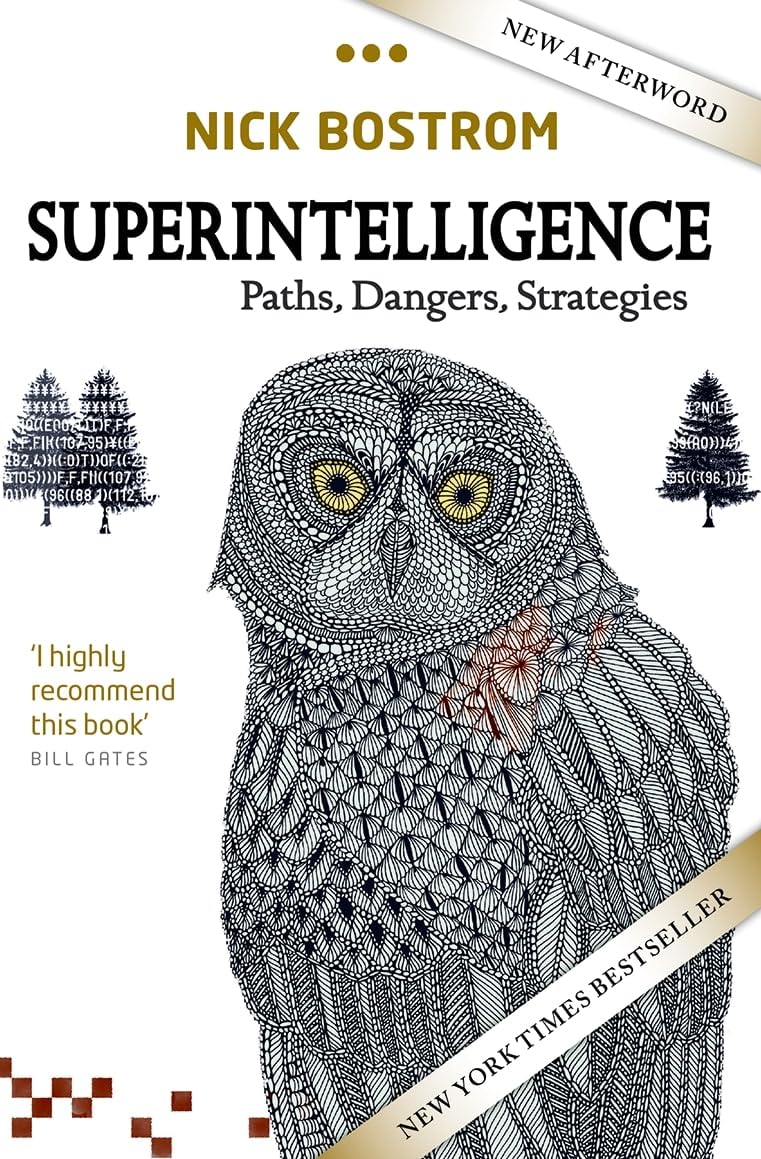
The book that started the existential-risk debate and that half the industry still cites.
As an Amazon Associate, Zendoric earns from qualifying purchases; the price does not change for you. · all our recommended books →
🔗 Related on Zendoric
- Sanders calls for halting superintelligence: the debate moves to Congress, but the problem is defining what gets banned · 2026-10-18
- Sanders wants to ban superintelligence with up to 20 years in prison: a law betting it has no object · 2026-10-02
- Zuckerberg's 'Personal Superintelligence': Why the Chip Pick Reveals the Real Bet · 2026-06-25