AI that reads the electrocardiogram could prevent thousands of biopsies in heart transplants
🕒 Published on Zendoric: October 7, 2026 · 00:19
✨ AI-generated · how it's made
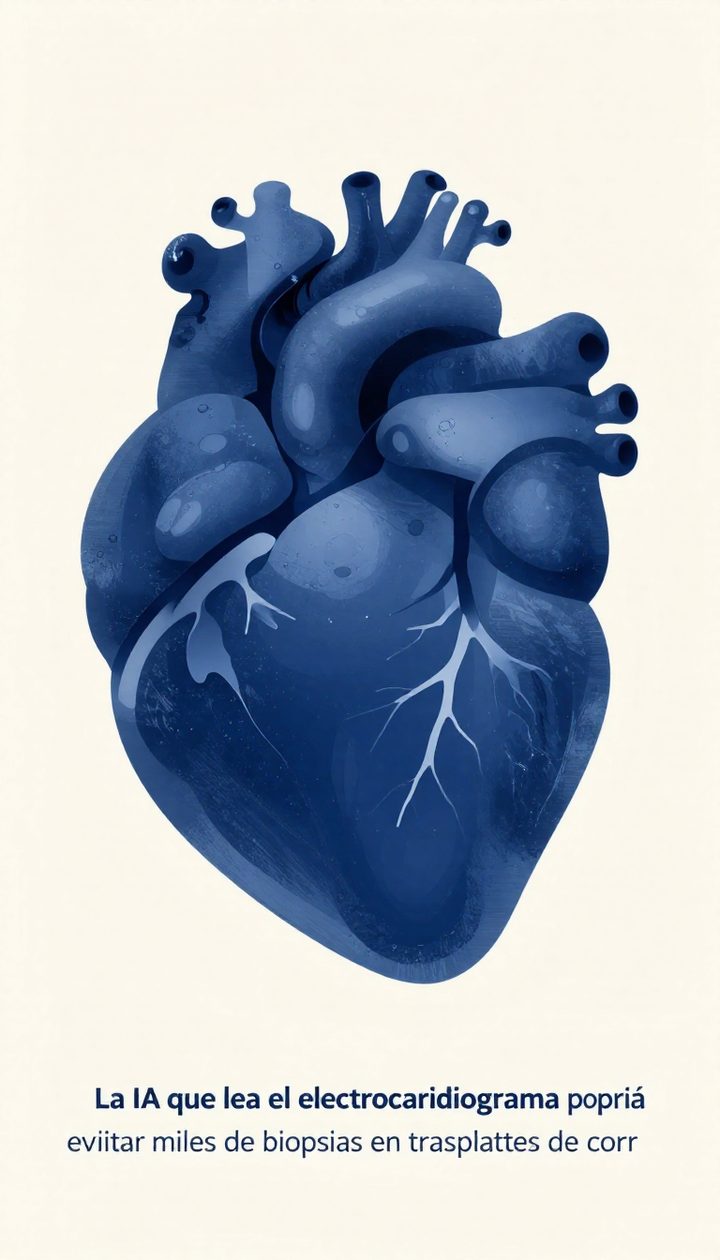
An NYU Langone AI model combining electrocardiogram and blood test data was correct in 94% of patients who were not rejecting their heart transplant, avoiding unnecessary biopsies. It is a step toward less invasive diagnostics, though validation is still small (38 patients).
📚 Go deeper

The only novel on the list, by a Nobel laureate: an artificial friend observes humans with a blend of lucidity and innocence no essay achieves.
As an Amazon Associate, Zendoric earns from qualifying purchases; the price does not change for you. · all our recommended books →
By Zendoric · October 7, 2026.
A team at NYU Langone Health has trained an artificial intelligence model that combines electrocardiograms (ECGs, the recording of the heart's electrical activity through electrodes placed on the skin) with two routine blood tests to detect heart transplant rejection without resorting to a biopsy. In a test cohort of 38 patients, the combined model was correct in 94% of the cases in which the transplanted heart was not being rejected, according to the study published on September 25 in the Journal of Heart and Lung Transplantation. The model that used only the blood tests, by contrast, wrongly flagged 19 of those 38 patients as biopsy candidates; the combined model, the authors say, would have spared them the procedure.
Endomyocardial biopsy—surgically removing a small sample of heart muscle to examine it under a microscope—remains the gold standard for diagnosing rejection, but it is invasive, uncomfortable and not without risk. Over the past decade, blood tests that measure the activity of genes linked to cellular rejection and fragments of donor DNA circulating in the recipient have become widespread; they are less invasive, but according to the study itself they produce a fair number of false positives, which leads to unnecessary biopsies. The team, led by cardiologist Lior Jankelson (NYU Grossman School of Medicine), trained its model on 5,300 electrocardiograms from 2,357 heart transplant recipients treated between 2018 and 2024, each paired with a biopsy performed in the previous month.
The finding fits a broader trend in medical AI: extracting hidden information from tests that are already performed routinely, rather than inventing new tests. The electrocardiogram is cheap, fast and ubiquitous in any cardiology follow-up; what changes is not the data, but a model's ability to read patterns in it that a cardiologist cannot detect with the naked eye. Broadly speaking, this is the pattern that keeps repeating in medical imaging, retinal scans or voice: AI does not replace clinical data, it squeezes it until it yields signals that used to be lost.
It is best not to get ahead of the conclusions. The validation group was just 38 patients at a single center, and the authors themselves make it clear: the next step is to test the model in more patients and at several transplant centers before considering replacing even one biopsy in real clinical practice. Nor is there, for now, any regulatory approval or a trial directly comparing health outcomes between patients monitored with AI and patients monitored conventionally. It is a promising result from a single research group, not a change of protocol.
That said, the direction matters more than the sample size. If this approach is confirmed on a larger scale, every transplant patient would be spared unnecessary biopsies—along with their cost, their discomfort and their small risk—and doctors would detect the rejections that do matter sooner, while adjusting immunosuppressant medication can still reverse them. It is exactly the kind of quiet progress that underpins our core thesis: AI is not going to eradicate organ rejection overnight, but it can make transplant medicine less invasive, earlier and cheaper, one 38-patient study at a time. The road toward healthcare that monitors continuously instead of intervening blindly runs through modest, well-measured findings like this one, not through grandiose announcements.
📚 Go deeper
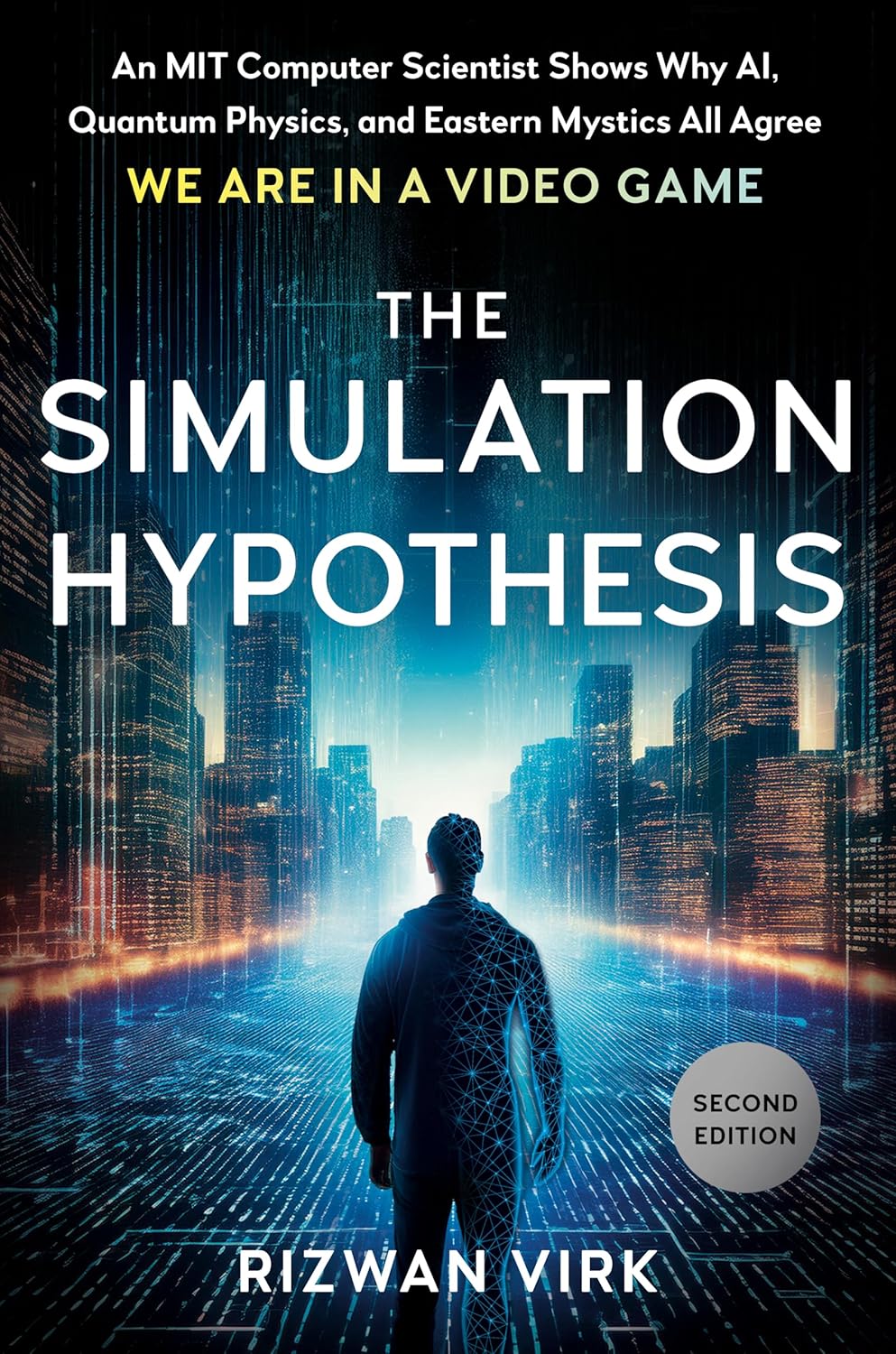
An MIT computer scientist connects AI, quantum physics and video games to take an uncomfortable question seriously: what if we live in a simulation? M

The memoir of the creator of ImageNet, the scientist who made the deep learning revolution in vision possible.
As an Amazon Associate, Zendoric earns from qualifying purchases; the price does not change for you. · all our recommended books →
🔗 Related on Zendoric
- An AI reads routine breast biopsies and predicts relapse almost as well as genomic tests costing thousands of dollars · 2026-07-10
- Alibaba's Claude Code Ban Signals the Splintering of the Global AI Stack · 2026-07-06
- Musk pits Grok Imagine against Nolan's 'Odyssey': a stunt that mistakes generation for filmmaking · 2026-07-25