An AI reads routine breast biopsies and predicts relapse almost as well as genomic tests costing thousands of dollars

🕒 Published on Zendoric: July 10, 2026 · 00:24
✨ AI-generated · how it's made
A team at New York University trained a multimodal AI on 8,161 patients from 15 cohorts across 7 countries to estimate breast cancer recurrence risk from the same biopsies any pathologist already analyzes. In external validation it matches —and in some subtypes surpasses— Oncotype DX, the reference genomic test, but without needing weeks or thousands of dollars.
📚 Go deeper
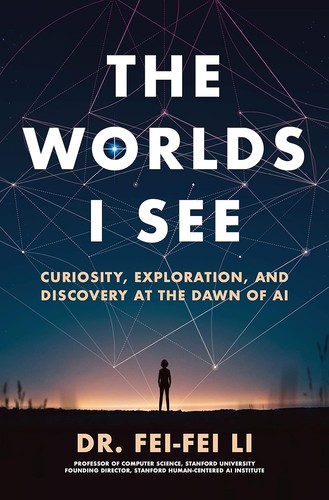
The memoir of the creator of ImageNet, the scientist who made the deep learning revolution in vision possible.
As an Amazon Associate, Zendoric earns from qualifying purchases; the price does not change for you. · all our recommended books →
By Pharmacy Times · July 9, 2026.
A team led by Krzysztof J. Geras, of New York University's Center for Data Science, has published in Nature Communications a multimodal artificial intelligence model capable of estimating the risk of breast cancer recurrence from the same hematoxylin-eosin-stained pathology slides that any hospital produces routinely, combined with basic clinical variables (stage, age, hormone receptors, HER2, and histological subtype). The system was trained on 8,161 patients from 15 cohorts across 7 countries and externally validated on 3,502 patients from 5 independent cohorts, where it achieved a pooled concordance index (C-index) of approximately 0.71 and clearly separated high- and low-risk patients, with a hazard ratio of 3.63 for recurrence.
The figure of greatest interest to oncology is the direct comparison with Oncotype DX, the 21-gene genomic test that today guides a large share of adjuvant chemotherapy decisions in hormone-receptor-positive, HER2-negative breast cancer. In 858 patients assessed with both methods, the AI obtained a C-index of 0.67 versus 0.61 for Oncotype DX —numerically superior, though with overlapping confidence intervals, something that should not be downplayed—. More relevant still: among patients with an intermediate Oncotype DX score, the gray zone where the clinical decision is hardest, the AI reclassified nearly 80% as low risk and nearly 20% as high risk, which could substantially refine who receives chemotherapy and who does not. The model also retained its predictive ability in triple-negative and HER2-positive breast cancer, subtypes for which no genomic test is currently recommended by the NCCN guidelines.
Technically, the system relies on self-supervised learning over millions of pathology image patches, which allows it to extract relevant morphological patterns without depending on a human manually labeling each sample by hand. It is the same family of techniques that has driven advances in generative AI in other domains, applied here to a problem with scarce, costly-to-annotate data such as oncological histopathology.
Our read: this news is an almost textbook example of how AI can begin to move the needle in medicine without requiring any spectacular computing breakthrough, but simply by extracting more signal from data that hospitals already generate. Oncotype DX and similar genomic tests are expensive, take weeks, and consume tumor tissue that could be reserved for other analyses; a test that reads the same slide the pathologist already looks at and returns a result in hours, at a fraction of the cost, does not replace molecular science, but it democratizes access to a risk stratification that today depends on whether the patient's healthcare system can afford it and wait. That matters especially outside the major cancer centers of wealthy countries, and it connects directly with the underlying thesis we defend at Zendoric: AI applied to diagnosis does not merely promise better tools for those who already have access, but the possibility of extending quality diagnostics to those who lack them today, a concrete step toward a more abundant medicine less dependent on purchasing power.
That said, we must be honest about the limits of what we know today. The authors themselves note that validation in randomized clinical trials is needed before this test can be used to decide real treatments, and the confidence intervals overlapping with Oncotype DX mean that, statistically, it cannot yet be firmly claimed that the AI is superior, only that it competes on equal terms. It is the distinction that should always be applied to these announcements: there is a difference between a capability demonstrated in retrospective cohorts —however solid, here with data from 7 countries— and a tool ready to change the clinical management of a breast cancer patient. The coverage of subtypes such as triple-negative and HER2-positive, where no genomic alternative exists today, is probably the most promising finding in the short term, precisely because there the AI competes with nothing, it merely fills a void.
If prospective validation confirms these results, the impact on oncology practice would be twofold: it would put price pressure on the market for proprietary genomic tests, and it would expand the number of patients who today fall outside any objective risk stratification beyond clinical judgment. That is the pattern we have been observing in health and diagnostics with AI: the most solid advances are not those that promise to replace the physician, but those that take already-existing data —a biopsy, an X-ray, a medical history— and extract from them information that previously required another expensive and slow test. It is incremental, verifiable progress and, if confirmed in trials, with real room to advance toward that precision oncology accessible to all that we consider part of the long-term horizon of this technology.
📚 Go deeper
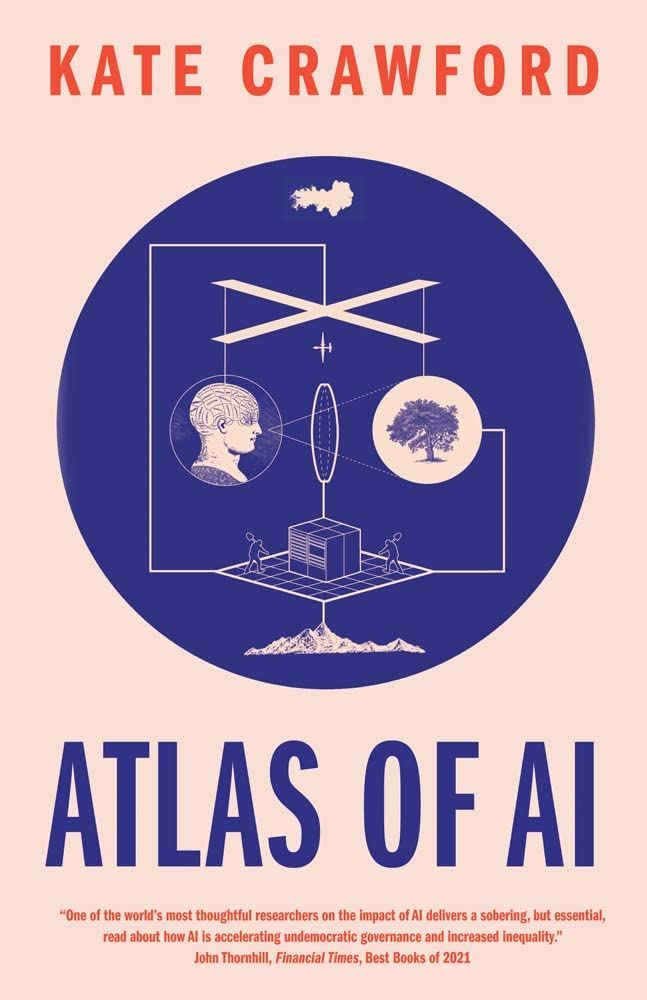
AI as an extractive industry: the lithium, the energy, the underpaid data-labeling work and the bodies behind the cloud.

The only novel on the list, by a Nobel laureate: an artificial friend observes humans with a blend of lucidity and innocence no essay achieves.
As an Amazon Associate, Zendoric earns from qualifying purchases; the price does not change for you. · all our recommended books →
🔗 Related on Zendoric
- AI that reads the invisible in a biopsy: Stanford predicts a tumor's ecosystem without raising diagnostic costs · 2026-07-07
- An AI that needs no extra tests: how La Trobe sharpens relapse risk in stage II colorectal cancer · 2026-07-29
- UCLA Health bets on AI for cancer detection: another sign that precision medicine is no longer just a promise · 2026-06-26