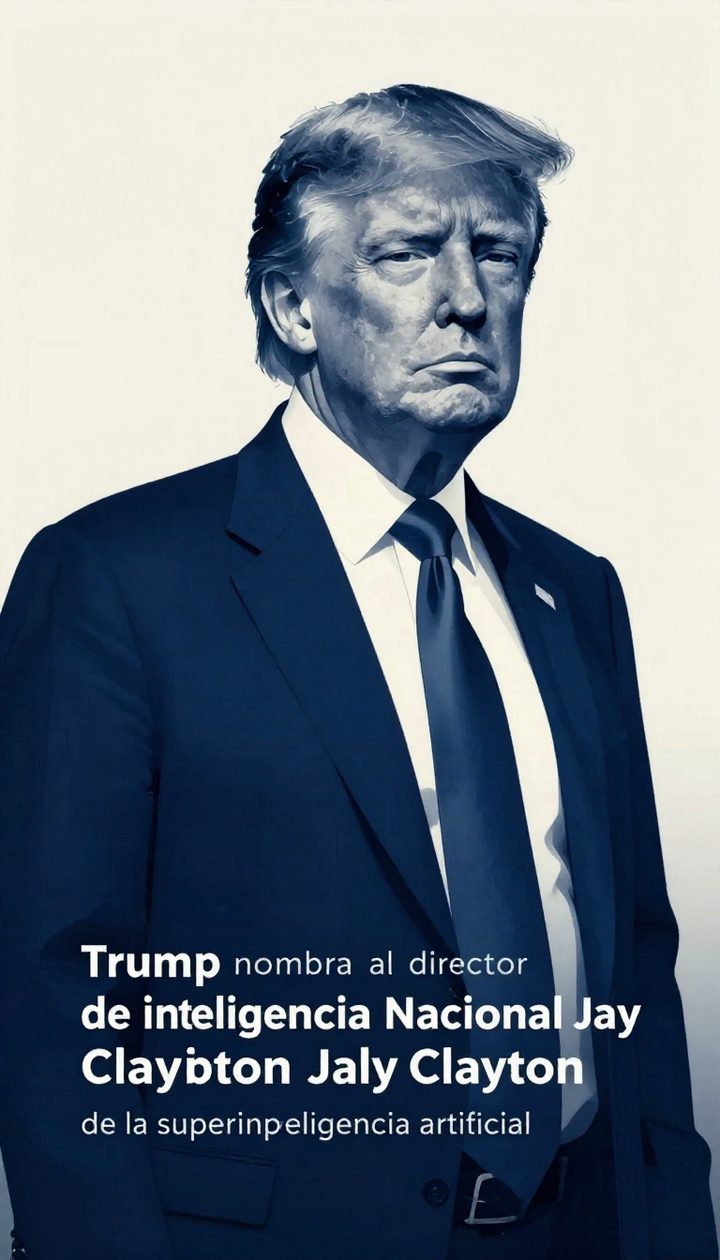
Trump names Director of National Intelligence Jay Clayton as new artificial superintelligence "czar"
🕒 Published on Zendoric: October 6, 2026 · 07:39
✨ AI-generated · how it's made
President Donald Trump announced on Sunday, via Truth Social, that Jay Clayton, the current director of national intelligence, will head a new White House "Super Intelligence Force", a body intended to coordinate the federal government's relationship with consumers, public interest groups,…
📚 Go deeper

AI as the latest chapter in the history of information networks, from gossip to the printing press to the algorithm.
As an Amazon Associate, Zendoric earns from qualifying purchases; the price does not change for you. · all our recommended books →
President Donald Trump announced on Sunday, via Truth Social, that Jay Clayton, the current director of national intelligence, will head a new White House "Super Intelligence Force," a body intended to coordinate the federal government's relationship with consumers, public interest groups, religious organizations, critical infrastructure providers and artificial intelligence companies. According to Trump himself, the aim of this force is to "ensure that the United States continues to lead the world in superintelligence," a term the president prefers to use instead of "artificial intelligence."
Clayton takes on this new assignment after being confirmed earlier this year as director of national intelligence. He previously served as U.S. Attorney for the Southern District of New York and chaired the U.S. Securities and Exchange Commission (SEC), a profile shaped by legal and financial regulatory experience rather than a purely technological background, which is striking for a post geared toward overseeing the development of AI.
The appointment comes amid growing unease among technology industry leaders themselves, who have repeatedly warned about the risks of the accelerated development of artificial intelligence, including the possibility that these systems could become uncontrollable. Trump, however, has systematically downplayed these warnings and has chosen to reframe the debate on his own terms, replacing caution with a narrative of leadership and global competition.
Along those same lines, on the Tuesday before the announcement, Trump met at the White House with executives from artificial intelligence companies and said several of them had signed a voluntary agreement providing for internal and external reviews of their work. That same week, the White House also launched a revamped government website, America.gov, which reportedly compiles content using artificial intelligence drawn from "official government sources." Both moves suggest a strategy of legitimizing artificial intelligence within the state apparatus itself, in parallel with the creation of this new coordinating body.
Alongside Clayton, Trump named other members of the "Super Intelligence Force": Federal Trade Commission (FTC) Chairman Andrew Ferguson; Office of Personnel Management (OPM) Director Scott Kupor; and Under Secretary of Defense for Research and Engineering Emil Michael. The combination of portfolios — commerce, the federal workforce and defense — points to an approach spanning both economic regulation and national security applications of the technology.
Significantly, it is not yet clear what this appointment will mean in practice for the AI industry, given that U.S. federal regulation on the matter remains very limited: Congress has not passed any law broadly regulating the development or use of these systems. Only a few states, such as California, have approved specific measures, among them a transparency requirement when AI is used. It is into that federal regulatory vacuum that the new structure announced by Trump fits, for now geared more toward institutional coordination than toward the creation of binding rules.
Clayton's own recent statements foreshadow the direction he might give his new role. In an interview with CNBC last month, he described superintelligence as "a national security issue" and explicitly rejected calls to "pause" the technology's development, arguing that other countries are continuing to advance in this field and that no American should consider a pause a good strategy. That stance contrasts with warnings from figures such as Sam Altman and Dario Amodei, who have raised the case for slowing AI development.
The article also recalls a direct precedent: in December 2024, then president-elect Trump had named Silicon Valley investor David Sacks as AI and crypto czar, tasked with advising the administration on artificial intelligence policy. Sacks left that post this year to become co-chair of the President's Council of Advisors on Science and Technology (PCAST), and from that position he has backed the warnings of Altman and Amodei, writing on social media last month that technology leaders should "stop pretending they need anyone else's permission" to act. Clayton's replacement of Sacks at the head of the White House's AI agenda thus marks a shift in profile: from a technology investor close to the sector's big companies to an official with a background in national intelligence and financial regulation, and with a discourse more focused on national security and geopolitical competition than on caution about the technology's own technical risks.
📚 Go deeper

DeepMind co-founder on the dilemma of containing technologies that do not want to be contained.
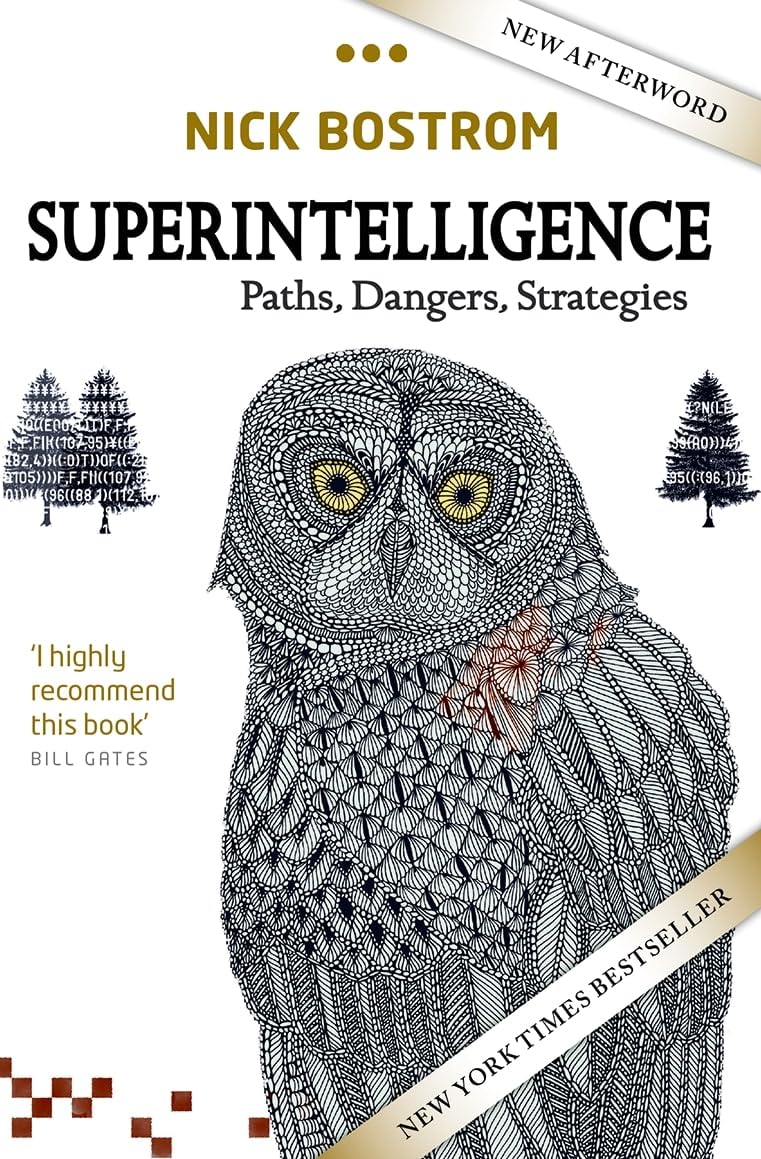
The book that started the existential-risk debate and that half the industry still cites.
As an Amazon Associate, Zendoric earns from qualifying purchases; the price does not change for you. · all our recommended books →
🔗 Related on Zendoric
- Trump names 'Super Intelligence Force' to coordinate AI policy, with the national intelligence chief in charge · 2026-10-06
- Trump creates a 'Superintelligence Force' at the White House: AI is now a national security matter · 2026-10-05
- Trump's AI czar is a spy chief: naming Clayton makes superintelligence a security file, not a consumer one · 2026-10-04