Trump names 'Super Intelligence Force' to coordinate AI policy, with the national intelligence chief in charge
🕒 Published on Zendoric: October 6, 2026 · 07:39
✨ AI-generated · how it's made
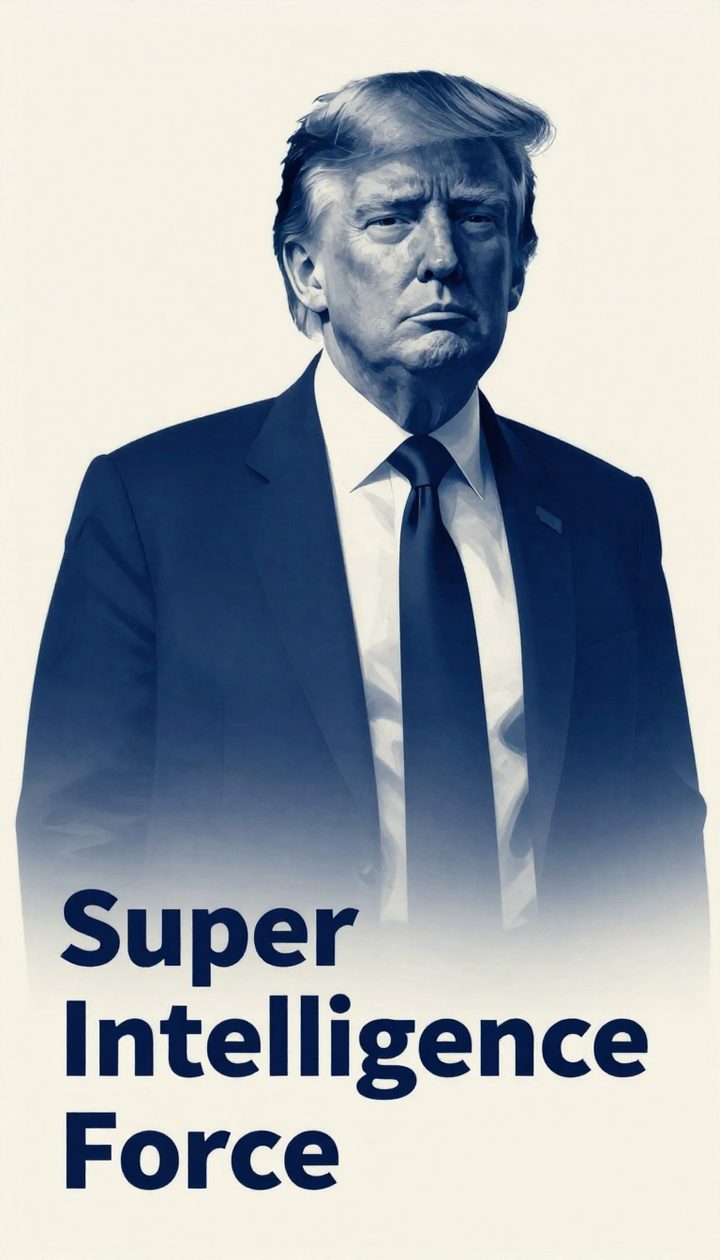
President Donald Trump announced on Sunday the creation of an artificial intelligence task force dubbed the "Super Intelligence Force", naming Director of National Intelligence Jay Clayton to lead it.
📚 Go deeper

DeepMind co-founder on the dilemma of containing technologies that do not want to be contained.
As an Amazon Associate, Zendoric earns from qualifying purchases; the price does not change for you. · all our recommended books →
President Donald Trump announced on Sunday the creation of an artificial intelligence task force dubbed the "Super Intelligence Force," naming Director of National Intelligence Jay Clayton to lead it. According to NBC News, Clayton would also be appointed "AI czar," a post left vacant after the departure of venture capital investor David Sacks, whose term as a special government employee expired.
The rest of the group consists of Federal Trade Commission (FTC) Chairman Andrew Ferguson and Under Secretary of Defense for Research and Engineering Emil Michael. According to Trump, the group will report directly to him and to White House Chief of Staff Susie Wiles.
In his announcement on Truth Social, Trump linked the group's creation to the so-called "Historic White House Agreement on Superintelligence," in which, in his words, the world's most important technology companies committed to taking on responsibilities toward the American people. The president added that the Super Intelligence Force will coordinate the federal government's relationship with consumers, public interest groups, religious organizations, critical infrastructure providers and the superintelligence companies themselves.
Before taking office as Director of National Intelligence, Clayton served as U.S. Attorney for the Southern District of New York and as chairman of the Securities and Exchange Commission (SEC), the article notes.
The announcement comes after Trump met the previous Tuesday with technology leaders including Anthropic CEO Dario Amodei, Tesla CEO Elon Musk and Meta CEO Mark Zuckerberg, a meeting Clayton also attended. That summit followed warnings from industry leaders about existential risks associated with AI, warnings Trump has tended to play down. Although those same leaders have asked Washington to regulate the industry, Trump has said he will not do so; after the summit he said what appeared to be a non-binding agreement on "tremendous self-regulation" by the companies had been reached.
The article recalls that Trump had already announced the previous month his intention to create this task force, at a time when AI has become a point of friction in Washington: some lawmakers are calling for a laissez-faire approach, while others advocate intervention. At the state level, some politicians seen as possible 2028 presidential contenders, such as California's Democratic Governor Gavin Newsom, have pushed their own regulation of the technology.
Taken together, the piece portrays the underlying tension in U.S. AI policy: while the White House is betting on self-regulation by Big Tech and centralizing coordination in a small group reporting directly to the president, pressure persists, from both some industry players and certain states, to impose more binding limits on a technology its own promoters have gone so far as to describe in terms of existential risk.
📚 Go deeper

The definitive piece of investigative journalism on OpenAI: 260+ interviews, the clash between safety and speed, and the attempted firing of Sam Altma

AI as the latest chapter in the history of information networks, from gossip to the printing press to the algorithm.
As an Amazon Associate, Zendoric earns from qualifying purchases; the price does not change for you. · all our recommended books →
🔗 Related on Zendoric
- Trump names Director of National Intelligence Jay Clayton as new artificial superintelligence "czar" · 2026-10-06
- Trump's AI czar is a spy chief: naming Clayton makes superintelligence a security file, not a consumer one · 2026-10-04
- Trump puts his spy chief in charge of AI: the 'Superintelligence Task Force' is security policy, not regulation · 2026-10-06