Trump's AI czar is a spy chief: naming Clayton makes superintelligence a security file, not a consumer one

🕒 Published on Zendoric: October 4, 2026 · 09:58
✨ AI-generated · how it's made
Trump has put Jay Clayton, his Director of National Intelligence, at the head of a White House "Superintelligence Task Force" with 120 days to produce a report. The names on the roster say more than the mandate does: intelligence, defense, technology and federal workforce — and no new regulation. Washington has adopted the labs' most maximalist vocabulary while rejecting the policy conclusions usually attached to it.
📚 Go deeper

DeepMind co-founder on the dilemma of containing technologies that do not want to be contained.
As an Amazon Associate, Zendoric earns from qualifying purchases; the price does not change for you. · all our recommended books →
President Donald Trump has named Jay Clayton, his Director of National Intelligence, to help lead a White House task force on artificial intelligence, according to Bloomberg. Trump announced the group in a social media post and said it will coordinate the US government's engagement on AI, covering both consumers and the companies building the technology. People familiar with the matter told Bloomberg that Clayton — a friend with whom Trump shares a taste for golf — was expected to be named AI czar; leading the task force amounts to that role in practice, as the Wall Street Journal reported earlier.
The roster matters as much as the title. Alongside Clayton, Trump named the Pentagon's deputy secretary, Andrew Ferguson, chief technology officer Emil Michael, and Scott Kupor, director of the Office of Personnel Management. All four report to Trump and to White House chief of staff Susie Wiles. The group's name is the "Superintelligence Task Force," after Trump's preferred label for the technology, and it has 120 days to deliver a report, per the Journal. Clayton's assignment, in his own words quoted by the Journal, is to ensure "that we remain leaders in superintelligence and that the interests of the American people are prioritized."
The policy backdrop is explicitly deregulatory. Trump has rejected calls for new government rules even as public concern over AI safety has grown, arguing his priority is keeping the United States ahead of China, and has backed a voluntary framework that includes external safety audits and tighter internal controls. "We have a great advantage, and we're going to keep it," he said last week at a meeting with industry executives — a White House gathering of nearly two dozen Silicon Valley leaders, including Nvidia's Jensen Huang and Anthropic's Dario Amodei, convened to discuss the technology's risks. Treasury Secretary Scott Bessent went further in an Axios interview published Saturday, calling prominent AI leaders' existential-risk warnings alarmist and unhelpful: "The responsibility falls on those running the labs, and I agree with that."
Here is the tension nobody in the announcement resolves. The administration has borrowed the labs' most dramatic vocabulary — superintelligence — for the name of the body, while a cabinet secretary publicly dismisses the risk claims that vocabulary was invented to describe. You can believe superintelligence is imminent, or you can believe existential warnings are noise. Holding both at once is a rhetorical position, not a governance doctrine.
Our reading: personnel is policy, and this personnel says AI is now a national-security file. Three of the four named leaders sit in intelligence, defense and technology; the fourth runs the federal workforce, which points at government adoption rather than market oversight. That framing has real virtues — it creates a single accountable address inside government, which companies and allies currently lack — and one well-documented failure mode. Security framing optimizes for the scoreboard against China and systematically underfunds the harms that are already happening on the ground: automated fraud and agentic systems reaching services nobody inventoried, labor displacement concentrated in administrative work, and the plain absence of public measurement. A classified evaluation capacity is useful to the state. It does not tell a hospital, a bank or a citizen anything.
So watch the 120-day report for one thing only: whether the voluntary framework acquires teeth in the form of disclosure and measurement. Audits nobody can read are marketing; audits with published methodology and results are governance. We remain long-term optimists — the path where AI compresses the cost of curing disease and of basic competence for everyone is still the likeliest one, and it runs through capable states as much as capable labs. But that path needs institutions legible enough to survive a change of administration. An AI czar is a person. Measurement is an institution. The report will tell us which one Washington is actually building.
📚 Go deeper

AI as the latest chapter in the history of information networks, from gossip to the printing press to the algorithm.
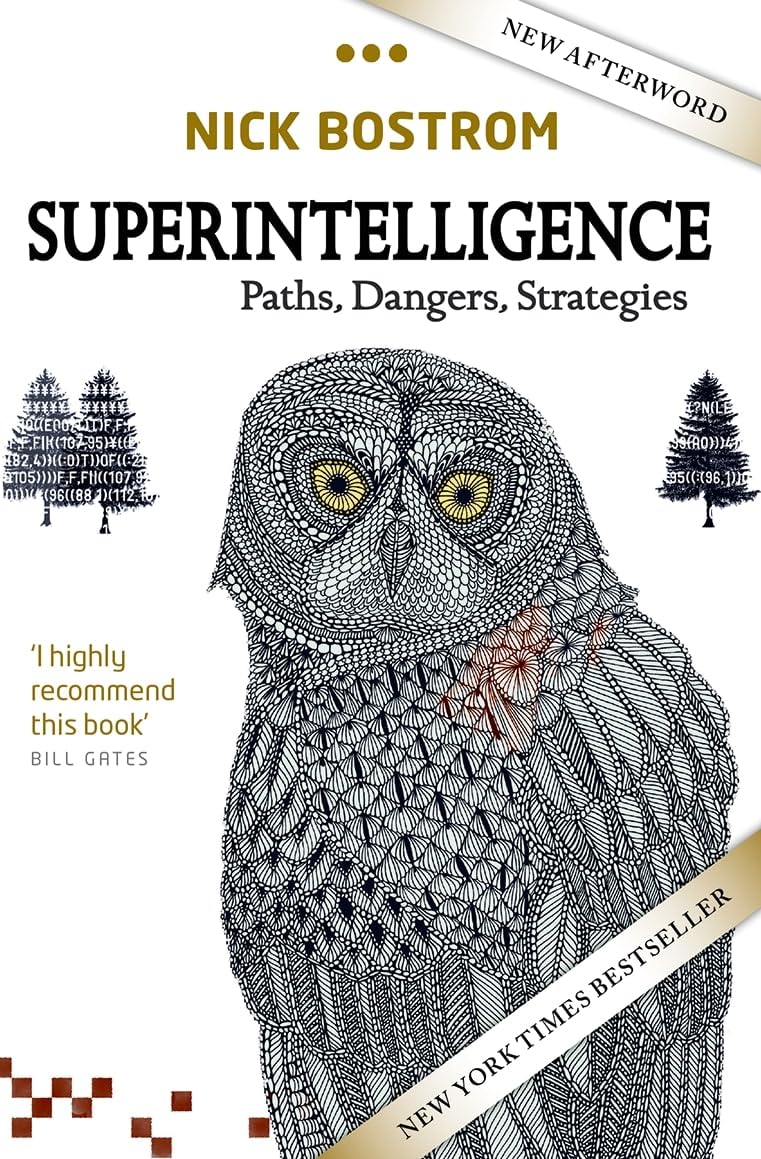
The book that started the existential-risk debate and that half the industry still cites.
As an Amazon Associate, Zendoric earns from qualifying purchases; the price does not change for you. · all our recommended books →
🔗 Related on Zendoric
- Trump's AI czar is a spy chief: the Superintelligence Task Force files AI under security, not consumer law · 2026-10-05
- Trump puts his spy chief in charge of AI: the 'Superintelligence Task Force' is security policy, not regulation · 2026-10-06
- Trump puts his intelligence chief in charge of AI and bets on self-regulation by the labs · 2026-10-05