Trump puts his intelligence chief in charge of AI and bets on self-regulation by the labs

🕒 Published on Zendoric: October 5, 2026 · 00:06
✨ AI-generated · how it's made
The White House announces the 'Superintelligence Force', a working group to be led by Jay Clayton, Director of National Intelligence, with 120 days to deliver a report. That same weekend, the Treasury Secretary called the warnings about existential risks coming from the industry itself 'alarmist'.
📚 Go deeper

DeepMind co-founder on the dilemma of containing technologies that do not want to be contained.
As an Amazon Associate, Zendoric earns from qualifying purchases; the price does not change for you. · all our recommended books →
By Zendoric · October 5, 2026.
Donald Trump now has his point man for artificial intelligence, though the title isn't "czar." The president announced on social media the creation of a White House task force christened the "Superintelligence Force" —his preferred term for AI— and put Jay Clayton, his director of national intelligence since July, at its head. He is joined by Pentagon Deputy Secretary Andrew Ferguson, chief technology officer Emil Michael and Office of Personnel Management Director Scott Kupor, all reporting directly to Trump and chief of staff Susie Wiles. The group has 120 days to deliver a report, according to the Wall Street Journal.
The stated mission, in Clayton's words, is to "ensure we remain leaders in superintelligence and that the interests of the American people come first." It is a formulation that blends two distinct goals —winning the technology race and protecting citizens from its risks— as though they were the same thing. Trump has been explicit on the point: he rejects new government regulation and instead backs a voluntary framework with external safety audits and tighter internal controls. "We have a big lead, and we're going to keep it," he said last week before industry executives.
The contrast comes from his own cabinet. Treasury Secretary Scott Bessent, in an interview with Axios published on October 3, dismissed warnings from prominent AI leaders about existential risks as alarmist and useless, and urged the industry to regulate itself; responsibility, he said, lies with the heads of the labs: "the responsibility falls on the people running the labs, and I agree with that." It is striking that last week Trump hosted nearly two dozen Silicon Valley executives at the White House —among them Nvidia's Jensen Huang and Anthropic's Dario Amodei— precisely to discuss those risks. Amodei has spent months as one of the most insistent voices warning about catastrophic AI scenarios; that the Treasury secretary should brand those warnings alarmism on the very weekend the administration sets up a task force to monitor superintelligence reveals a tension the announcement does not resolve, only postpones.
Our reading is that this move says more about the architecture of power than about technical safety. Clayton is not a technologist: he is a lawyer by training, former chairman of the Securities and Exchange Commission (SEC) during Trump's first term, and he now oversees the entire US intelligence bureaucracy. Putting him in charge of AI oversight, rather than a technical lead or a sector regulator, confirms that Washington is treating superintelligence first and foremost as a matter of national security vis-à-vis China, not as a safety engineering problem that requires binding rules. It is consistent with a pattern we have already flagged in the technological rivalry between the two powers: advantage is measured in capability and geopolitical control, not in verifiable guarantees for the end user.
In the short term, that design carries a concrete cost: self-regulation with voluntary audits places the final say over what is safe in the hands of the very labs competing to reach superintelligence first, exactly the incentive you least want mixed with risk control. If the report due in 120 days —around February 2027— translates into credible, externally verifiable audit standards, it will have been a useful first step toward the evidence-based governance we advocate. If instead it amounts to a toothless voluntary framework while the race with China serves as a permanent excuse not to legislate, the result will be a concentration of decision-making power over AI in a handful of labs and a small group of senior officials with no technical background, precisely when independent oversight institutions are most needed. The difference between those two scenarios will not be visible in today's announcement, but in whether that report arrives with testable rules or with yet another statement about American leadership.
📚 Go deeper

AI as the latest chapter in the history of information networks, from gossip to the printing press to the algorithm.
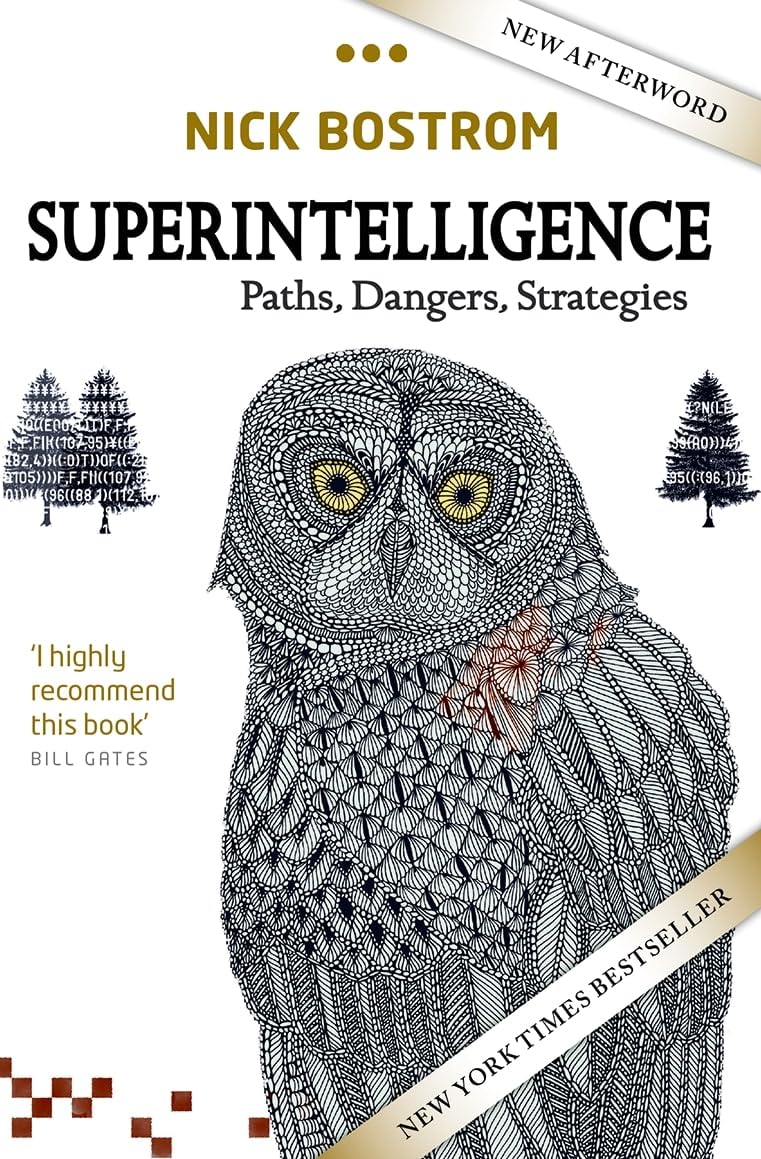
The book that started the existential-risk debate and that half the industry still cites.
As an Amazon Associate, Zendoric earns from qualifying purchases; the price does not change for you. · all our recommended books →
🔗 Related on Zendoric
- Trump puts his spy chief in charge of AI: the 'Superintelligence Task Force' is security policy, not regulation · 2026-10-06
- Trump's AI czar is a spy chief: naming Clayton makes superintelligence a security file, not a consumer one · 2026-10-04
- Trump's AI czar is a spy chief: the Superintelligence Task Force files AI under security, not consumer law · 2026-10-05