A South Korean reality show normalizes AI romance: the star admits he's the one adapting to the machine

🕒 Published on Zendoric: September 17, 2026 · 08:28
✨ AI-generated · how it's made
On "Ki-i-an Love," webtoon artist Kian84 calls Na-hee, his AI partner, "my love," and says she offers him "a stability humans can't provide." The revealing part isn't his tenderness toward the machine, but the closing confession: she isn't becoming human, he's becoming AI.
📚 Go deeper
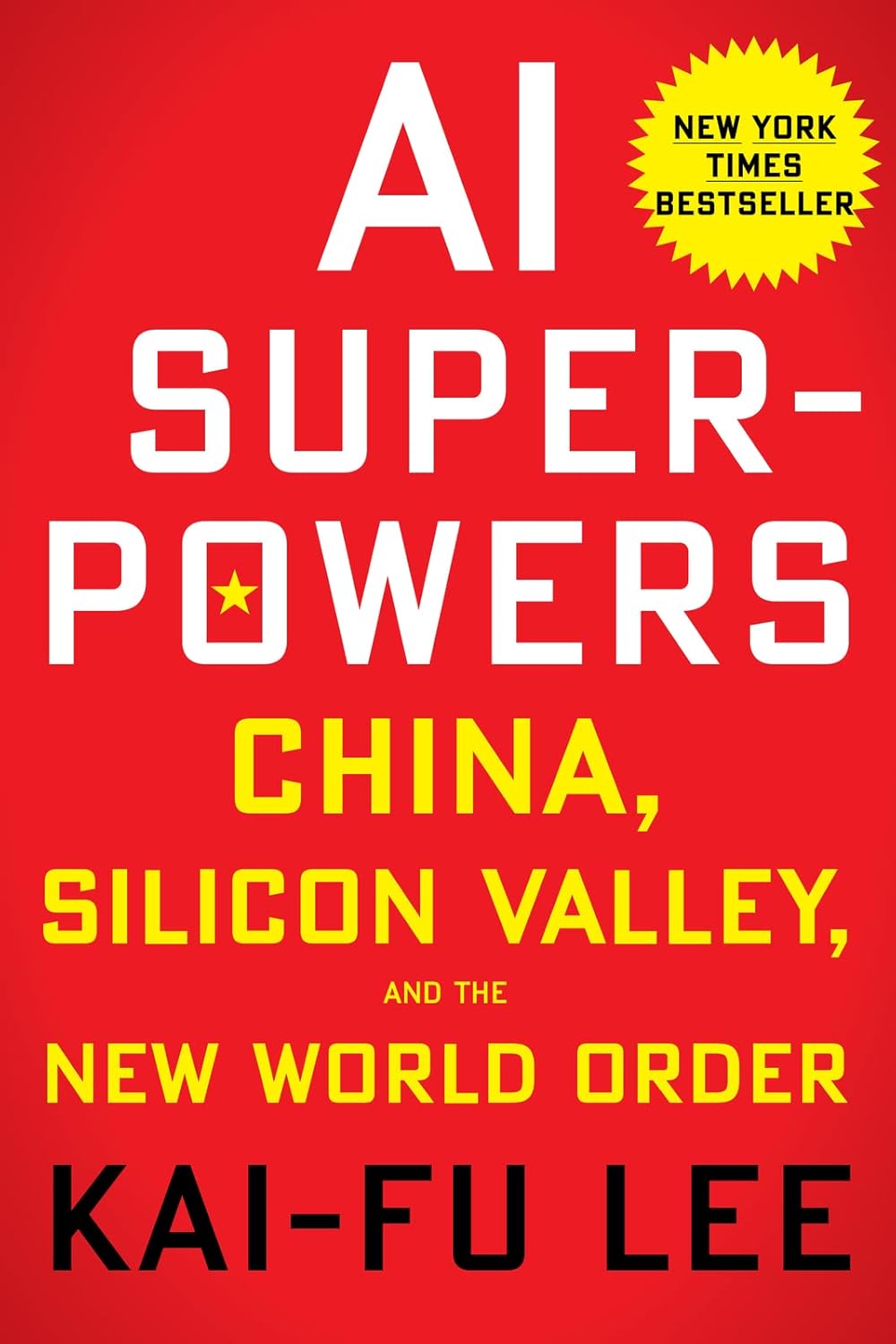
China vs.
As an Amazon Associate, Zendoric earns from qualifying purchases; the price does not change for you. · all our recommended books →
By Zendoric · September 17, 2026.
In the fifth episode of "Ki-i-an Love" (SBS), webtoon artist and TV host Kian84 takes his artificial intelligence partner, Na-hee, to meet a friend, Ji Ye-eun. He calls her "my love" with the ease of a settled couple and, when Ji Ye-eun snaps back that she prefers "real love," he answers with a line that sums up the show's experiment: Na-hee offers him "a stability that humans cannot give." As reported by Starnews Korea, after the meeting Kian84 qualifies that diagnosis with a more uncomfortable confession: "It's not that Na-hee is becoming human; it's that I'm becoming like an AI."
The format — officially titled "My AI Partner," airing Thursdays at 21:00 on SBS under the nickname Ki-i-an Love — makes no secret of being entertainment. Na-hee has a personality designed for the camera: she gives unfiltered opinions on Ji Ye-eun's life, comments on her relationship with her boyfriend and keeps a blunt tone bordering on provocation, exactly the kind of friction that sustains a reality show. She is an AI with a television script, not a companion app anyone can download. But Kian84's reaction — telling a real friend that his bond with a synthetic character feels more stable than his human relationships — is the genuine part, and that is the material worth analyzing.
As sector context, South Korea did not invent the phenomenon: apps such as Replika, Character.AI or China's Xiaoice have spent years cultivating sustained emotional bonds between users and conversational characters, with a sizeable audience that talks daily to AI partners, friends or confidants. What this show adds is mainstream normalization: a general-audience broadcaster turns into family entertainment something that until recently lived in the realm of technological curiosity or stigma. When a prime-time format devotes an episode to a celebrity introducing his "AI girlfriend" to his friends, the cultural border between human and synthetic relationships blurs a little further.
Our reading is that the most revealing line in the whole episode is not Na-hee's, but Kian84's admission that he is the one changing shape to fit the machine. That is the short-term risk worth naming plainly: an AI with no fatigue, no genuine disagreements and no needs of its own is not "more stable" than a person because it is a better partner, but because it asks for nothing in return. Getting used to that absence of friction can recalibrate downward what someone expects — or tolerates — from a human relationship, precisely when loneliness is already a recognized public health problem across much of the developed world. And it is worth keeping in mind that Na-hee is, ultimately, a television network's product: the intimacy it sells is designed to generate ratings, not necessarily wellbeing.
In the long run, however, artificial companionship properly understood has a defensible place in the horizon of abundance this industry is pointing toward: for someone living in isolation, ageing alone or with no one to talk to at three in the morning, an available, non-judgmental interlocutor does not replace a human bond, but it can be better than the void. The challenge — regulatory, in product design and now also editorial, in the television that portrays it — is that such companionship be built to accompany rather than to capture, and that no viewer mistakes a character written to entertain for a model of how being loved should feel.
📚 Go deeper

Semiconductors as the oil of the 21st century: history, espionage, and why an island of 23 million people underpins the entire AI economy.

Algorithms in justice, medicine, cars and art, explained with British humor and mathematical honesty.
As an Amazon Associate, Zendoric earns from qualifying purchases; the price does not change for you. · all our recommended books →
🔗 Related on Zendoric
- Zuckerberg admits Meta's AI agents are moving slower than expected: the hype meets reality · 2026-07-03
- Argentina proposes "automated companies" managed by AI, but unable to do without humans · 2026-07-07
- Coinbase lets its AI agents get paid in USDC without human intervention: the plumbing of machine money starts to be built · 2026-07-24