Argentina proposes "automated companies" managed by AI, but unable to do without humans

🕒 Published on Zendoric: July 7, 2026 · 03:25
✨ AI-generated · how it's made
The bill pushed by Argentine President Javier Milei to create "non-human companies" or "automated companies" managed by artificial intelligence has generated both enthusiasm and wariness, but according to Reuters the reality is far less disruptive than the initial announcement suggested.
📚 Go deeper
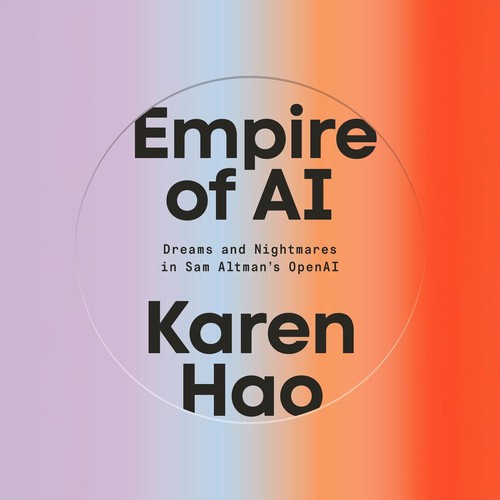
The definitive piece of investigative journalism on OpenAI: 260+ interviews, the clash between safety and speed, and the attempted firing of Sam Altma
As an Amazon Associate, Zendoric earns from qualifying purchases; the price does not change for you. · all our recommended books →
The bill promoted by Argentine President Javier Milei to create "non-human companies" or "automated companies" managed by artificial intelligence has generated both enthusiasm and wariness, but according to Reuters the reality is far less disruptive than the initial announcement suggested. In an op-ed in the Financial Times, Milei had described a new kind of company able to operate without human employees, with AI agents or robots "exercising independent judgment in unpredictable environments," and declared that Argentina "is open for business." This drew criticism from Israeli historian Yuval Noah Harari, who warned that giving too much power to AI could reduce corporate accountability.
However, corporate lawyers consulted by Reuters qualify that account. The "automated company" figure introduced by the reform —part of a broader project to modernize Argentine corporate law and cut red tape— would still require a human administrator to oversee operations. The law would allow a company's management to use AI to make decisions, but without exempting human administrators from monitoring the results. Lawrence Cunningham, director of the Weinberg Center for Corporate Governance at the University of Delaware, said it would be "a wild first step" to dispense entirely with human agency, though he called Milei's proposal bold: "We're not changing the world so much as recognizing that you could run a business without any human resources department," he said, adding that it is "the beginning of something."
Diego Duprat, a law professor and co-author of the bill, argues that automated companies already exist in a certain form, citing AI-assisted cashierless supermarkets as an example. The company would remain liable for damages caused by AI or algorithmic systems, according to the text of the law. A spokesperson for the presidency clarified that there are currently no companies or investment commitments directly tied to the project, and that the initiative seeks to "make Argentina an attractive jurisdiction for the establishment of automated companies" and to create better conditions to attract investment.
Milei, who has managed to sharply lower inflation and is seeking to attract foreign investors with incentives, has repeatedly promoted Argentina as a future AI hub, highlighting Patagonia's cold climate and energy supply as ideal for data centers. Along those lines, OpenAI and Sur Energy announced plans in October for a data center with an investment of up to $25 billion.
From the standpoint of attracting investment, corporate lawyer Maria Gisele Cano, from the province of Buenos Aires, says she has received more than a dozen inquiries from local and foreign entrepreneurs about the proposal, arguing that these companies would have "a clearer and more predictable framework" to operate in this environment. Yonathan Arbel, a University of Alabama professor specializing in AI, agrees that Argentina could gain a "huge competitive advantage" if it manages to create a favorable environment for AI businesses, though he suggests the project would benefit from specifying that AI agents have a digital identity for their interactions with people and companies.
The proposal also envisions the creation of blockchain-based decentralized autonomous organizations (DAOs), which would allow members to vote on proposals via digital tokens, a relevant aspect given that Argentina is one of the leading cryptocurrency markets in Latin America. However, Ricardo Mihura Estrada, former president of Bitcoin Argentina, warns that the requirement to identify and register token users could be an obstacle for an industry built around anonymity: "I think it has good intentions, but I see difficulty in it being adopted in the blockchain world," he noted. The presidency responded that identifying token users is a minimum security requirement, and that DAOs that prefer to maintain a fully anonymous structure will be able to keep operating outside this regime, though without access to its legal benefits.
The article connects this initiative with the vision of Sam Altman, CEO of OpenAI, who suggested in 2024 that AI would allow a company with a single employee to reach a $1 billion valuation. Several U.S. states, such as Texas and Utah, have already established legal frameworks for companies to experiment with AI, according to Emerald Greywoode, a researcher at the Weinberg Center, though they usually include guidelines for greater human oversight in the early stages of these trials.
Experts agree that current technical capabilities are not advanced enough for AI agents to make business decisions in a fully autonomous way. Nonetheless, according to Lan Xuezhao, managing partner at Basis Set Ventures, Silicon Valley entrepreneurs are increasingly shifting their hiring budgets toward spending on AI computing power to perform the same tasks. AI entrepreneurs are more concerned with access to and the cost of computing power, chips and energy, she noted, adding that looser regulation could prove appealing as regulators in the United States and Europe impose stricter rules on AI use. Even so, Lan warns that Milei's law alone is unlikely to turn Argentina into an AI hub: "The most important thing is whether talent goes to Argentina. People will follow," she concluded.
Ultimately, this is a pioneering legal initiative —Argentina would be the first country to pass legislation creating a specific category for AI-managed companies— but one that, in practice, keeps fundamental human safeguards: administrators who oversee results, corporate liability for damages caused by algorithmic systems, and identification requirements in the crypto sphere. The project's real value, according to the experts cited, would lie less in enabling radical AI autonomy and more in offering a clear regulatory framework that can attract investment and talent to a country seeking to position itself as a technology hub.
📚 Go deeper
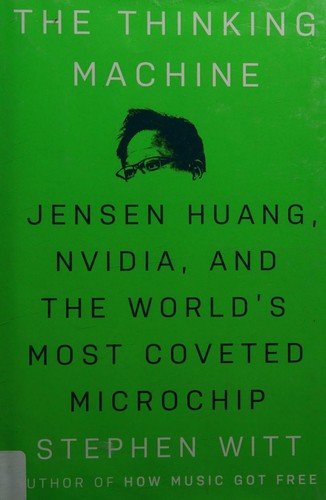
The story of NVIDIA and Jensen Huang: how a video-game card company ended up making the most coveted resource on the planet.
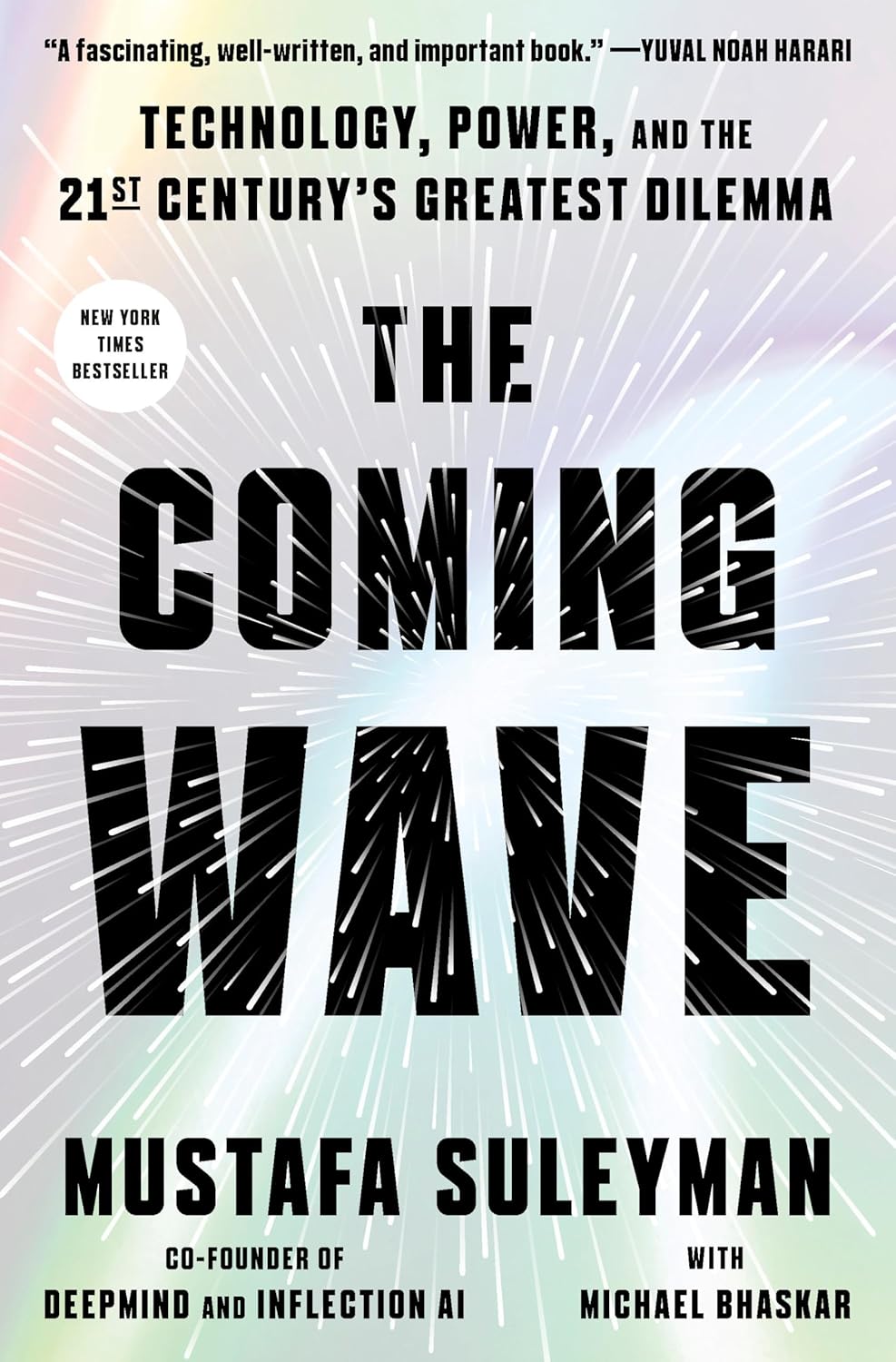
DeepMind co-founder on the dilemma of containing technologies that do not want to be contained.
As an Amazon Associate, Zendoric earns from qualifying purchases; the price does not change for you. · all our recommended books →
🔗 Related on Zendoric
- Sheinbaum proposes a census to regulate AI and social media around children, but without a roadmap · 2026-07-21
- Gunslinger: when agentic AI comes down from the lab to the cockpit of a turboprop · 2026-06-27
- AI to detect cancer at Posadas Hospital: the official announcement arrives without data to back it up · 2026-07-19