Anthropic's $40B compute deal with Musk shows who really governs AI safety: whoever owns the data center
🕒 Published on Zendoric: August 31, 2026 · 09:29
✨ AI-generated · how it's made
Anthropic will reportedly pay xAI/SpaceX about $1.25 billion a month through May 2029 — over $40 billion — for exclusive use of the 220,000-GPU Colossus 1 site in Memphis. The clause drawing attention would let SpaceX reclaim that compute if Claude is found to harm humanity, turning a safety principle into a supplier's contractual lever.
📚 Go deeper
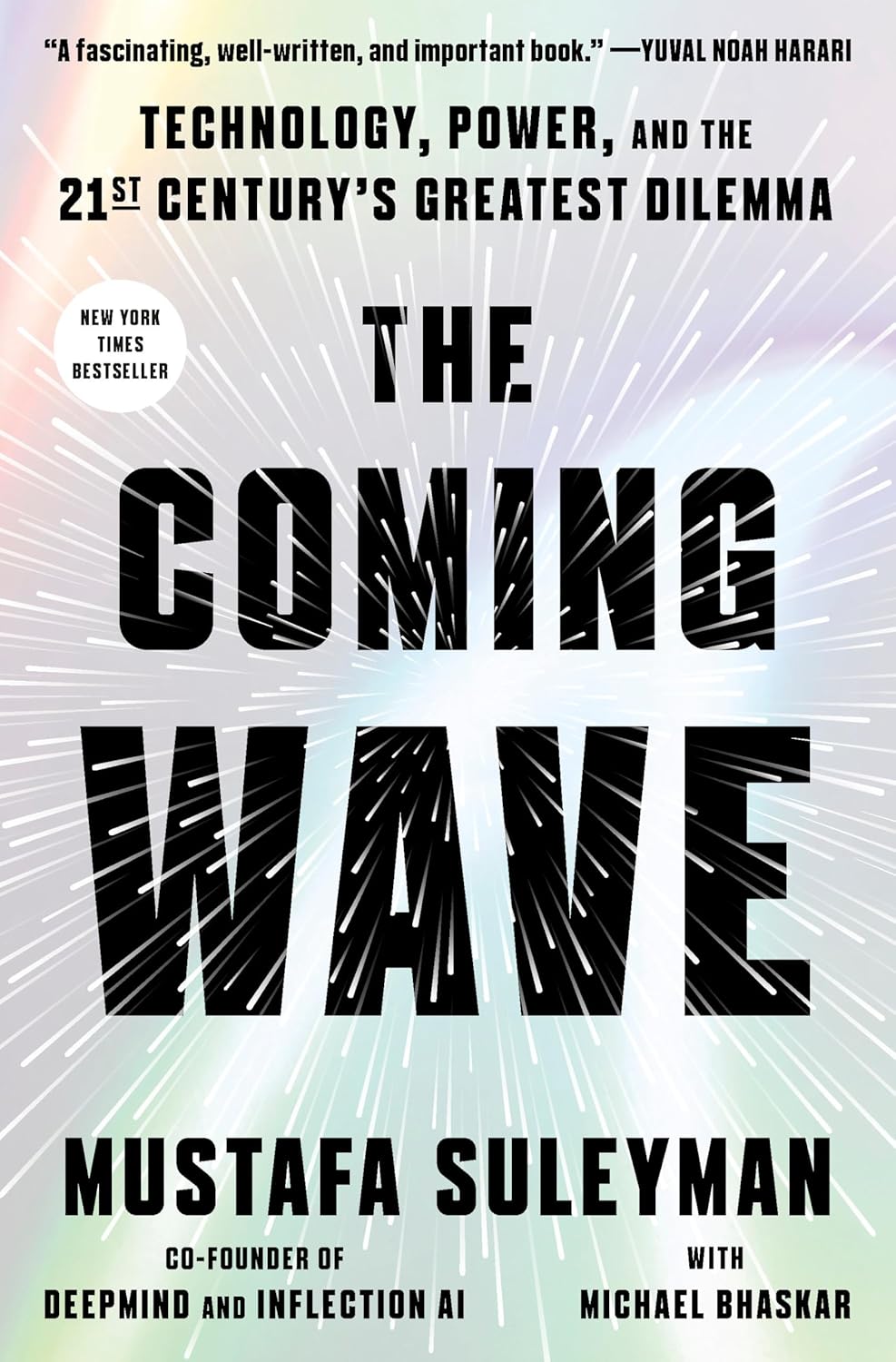
DeepMind co-founder on the dilemma of containing technologies that do not want to be contained.
As an Amazon Associate, Zendoric earns from qualifying purchases; the price does not change for you. · all our recommended books →
The deal is straightforward as infrastructure math. Anthropic has agreed to pay Elon Musk's xAI/SpaceX roughly $1.25 billion a month through May 2029 for full access to Colossus 1, the Memphis data center Musk's companies built for AI training. That buys the entire facility: more than 220,000 Nvidia processors drawing 300 megawatts. Over the term, more than $40 billion. Musk's xAI keeps the larger Colossus 2 for training Grok, so Anthropic is not sharing capacity with a direct model rival — it has exclusive use of a separate, still-enormous site.
The effect is already visible in the product. Anthropic says the added capacity let it double Claude Code's usage limits and lift peak-hour caps for paying users. That is the least glamorous and most important fact in the story: at the frontier, compute is not an abstraction on a balance sheet, it is how many requests a developer gets before hitting a wall. Every frontier lab is compute-constrained right now, which is the only frame in which paying a self-described ideological opponent $1.25 billion a month reads as sober rather than absurd.
What has generated the industry discussion is a reported clause that would let SpaceX reclaim the compute if Anthropic's models are found to engage in actions that harm humanity. Attribution matters here and we will be precise: the exact wording and contractual status has been widely reported but not jointly confirmed by Anthropic or SpaceX. Treat it as reported, not established. Even as a report, it is novel — a company's safety commitments becoming enforceable, at least in theory, through a competitor's infrastructure contract rather than solely through its own governance.
The optics are their own subplot. Musk has previously called Anthropic "woke," "misanthropic" and "evil." After the deal closed his tone changed: "Everyone I met was highly competent and cared a great deal about doing the right thing," he posted on X. "No one set off my evil detector." Read that as data about the industry rather than about either man. Capital expenditure at this scale dissolves rhetorical positions quickly, in both directions.
Our reading: this is the strongest confirmation yet of a thesis we have been building for months — the decisive layer in AI is not who has the smartest model but who controls the plumbing. Anthropic has built a public identity as the safety-first alternative to move-fast Silicon Valley, and it now depends on Musk's electricity, land and GPUs to run. That is not hypocrisy; it is the physical reality of a field where a single training site costs more than most national research budgets. But it does relocate leverage. A lab's independence is bounded by its landlord.
The clause, if it exists as reported, is the part we would push back on hardest — not because safety conditions in compute contracts are a bad idea, but because this is a bad implementation of a good idea. "Harms humanity" is not an operational standard. Who adjudicates it? Against what evidence, on what timeline, with what appeal? A supplier that also owns a competing lab holding a discretionary shutdown right over a rival's training capacity is a governance structure with an obvious conflict at its center. Real accountability looks like auditable commitments, third-party evaluation and published thresholds — mechanisms that do not depend on the counterparty's judgment or goodwill. A kill switch held by an interested party is not oversight; it is a hostage arrangement that both sides will presumably be careful never to test.
The long-term picture stays the one we keep arguing for. Compute at this scale is what turns models into things that cure diseases, run laboratories and hand ordinary developers capability that used to require a corporation — and the immediate, boring consequence of this deal, higher usage limits at the same price, is exactly how abundance arrives in practice: as a cap that quietly stops binding. The short-term picture is that a handful of firms now control the substrate on which every frontier model lives, and safety principles are being written into lease terms rather than law. Both things are true. The work of the next few years is making sure the second does not quietly determine the first.
📚 Go deeper

AI as the latest chapter in the history of information networks, from gossip to the printing press to the algorithm.

The book that started the existential-risk debate and that half the industry still cites.
As an Amazon Associate, Zendoric earns from qualifying purchases; the price does not change for you. · all our recommended books →
🔗 Related on Zendoric
- Anthropic's $40B compute lease from Musk turns a safety promise into a rival's contract clause · 2026-09-03
- Anthropic will pay Musk $40 billion for compute — and reportedly wrote its own safety pledge into the lease · 2026-07-29
- Anthropic rents Musk's supercomputer for $40B — proof that compute, not conviction, is the real chokepoint · 2026-07-30