Anthropic rents Musk's supercomputer for $40B — proof that compute, not conviction, is the real chokepoint

🕒 Published on Zendoric: July 30, 2026 · 00:20
✨ AI-generated · how it's made
Anthropic has agreed to pay xAI/SpaceX about $1.25 billion a month through May 2029 — over $40 billion — for exclusive use of the 220,000-GPU Colossus 1 data center in Memphis. Reports describe a clause letting SpaceX reclaim the compute if Claude is found to harm humanity. The safety lab's safety promises now have a landlord.
📚 Go deeper
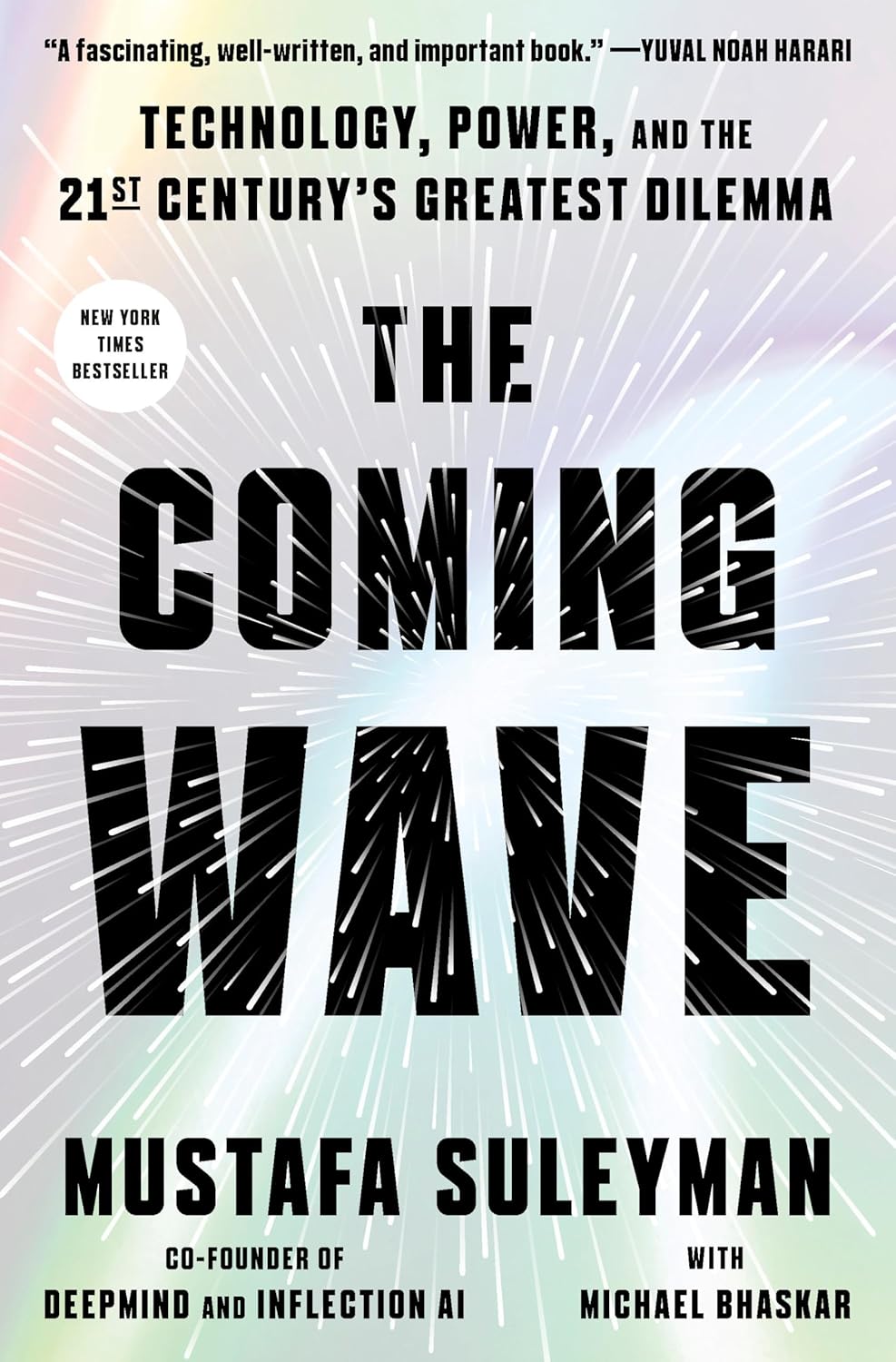
DeepMind co-founder on the dilemma of containing technologies that do not want to be contained.
As an Amazon Associate, Zendoric earns from qualifying purchases; the price does not change for you. · all our recommended books →
The numbers first. Anthropic will pay Elon Musk's xAI/SpaceX roughly $1.25 billion a month through May 2029 for full access to Colossus 1, the Memphis data center built for AI training — more than $40 billion over the term, or about $15 billion a year in rent. The capacity is substantial: more than 220,000 Nvidia processors drawing 300 megawatts. Critically, this is not shared capacity. Musk's xAI keeps the larger Colossus 2 for training Grok, so Anthropic gets exclusive use of an entire separate facility built by a direct competitor.
The effect on the product is already visible, and it is the cleanest evidence yet that compute — not algorithms, not talent — is the binding constraint on what these companies can ship. Anthropic says the added capacity let it double Claude Code's usage limits and lift peak-hour caps for paying customers. Those caps were never a pricing strategy; they were a physics problem. Buy 300 megawatts and the throttles come off.
Then there is the clause everyone is discussing. Multiple reports describe a provision letting SpaceX reclaim the compute if Anthropic's models are found to engage in actions that harm humanity. Neither company has jointly confirmed the exact wording or status, and that caveat matters — treat this as widely reported rather than established. But if it is real, it is a genuinely novel structure: Anthropic's safety commitments, until now enforced by its own governance and public posture, would also be enforceable through a competitor's infrastructure contract. A supply-chain dependency has been converted into a behavioral lever.
The optics are strange in both directions. Musk has a long and public history of hostility toward Anthropic, and Anthropic has built its entire identity as the safety-conscious alternative to the move-fast labs. That identity now runs, financially and physically, on hardware owned by a rival. Note also what the deal is not: $40 billion in rent buys no asset at the end. Anthropic is trading enormous operating expense for immediate frontier capacity rather than waiting years to build its own — a rational choice when your competitive position depends on training the next model now, and a costly one if compute prices ever fall.
Our reading, and our thesis: the AI industry's real hierarchy is not the model leaderboard, it is who controls power and silicon. On our own quality index Anthropic sits at the top of the frontier, and this deal is the invoice for staying there. When the leading safety-first lab has to rent from the competitor most rhetorically opposed to it, scarcity has plainly overwhelmed rivalry — which tells you the data-center and electricity buildout, not model research, is the current bottleneck on everything from cheaper inference to the drug-discovery and diagnostic workloads that make the long-term case for this technology.
The clause deserves more scrutiny than applause. Embedding a safety trigger in a commercial contract sounds like accountability, and in one sense it is: it creates a consequence that does not depend on a lab policing itself. But look at the mechanics. "Harms humanity" is not a defined standard, there is no disclosed adjudicator, and the party holding the switch is a competitor with an obvious interest in the outcome. That is not governance; it is leverage wearing governance's clothes. Real oversight of frontier models needs public, evidence-based criteria and a neutral referee — the kind of framework we have argued for consistently, against both panic-driven regulation and pure self-certification. This deal is a useful precedent precisely because it exposes the gap: the industry has arrived at a point where infrastructure owners can shape model behavior, and nobody has decided who should hold that power or on what terms. Better to answer that question now, while the switch is only in a rental agreement.
📚 Go deeper

AI as the latest chapter in the history of information networks, from gossip to the printing press to the algorithm.

The book that started the existential-risk debate and that half the industry still cites.
As an Amazon Associate, Zendoric earns from qualifying purchases; the price does not change for you. · all our recommended books →
🔗 Related on Zendoric
- Anthropic rents Musk's supercomputer for $40B — and safety becomes a clause someone else can enforce · 2026-09-04
- Anthropic's $40B compute deal with Musk: the safety lab now rents its future from a rival · 2026-07-31
- Anthropic's $40B bill to Musk shows compute, not cleverness, is the real chokepoint in frontier AI · 2026-09-02