Anthropic's $40B compute deal with Musk: the safety lab now rents its future from a rival
🕒 Published on Zendoric: July 31, 2026 · 15:01
✨ AI-generated · how it's made
Anthropic has agreed to pay roughly $1.25 billion a month through May 2029 — more than $40 billion — for exclusive use of Musk's Colossus 1 data centre in Memphis. Reports also describe a clause letting SpaceX reclaim the compute if Claude is found to harm humanity, though neither company has jointly confirmed it. The headline is the kill switch; the real story is that compute, not talent, is now the scarce asset that decides who gets to build frontier AI.
📚 Go deeper
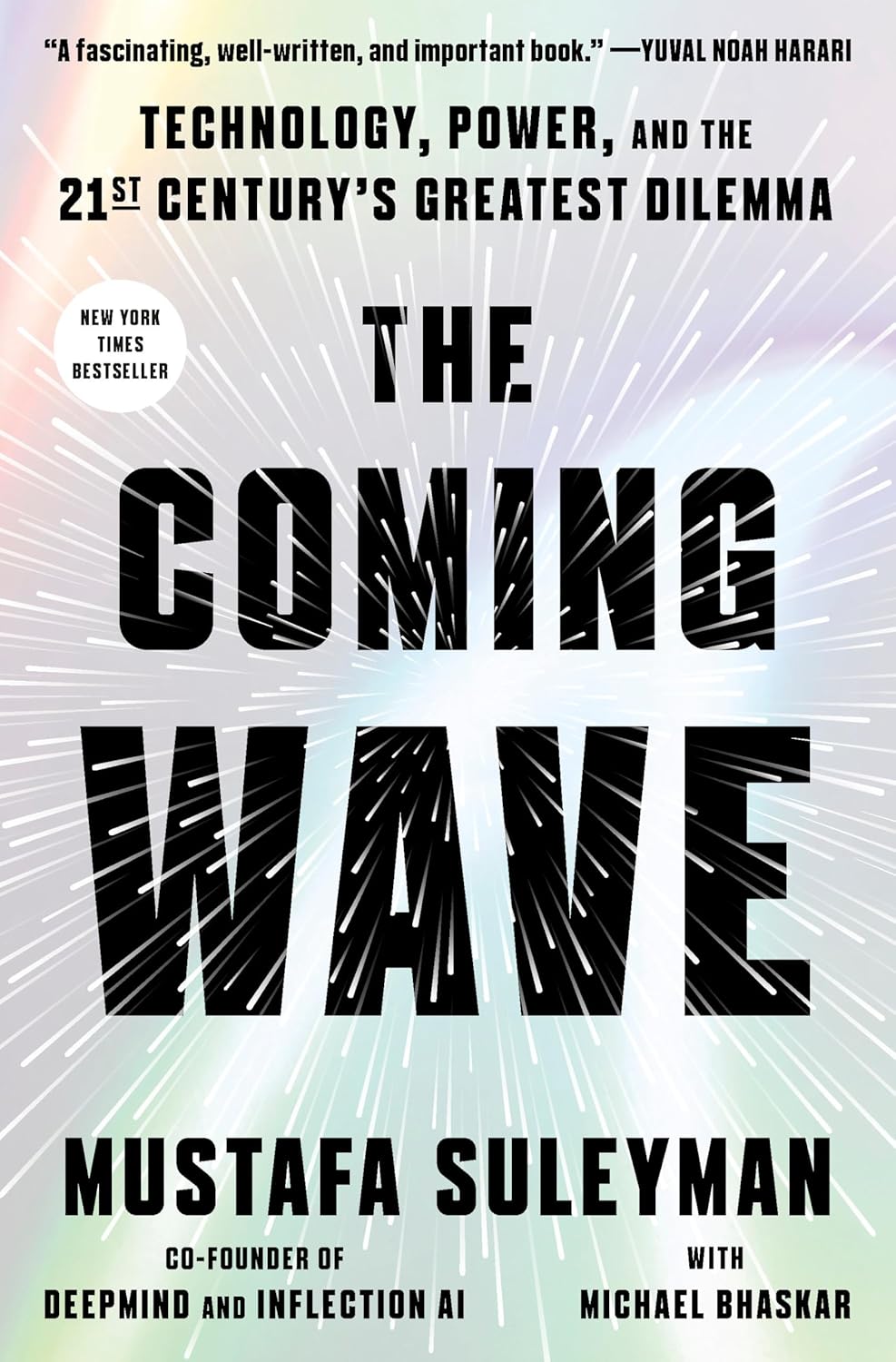
DeepMind co-founder on the dilemma of containing technologies that do not want to be contained.
As an Amazon Associate, Zendoric earns from qualifying purchases; the price does not change for you. · all our recommended books →
Anthropic will pay Elon Musk's xAI/SpaceX about $1.25 billion a month through May 2029 for full access to Colossus 1, the Memphis data centre built for AI training. That is more than $40 billion over the term, for more than 220,000 Nvidia processors drawing 300 megawatts. Run the arithmetic and the scale lands: roughly $41 million a day, or about $5,700 per GPU per month. Our thesis: the eye-catching detail is the reported shutdown clause, but the structural news is that the lab that built its identity on caution now rents its capacity from its loudest competitor.
The clause deserves careful handling. As WION reports, multiple outlets describe a provision letting SpaceX reclaim the compute if Anthropic's models are found to harm humanity — and the same report is explicit that the exact contractual status has not been jointly confirmed by either company. We treat it as reported, not established. If it exists in anything like that form, it is a remarkable piece of governance-by-contract: a private counterparty, itself building a rival model, holding a discretionary lever over a frontier lab's infrastructure, with no public definition of the triggering standard, no disclosed adjudicator and no appeal. "Harms humanity" is an admirable sentiment and a terrible contract term.
The commercial logic on both sides is clean, which is why the deal happened. Musk keeps the larger Colossus 2 for xAI's own training, so Anthropic is not sharing silicon with Grok — it gets exclusive use of a separate facility. Anthropic gets capacity now instead of in three years, and the effect is already visible in the product: the company says the added compute let it double Claude Code's usage limits and lift peak-hour caps for paying users. Musk turns a depreciating asset into a contracted revenue stream from a competitor. Nobody in this transaction was confused about what they were buying.
This is the clearest confirmation yet of a thesis we have been developing: the frontier contest has moved from who has the smartest model to who controls the plumbing — data centres, power interconnects, chip allocation, distribution. Model quality converges and leapfrogs on a monthly cadence. A 300-megawatt facility with a grid connection does not. When compute becomes the binding constraint, an AI lab's real risk register stops being "can we train it safely" and starts including "what happens if our landlord doesn't renew." Concentration of infrastructure is a governance fact, not an accounting one.
Our reading: don't score this as hypocrisy, score it as a warning about dependency. Anthropic's safety positioning is not invalidated by leasing GPUs from Musk — the useful question is what leverage came attached, and whether the terms are public enough for anyone outside the two companies to evaluate. That is the transparency gap worth pressing on, and it echoes what we argued about export controls turning a model into a geopolitical asset: when the inputs to frontier AI are scarce and privately held, control over inputs quietly becomes control over outputs. Long term we still expect this buildout to pay off in ways that matter — the same compute that trains chat assistants trains protein and diagnostic models, and that path leads somewhere genuinely good. Short term, a handful of private actors now hold a veto over who gets to walk it, enforced by contract rather than by law. That is a worse arrangement than public rules, and it is the one we currently have.
📚 Go deeper
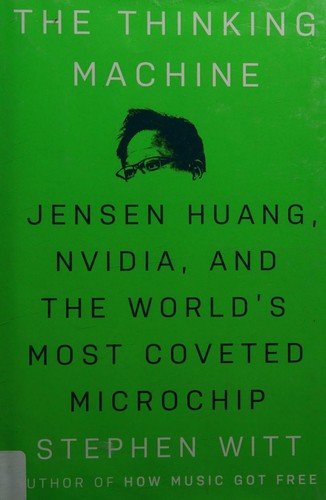
The story of NVIDIA and Jensen Huang: how a video-game card company ended up making the most coveted resource on the planet.

AI as the latest chapter in the history of information networks, from gossip to the printing press to the algorithm.
As an Amazon Associate, Zendoric earns from qualifying purchases; the price does not change for you. · all our recommended books →
🔗 Related on Zendoric
- Anthropic's $40B bill to Musk shows compute, not cleverness, is the real chokepoint in frontier AI · 2026-09-02
- Anthropic will pay Musk $40 billion for compute — and reportedly wrote its own safety pledge into the lease · 2026-07-29
- Anthropic rents Musk's supercomputer for $40B — and safety becomes a clause someone else can enforce · 2026-09-04