An AI trained on biopsies detects 94% of incidental prostate cancers in surgical tissue: its value lies in ruling out
🕒 Published on Zendoric: November 8, 2026 · 00:05
✨ AI-generated · how it's made
A commercial algorithm trained on needle biopsies identified 33 of 35 incidental prostate cancers in TURP and HoLEP samples. With a negative predictive value of 99.2%, its most realistic role is ruling out healthy tissue, not diagnosing.
📚 Go deeper

The only novel on the list, by a Nobel laureate: an artificial friend observes humans with a blend of lucidity and innocence no essay achieves.
As an Amazon Associate, Zendoric earns from qualifying purchases; the price does not change for you. · all our recommended books →
By Bioengineer.org · November 7, 2026.
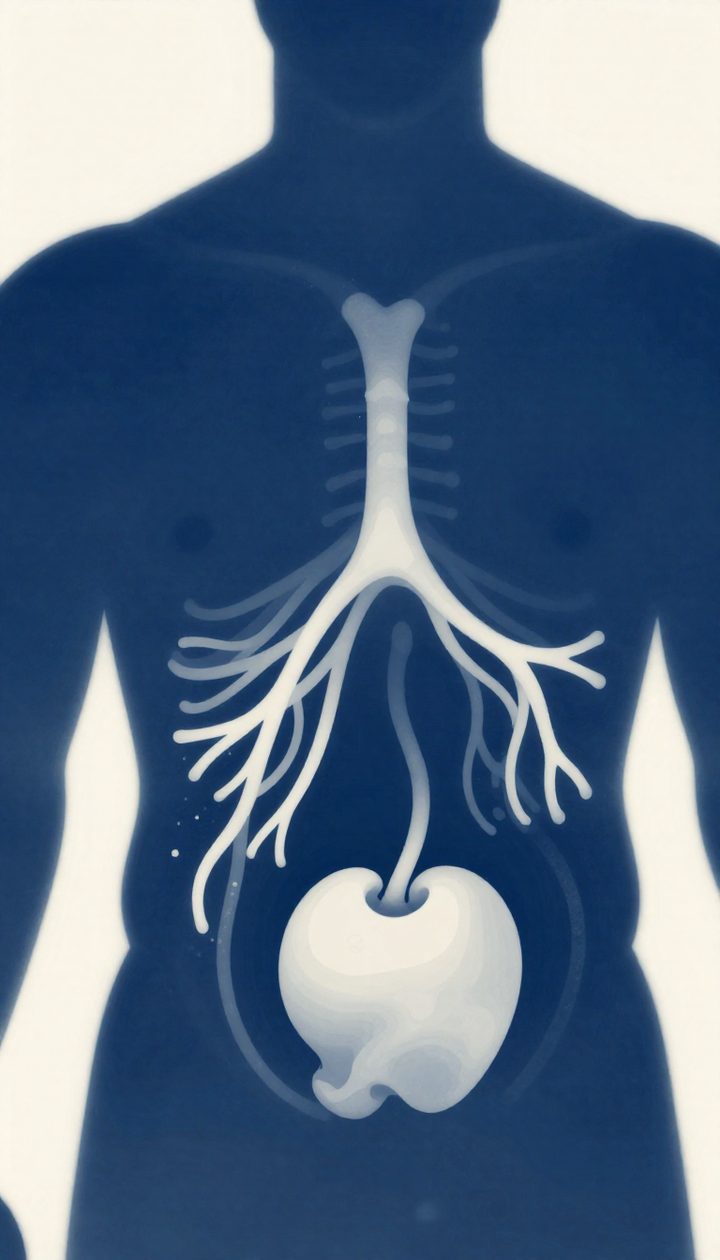
A commercial AI algorithm, originally trained on prostate needle biopsies, detected 33 of 35 incidental adenocarcinomas (tumors found by chance) in prostate surgery specimens. That is a sensitivity of 94.3%, according to a retrospective study published in Diagnostic Pathology.
The study analyzed 3,241 whole-slide images (digital scans of the specimens) from 368 consecutive patients treated between May 2023 and December 2025. Of these, 247 underwent HoLEP (holmium laser enucleation of the prostate) and 121 underwent TURP (transurethral resection of the prostate). Both techniques are used to treat benign prostatic hyperplasia and sometimes uncover a cancer nobody was looking for. The algorithm, provided by Virasoft, was applied to hematoxylin-eosin-stained slides scanned at ×20.
The numbers, according to the authors:
• Overall sensitivity: 94.3%. In TURP, 100% (9 of 9); in HoLEP, 92.3%. • Overall specificity: 76.0%, meaning a fair number of false positives. • Positive predictive value (PPV): 29.2%. Only about three in ten flagged cases were actual cancer. • Negative predictive value (NPV): 99.2%. If the algorithm flags nothing, a tumor is very unlikely. • Area under the ROC curve of 0.89 at the case level.
One finding is useful in practice. The malignancy rate rose with the number of flagged slides: from 0.8% in cases with none to 44.4% in those with three or more.
The two false negatives were low-volume, Grade Group 1 adenocarcinomas (the least aggressive), occupying around 2% and 5% of the tissue, with PSA levels of 3.1 and 4.2 ng/mL. False positives were associated with crowded benign glands, basal cell hyperplasia, cautery artifacts and fragmented or inflamed tissue, especially in HoLEP, where the laser leaves thermal damage.
**Our take.** The key point is that this result is more valuable as a filter than as a diagnosis. With a PPV of 29%, nobody should let this tool sign off on a cancer. But with an NPV of 99.2%, it can tell the pathologist which slides can be reviewed with less urgency. In TURP and HoLEP specimens, made up of a great many fragments spread across several slides, that reduction in microscopy workload is real. The authors propose precisely this triage use.
The most interesting aspect is generalization. The model was trained on biopsies, which are orderly and well-preserved tissue, yet still performed reasonably on fragmented, laser-burned tissue. It is a sign that these models learn the morphological features of cancer and not just the specimen format. Even so, specificity drops in HoLEP, precisely where artifacts are greatest, so the robustness is only partial.
There are limits worth keeping in mind. The study is retrospective, single-center and has only 35 positive cases, which makes the subgroup percentages fragile (the 9 TURP cases cannot support a robust "100%"). Nor did it measure how pathologist and AI work together or how much time is saved: that benefit is inferred from the NPV, not demonstrated. The authors themselves call for multicenter validation with different scanners and staining protocols before broad clinical use.
More broadly, digital pathology is one of the areas where medical AI is closest to delivering everyday value: repetitive, high-volume tasks with a human validating the results. It fits the long-term thesis we hold at Zendoric. Tools like this don't replace the specialist; they take over the tedious work so the specialist can devote their judgment to the difficult cases, and that translates into earlier, more reliable diagnoses. The path forward runs through prospective trials and human oversight, not through the sensitivity headline.
📚 Go deeper
An MIT computer scientist connects AI, quantum physics and video games to take an uncomfortable question seriously: what if we live in a simulation? M
The memoir of the creator of ImageNet, the scientist who made the deep learning revolution in vision possible.
As an Amazon Associate, Zendoric earns from qualifying purchases; the price does not change for you. · all our recommended books →
🔗 Related on Zendoric
- An AI reads routine breast biopsies and predicts relapse almost as well as genomic tests costing thousands of dollars · 2026-07-10
- Very Group hands pricing of 200,000 products to agentic AI: when the algorithm sets what you pay · 2026-07-15
- Prostate cancer: the British study proving AI in pathology already works in the real hospital, not the lab · 2026-07-17