Prostate cancer: the British study proving AI in pathology already works in the real hospital, not the lab
🕒 Published on Zendoric: July 17, 2026 · 00:24
✨ AI-generated · how it's made
An NHS study with more than 1,600 prostate biopsies shows that AI, integrated into the real workflow, changed the diagnosis in 1 out of every 20 cases and cut waiting time by up to 30 hours. It doesn't replace the pathologist: it makes them faster and more accurate.
📚 Go deeper

The only novel on the list, by a Nobel laureate: an artificial friend observes humans with a blend of lucidity and innocence no essay achieves.
As an Amazon Associate, Zendoric earns from qualifying purchases; the price does not change for you. · all our recommended books →
By Digital Journal · July 16, 2026.
Most AI announcements in medicine stay in the lab: an algorithm that "matches radiologists" on a curated set of images, without our knowing what happens when that system enters a real hospital, with real patients and pathologists with full schedules. The value of the British Articulate Pro study lies precisely there: it does not measure whether AI can detect prostate cancer under ideal conditions, but what happens when it is deployed in the everyday workflow of three NHS hospitals —Oxford University Hospitals, North Bristol and University Hospitals Coventry and Warwickshire—, led by Professor Clare Verrill (University of Oxford), using the Paige Prostate Suite platform on needle biopsies.
The numbers are modest in appearance and significant in practice. Across more than 1,600 cases assessed, more than 1,000 were reported with AI support: in approximately 5.4% of patients, AI-assisted review prompted changes in the diagnosis or in tumor grading; in 1.3%, those changes could alter the clinical treatment decision. In prostate cancer, where treatment depends on fine nuances in tumor classification, that 1.3% is not a statistical footnote: they are people whose treatment plan changed because a support system flagged something that warranted a second look. In addition, one of the hospitals cut the average report turnaround time by about 30 hours —one less day of waiting for the patient—, and the three centers reduced requests for immunohistochemistry, the specialized stain ordered when a case is ambiguous, thereby easing the laboratory's workload.
It is worth being precise about what this proves and what it does not. The AI did not diagnose anything on its own: it acted as a second pair of eyes flagging suspicious regions for the pathologist to decide. The study itself stresses that the value appeared when the tool was used alongside experienced specialists, not in their place. This is the distinction that separates substitutive automation —worrying for its impact on specialized employment— from augmentation, which is what we generally argue is the more likely pattern in medicine in the medium term: AI is not coming to replace clinical judgment, it is coming to compress the time between sample and decision, and to make that judgment more consistent across hospitals with different case volumes and different access to subspecialists.
The Canadian angle that drives the original article is revealing because it is transferable to almost any Western healthcare system, including Spain's: rising cancer, an aging population, a shortage of specialized pathologists and geographic disparities between large academic centers and rural areas. The precondition for AI to help —digitized biopsies— is already underway in several Canadian provinces, which turns this into a question of deployment rather than basic research. It is a pattern we will see repeated: the competitive advantage no longer lies in whether a model capable of reading a biopsy exists, but in who has the digital infrastructure and clinical governance to connect it to the real workflow without friction.
Our reading is that this kind of study —low-key, without grandiose headlines, published in clinical journals and not in startup press releases— is the real material on which the long-term horizon we defend is built: not an AI that cures cancer overnight, but thousands of slightly better and faster clinical decisions, accumulated hospital by hospital, which together reduce suffering and error. The path toward a healthcare system able to detect disease earlier and treat it more precisely does not run through a disruptive announcement, but through adoptions like this one: boring, measured in hours saved and single-digit percentages, and for that very reason credible. In the short term, the challenge is not technological but organizational —validating these systems country by country, training pathologists to work with them and deciding who is accountable if the AI gets it wrong—; in the long term, it is precisely this kind of incremental, verified progress that brings us, biopsy by biopsy, closer to systematically earlier cancer detection and to a healthcare system that devotes human time where it matters most: the relationship with the patient and the difficult clinical judgment, not the administrative burden of ruling out the easy cases.
📚 Go deeper

An MIT computer scientist connects AI, quantum physics and video games to take an uncomfortable question seriously: what if we live in a simulation? M
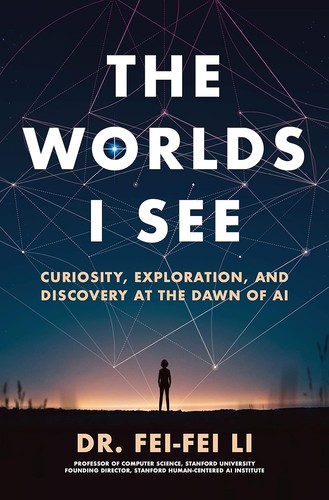
The memoir of the creator of ImageNet, the scientist who made the deep learning revolution in vision possible.
As an Amazon Associate, Zendoric earns from qualifying purchases; the price does not change for you. · all our recommended books →
🔗 Related on Zendoric
- Breast cancer leaves traces six years earlier: AI can already see them, and that forces a rethink of the entire screening process · 2026-06-28
- AI that reads the invisible in a biopsy: Stanford predicts a tumor's ecosystem without raising diagnostic costs · 2026-07-07
- An AI reads routine breast biopsies and predicts relapse almost as well as genomic tests costing thousands of dollars · 2026-07-10