An AI model for cardiovascular risk in Holguín: useful, but still without figures to back it up

🕒 Published on Zendoric: November 7, 2026 · 00:30
✨ AI-generated · how it's made
A researcher from Holguín, Cuba, presents an AI model to predict cardiovascular disease in family-medicine clinics. It is the kind of healthcare AI that matters most in the long run, although the source provides no performance data.
📚 Go deeper
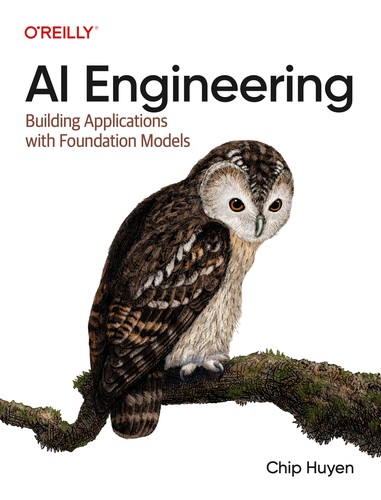
The reference manual for building products on top of AI models: prompts, RAG, fine-tuning, agents, evaluation and deployment.
As an Amazon Associate, Zendoric earns from qualifying purchases; the price does not change for you. · all our recommended books →
By Radio Angulo · November 6, 2026.
An AI-based predictive model for cardiovascular disease is being applied in the health system of Holguín province, Cuba. According to Radio Angulo, citing the ACN news agency, it is designed for family doctor and nurse clinics, the country's primary level of care.
Its developer, Jorge Vega Abascal, says the model outperforms traditional ones in anticipating early symptoms in at-risk population groups. He also says it eliminates the "therapeutic inertia" associated with intermediate risk. In other words, it prevents patients in a gray zone from going untreated because they are not clearly high-risk. He also stresses that it does not replace clinical judgment.
The technical novelty he describes is that AI makes it possible to incorporate predictors that classical methods do not use. The main one is high-sensitivity C-reactive protein, a blood marker of chronic low-grade inflammation. He also cites abdominal obesity, impaired fasting glucose and triglycerides. All of this points toward more personalized care.
The backdrop is one of scarcity. According to the source, the provincial health sector is turning to local science and innovation in the face of shortages of equipment and supplies, which it attributes to US policy toward Cuba. That is the account of the source, a local outlet. It also mentions other initiatives, such as educational software and models for nursing care in onco-hematology.
**Our take.** Our thesis is that this kind of modest, inexpensive AI is the closest to delivering on the long-term promise in healthcare. A model that runs in a clinic and improves cardiovascular screening, without expensive hardware, is the kind of mass prevention needed to reduce deaths from chronic disease. Scarcity also pushes toward simple, deployable tools, and that is a virtue.
But demonstrated capability should be separated from aspiration. The article offers no figures: no accuracy, sensitivity, sample size, comparison with reference scales, external validation or peer-reviewed publication. "Outperforms traditional models" is, for now, the developer's own claim. Until those data are available, it is a reasonable promise, not a verified result.
There is also a more fundamental caveat. Adding predictors such as C-reactive protein only helps if that test is available in the clinic, and amid supply shortages that is no small matter. A model that requires tests that cannot be performed loses its advantage. In general, healthcare AI fails more often because of integration and data than because of the algorithm.
In the short term, the realistic outcome is decision-support tools, validated slowly and always with the doctor in charge. In the long term, if these models are rigorously evaluated and extended to primary care worldwide, early prevention will be one of the most tangible paths toward a society with less disease. It is worth watching whether Holguín publishes results.
📚 Go deeper
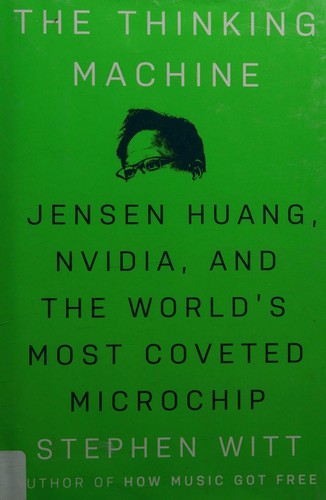
The story of NVIDIA and Jensen Huang: how a video-game card company ended up making the most coveted resource on the planet.

The creator of Keras teaching from scratch, with working code and zero pedantry.
As an Amazon Associate, Zendoric earns from qualifying purchases; the price does not change for you. · all our recommended books →
🔗 Related on Zendoric
- A homemade proxy for mixing models in t3's Codex and Claude tabs, a symptom of LLM commoditization · 2026-09-03
- US hospitals ask for a single AI rule, not a patchwork of 50 state laws · 2026-09-17
- Percival, Penn's AI that looks for hidden disease in every CT scan, still needs clinical validation · 2026-10-20