Percival, Penn's AI that looks for hidden disease in every CT scan, still needs clinical validation
🕒 Published on Zendoric: October 20, 2026 · 00:19
✨ AI-generated · how it's made
Penn Medicine unveils Percival, a model that analyzes CT scans in the background and detects signs of diseases no one was looking for. The idea is solid and the code is open source, but metrics and clinical trials are lacking.
📚 Go deeper

THE AI textbook: used by 1,500+ universities.
As an Amazon Associate, Zendoric earns from qualifying purchases; the price does not change for you. · all our recommended books →
By Medical Xpress · October 19, 2026.
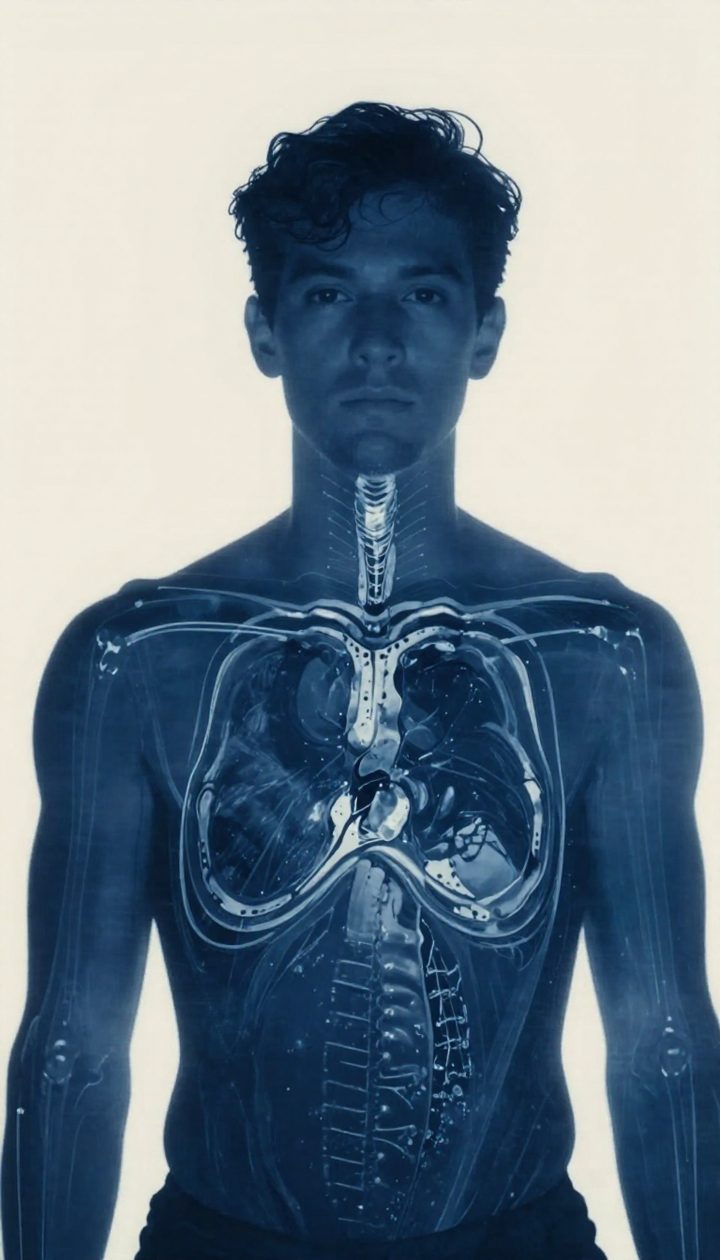
Researchers at Penn Medicine (Perelman School of Medicine, University of Pennsylvania) have unveiled Percival, an AI model that analyzes computed tomography (CT) scans for patterns unrelated to the original reason for the scan. This practice is generally known as "opportunistic screening." According to the published reports, the model can flag signs of chronic diseases such as atrial fibrillation and chronic kidney disease. It also detects pancreatic cancer, cirrhosis and bacterial pneumonia, and estimates the future risk of cardiovascular and liver complications.
The authors trained it on about 400,000 CT scans from around 50,000 patients in the Penn Medicine BioBank, an archive holding data on more than 350,000 people collected over roughly two decades. The work was published in *npj Digital Medicine* under the title "Generalizable CT vision-language modeling for population health and disease risk." Cameron Beeche is the lead author and Walter Witschey the senior author. A vision-language model combines images and text in a single representation, which allows it to link what it sees on the CT scan with the patient's medical history.
The source states that Percival identifies pancreatic cancer, cirrhosis and bacterial pneumonia more reliably than TotalSegmentator, another CT analysis tool. That comparison is only qualitative: the article gives no sensitivity, specificity or AUC (area under the curve, the standard accuracy measure). Without those numbers, the size of the improvement cannot be gauged.
It is also worth separating capability from promise. Percival is still in preclinical testing, and clinical validation is pending. The developers plan to test it early next year, with the goal of reaching clinical use. According to the team itself, they want to expand the data with more institutions to improve robustness. That suggests the training data comes from a single health system, although the article does not say so explicitly. The model's code and specifications are open.
**Our take.** The underlying thesis is that the strategic asset of medical AI is the archives hospitals already have. A CT scan ordered for one reason contains information no one reads today, and extracting it requires no new tests or extra radiation for the patient. It is the same pattern we see in other models that leverage longitudinal records: the value lies in what has already been stored.
The risk lies in opportunistic screening. Detecting more disease is not the same as improving health. If the model generates false positives, unnecessary tests, anxiety and overdiagnosis will follow. That is why real metrics and multicenter trials matter more than the headline. In the short term, the burden will fall on radiologists and health systems, which will have to decide what to do with findings nobody asked for.
In the long term, the direction is the right one. Medicine that detects early, almost for free and using existing data, is a real step toward eradicating diseases that today are diagnosed late. Open code helps other centers audit and replicate it, something independent validation needs. We don't yet know how accurate it is, and that is what will decide whether Percival makes it into the clinic.
📚 Go deeper

The academic "bible" of deep learning, with a Turing Award winner among its authors, and legally free on the web.

The memoir of the creator of ImageNet, the scientist who made the deep learning revolution in vision possible.
As an Amazon Associate, Zendoric earns from qualifying purchases; the price does not change for you. · all our recommended books →
🔗 Related on Zendoric
- Looking at the whole lung, not just the tumor: AI predicts immunotherapy response with an AUC of 0.79 · 2026-10-19
- UCLA Health bets on AI for cancer detection: another sign that precision medicine is no longer just a promise · 2026-06-26
- The medical AI astronauts need isn't flashy: it's boring, offline and auditable · 2026-07-04