AI agent-run networks: the challenge isn't autonomy but getting them to act deterministically

🕒 Published on Zendoric: November 4, 2026 · 00:20
✨ AI-generated · how it's made
Cisco argues that AI can already sense, diagnose and plan in networks, but when applying changes it must run predefined workflows. Useful autonomy isn't improvisation: it means acting predictably where a single error can take services down.
📚 Go deeper

The best starting book if you're not technical: a Wharton professor explains how to work WITH AI — when to delegate, when to supervise, when to keep i
As an Amazon Associate, Zendoric earns from qualifying purchases; the price does not change for you. · all our recommended books →
By TechTarget · November 3, 2026.
Companies are increasingly comfortable letting AI make network changes without prior human approval. But according to Joe Vaccaro, senior vice president and general manager of Cisco Network Platform and ThousandEyes, those decisions cannot be probabilistic. He made the comments on TechTarget's Targeting AI podcast.
The driver of this adoption is the volume of alerts that network operations teams receive. According to Vaccaro, if humans alone had to resolve them, "you can't hire enough people" to do it.
Cisco applies AI to network operations in four stages: detecting a problem, diagnosing it with cross-domain telemetry (data from different parts of the infrastructure), planning the remediation and acting. The key nuance is in the last stage. According to Vaccaro, in the action phase, when the change is rolled out across the network, execution should be deterministic: predefined workflows rather than letting agents improvise.
A deterministic system always produces the same output for the same input. A language model, by design, does not guarantee that.
The source material is brief and provides no adoption figures or specific cases. What follows is therefore our own take.
**Our take.** This architecture separates two kinds of intelligence. The model provides flexible judgment where mistakes are cheap: interpreting alerts, correlating signals, proposing a plan. Traditional code provides guarantees where mistakes are expensive: touching the configuration that carries a company's traffic. This pattern can be expected to spread to other critical domains.
In general, this fits an industry trend: the value of agents is shifting from the model to control, meaning permissions, limits and oversight. A network makes a good testing ground because failures are immediately visible and cost money.
There is an honest caveat. Making the last step deterministic does not eliminate risk: if the diagnosis or the plan is wrong, a perfectly executed workflow will apply the wrong change with total precision. Verifying the plan before acting matters as much as the execution.
For jobs, the picture cuts two ways. In the short term, alert triage work is the most exposed. But the shortage Vaccaro describes suggests the problem isn't eliminating jobs, but that there are no longer enough hands. The people who design, audit and govern these workflows become more important. In the long run, infrastructure that largely runs itself is part of the abundance we're aiming for: more reliable services, with people focused on design instead of firefighting.
📚 Go deeper

How opaque algorithms decide who gets credit, a job or parole — and why they tend to punish the same people.
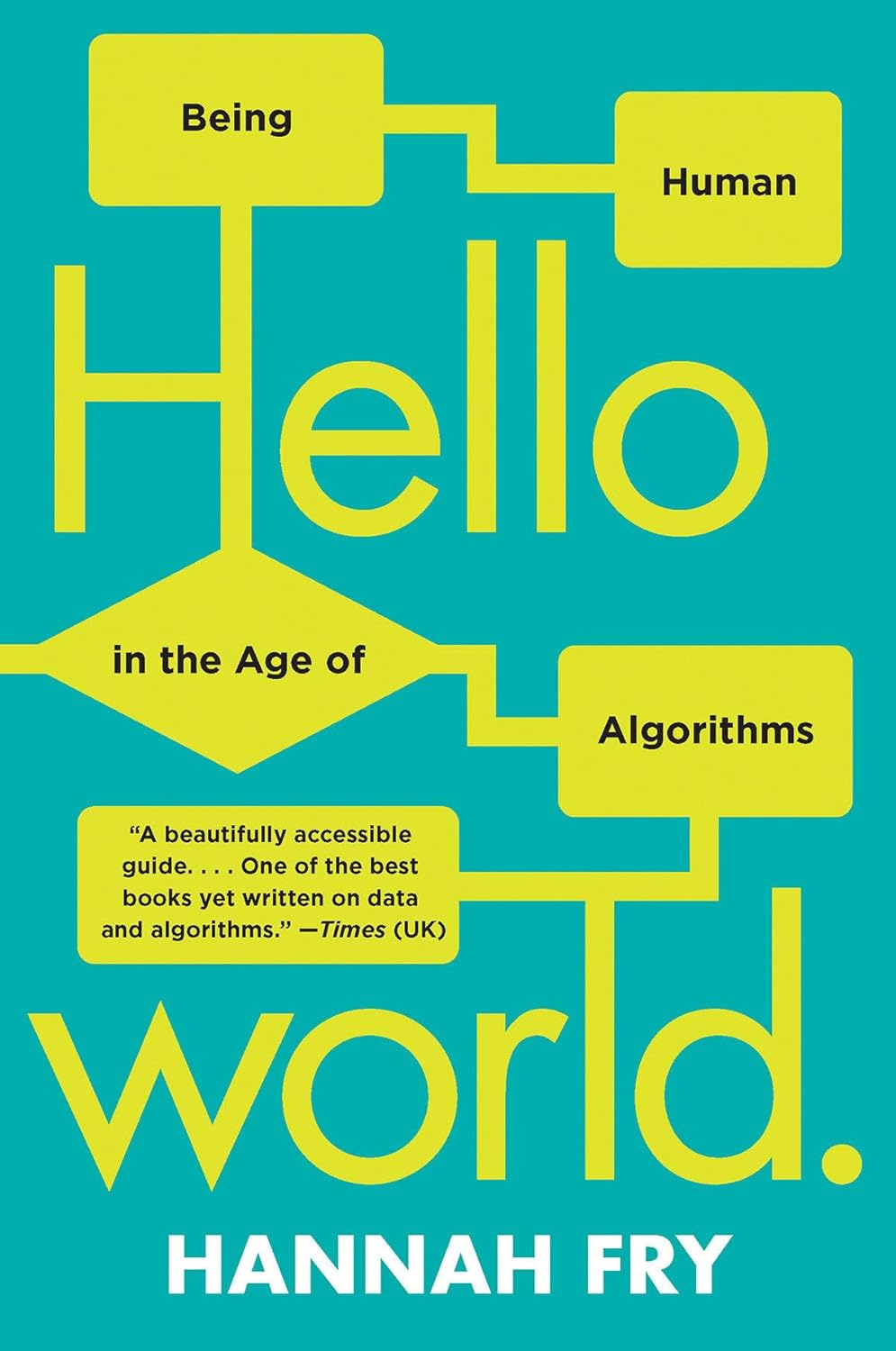
Algorithms in justice, medicine, cars and art, explained with British humor and mathematical honesty.
As an Amazon Associate, Zendoric earns from qualifying purchases; the price does not change for you. · all our recommended books →
🔗 Related on Zendoric
- The switch that decides: the F-16 VENOM isn't seeking a pilotless fighter, but one with two brains · 2026-07-18
- Cisco's Project Quarry: monitoring agents means reading sequences, not isolated actions, and the limit is governance more than code · 2026-11-01
- The coding agent stack fragments into layers: kernel, workbench and end product · 2026-07-04