The coding agent stack fragments into layers: kernel, workbench and end product

🕒 Published on Zendoric: July 4, 2026 · 00:29
✨ AI-generated · how it's made
A technical analysis compares three open source AI coding agent tools —Pi, Goose and OpenCode— and argues they don't compete with each other: they operate at different layers of the same stack. It's a revealing read on where agent engineering is heading in 2026.
📚 Go deeper
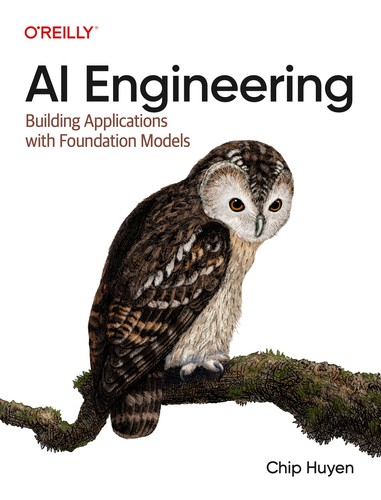
The reference manual for building products on top of AI models: prompts, RAG, fine-tuning, agents, evaluation and deployment.
As an Amazon Associate, Zendoric earns from qualifying purchases; the price does not change for you. · all our recommended books →
By GitHub Gist (AIMOWAY) · July 3, 2026. The source material is modest in scope: a technical gist published on GitHub, discussed on Hacker News with barely two points and no comments. It's not a corporate announcement or major news, but the reflection of a developer who has been testing three open source AI coding agent projects—OpenCode, Pi and Goose—and proposes a way of understanding them worth capturing because it illustrates something broader about how the ecosystem is maturing.
The author's thesis is simple but useful: these three tools are often lumped together under the generic label 'AI coding agents,' but they actually occupy different layers of the stack. Pi behaves like an agent kernel or harness: a set of low-level pieces (a runtime with tool calls, state management, a unified multi-provider API, a terminal interface library) designed for those who want to build or study agent systems, not just use them. In fact, Pi is explicit that it doesn't include its own permissions system to restrict access to files, processes, network or credentials: it runs with the permissions of the user who launches it, leaving the responsibility of isolating it (containers, sandboxing) to the external environment. It's a design decision, not an oversight: it separates agent logic from perimeter security.
Goose, for its part, presents itself as a broader local agent workbench: desktop app, CLI and API, with MCP-style extensions, designed not just for coding but for research, writing, automation and data analysis. One relevant detail is that Goose is already part of the Agentic AI Foundation, within the Linux Foundation, which gives it institutional backing that takes it out of niche-project territory. OpenCode, by contrast, is the most specialized of the three: a coding agent with a terminal interface, a desktop app and distinct modes—one with full access for building and another read-only for planning—focused on tasks within a repository: exploring code, planning changes, implementing features, running development tasks.
Beyond the classification itself, what adds real value to the debate are the operational questions the author raises, questions rarely asked by marketing benchmarks: how each tool manages credentials, whether it supports third-party OpenAI-compatible endpoints, how it exposes permissions to the user, how it recovers from a failure in a multi-step task. These are the questions that truly determine whether an agent is usable in production, in contrast with the usual obsession over the underlying model's capability ranking.
Our reading is that this kind of layered fragmentation—kernel, orchestration, end product—is exactly what one would expect in a rapidly maturing software ecosystem. We've noted it in other analyses before: competition in agentic AI is shifting from "which model is smartest" to "who controls the plumbing" that connects models, tools and real workflows. That specialized tools are emerging per layer, rather than a single monolithic agent trying to do everything, is a sign of a healthy open source ecosystem: it reduces friction for those who just want to code (OpenCode), for those who want a flexible local workbench (Goose), and for those who want to understand or build the internal machinery of agents (Pi). It's, on a small scale, the same layering pattern followed by all mature software infrastructure, from operating systems to the cloud.
That said, this piece shouldn't be overstated: it's the opinion of an individual developer with minimal traction on Hacker News, not an industry verdict or a product announcement with adoption figures. Its value lies in the conceptual map it proposes, useful for anyone choosing tools in a still very fragmented ecosystem, rather than in verifiable facts about market share or performance. As sector context, this proliferation of open source coding agents—free, auditable and not dependent on a single vendor—is exactly the kind of democratization that supports our underlying thesis: the cheaper and more open access to tools at this level becomes, the closer we get to AI-driven productivity gains being widely shared, rather than concentrated in whoever can afford the most expensive coding assistant.
📚 Go deeper
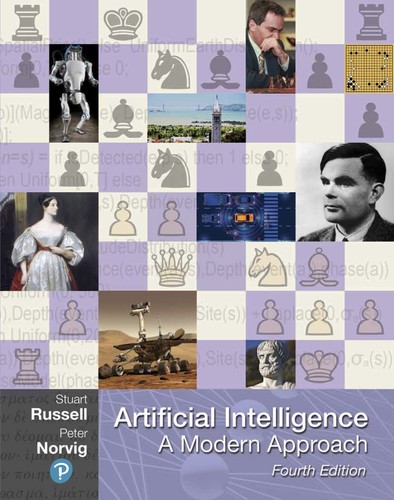
THE AI textbook: used by 1,500+ universities.

The academic "bible" of deep learning, with a Turing Award winner among its authors, and legally free on the web.
As an Amazon Associate, Zendoric earns from qualifying purchases; the price does not change for you. · all our recommended books →
🔗 Related on Zendoric
- 'Vibe coding' doesn't kill SaaS: it redraws the line between what serves one and what serves many · 2026-06-24
- Utah State receives 600,000 dollars from the NSF to find out whether AI is undoing the engineers it trains · 2026-07-23
- Memory, the bottleneck for agents: Neo4j's proposal to break context into three layers · 2026-06-26