Utah State receives 600,000 dollars from the NSF to find out whether AI is undoing the engineers it trains

🕒 Published on Zendoric: July 23, 2026 · 00:24
✨ AI-generated · how it's made
A professor at Utah State University has secured federal funding to measure, over three years and with up to 150 students, whether relying on AI to solve engineering problems strengthens or atrophies critical thinking. The answer will shape how universities regulate these tools in technical degrees.
📚 Go deeper
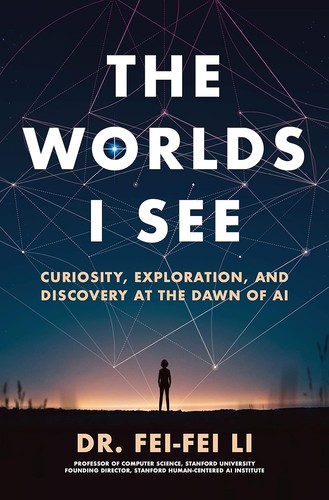
The memoir of the creator of ImageNet, the scientist who made the deep learning revolution in vision possible.
As an Amazon Associate, Zendoric earns from qualifying purchases; the price does not change for you. · all our recommended books →
By Zendoric · July 23, 2026.
Oenardi Lawanto, a professor of engineering education at Utah State University (USU), has received a grant of more than 600,000 dollars from the National Science Foundation (NSF), the main public science-funding agency in the United States, as the university itself has confirmed. The goal of the project, which will run for three years, is to determine whether the use of AI tools strengthens or weakens engineering students' ability to solve problems on their own.
The study's design is methodical. Between 100 and 150 second- and fourth-year students will complete a revised version of the Physics Metacognition Inventory, a questionnaire designed to map how students think when they tackle a technical problem — that is, how they monitor and adjust their own reasoning (what in academic jargon is called metacognition). To that will be added open-ended surveys in the second, third and fourth years and, at the end of the process, interviews with a small subsample. It will all rely on an AI tool integrated into Canvas, the learning management system (LMS).
Lawanto sums up the motive for the study with a phrase that avoids both panic and euphoria in equal measure: "We can't avoid AI, it's already here. People and industry use it, so we must find a way for students to use it to improve their learning." And he adds the question that in fact underpins the entire project: "We don't know whether it will have a negative or positive impact. If we find that it's mostly negative, the next question is how we change it."
The relevant point, beyond the grant figure, is the reason Lawanto decided to launch this research: as he explains, many universities are already drafting policies on AI use in the classroom without any empirical basis to support them. It is an uncomfortable but honest admission — a phenomenon that has not yet been measured is being regulated blind — and it is exactly the kind of gap this project aims to fill with a model, built from real data, of how a student's relationship with AI evolves over an entire degree.
This connects with a debate we have already addressed in analyzing AI's impact on education by sector: the difference is not between "using AI" and "not using AI," but between the teacher — or the student — who orchestrates it with their own judgment and the one who simply delegates to it. The very design of Lawanto's study points in that direction: it does not measure whether students use AI, but whether they retain ownership of their own problem-solving process, whether they develop the judgment to know when to trust the tool and when to question it. That distinction — between passive delegation and active oversight — is probably the variable that matters most for the future of technical talent, even more than the final figure of whether the net effect is positive or negative.
Our reading is that this type of research, modest in sample size but rigorous in design, is precisely what is missing in the public debate on AI and education, dominated so far either by anecdotes and alarmism or by marketing optimism without evidence. In the short term, the risk of atrophy of fundamental skills — the ability to frame a problem from scratch, to tolerate uncertainty before reaching a solution — is real and deserves to be taken seriously; it is not an unfounded fear, it is exactly what this study seeks to quantify. But in the long term, the relevant question is not whether the engineers of the future will use AI (they will, as universally as they use a calculator or a compiler today), but whether the education system knows how to teach them to supervise it with their own judgment rather than subordinate themselves to it. An engineer capable of directing AI instead of obeying it is precisely the kind of professional who can take advantage of the coming abundance of tools to solve more ambitious problems — from infrastructure to energy or health — instead of losing the craft along the way. That universities like Utah State are starting to measure it with data, rather than leaving it all to the intuition of an academic policy committee, is a small but necessary step in that direction.
📚 Go deeper
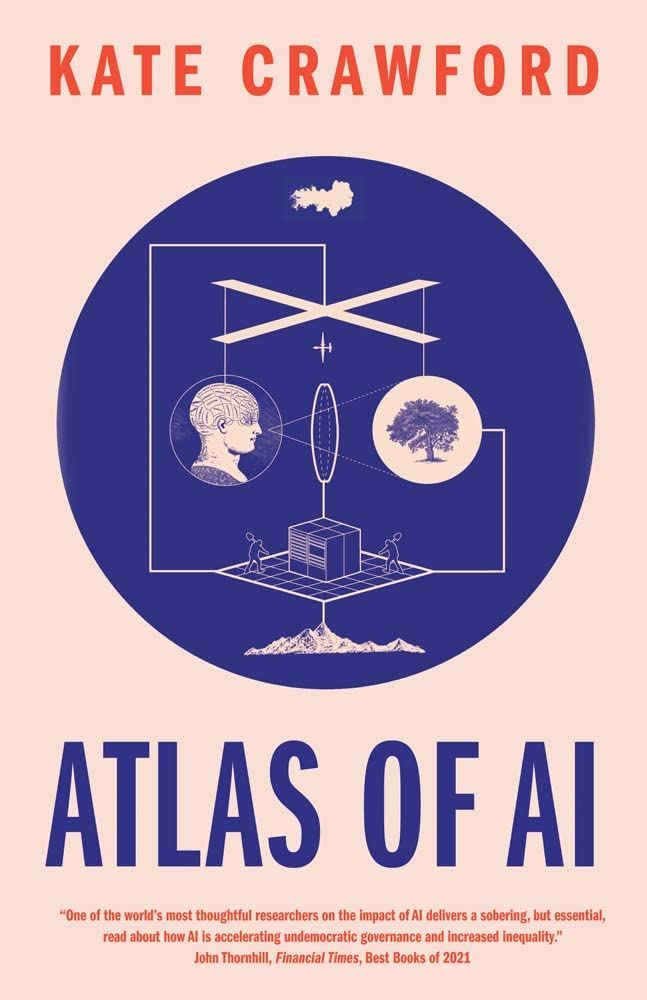
AI as an extractive industry: the lithium, the energy, the underpaid data-labeling work and the bodies behind the cloud.

The only novel on the list, by a Nobel laureate: an artificial friend observes humans with a blend of lucidity and innocence no essay achieves.
As an Amazon Associate, Zendoric earns from qualifying purchases; the price does not change for you. · all our recommended books →
🔗 Related on Zendoric