UN approves talks on military AI with 171 votes, but without negotiating rules: dialogue advances, the brakes don't yet

🕒 Published on Zendoric: November 3, 2026 · 00:06
✨ AI-generated · how it's made
The UN First Committee approved, with 171 votes, a structured dialogue on military AI in 2027 and 2028. The US, Russia and Israel voted against. It's a useful step, but with no obligations or treaty negotiations.
📚 Go deeper
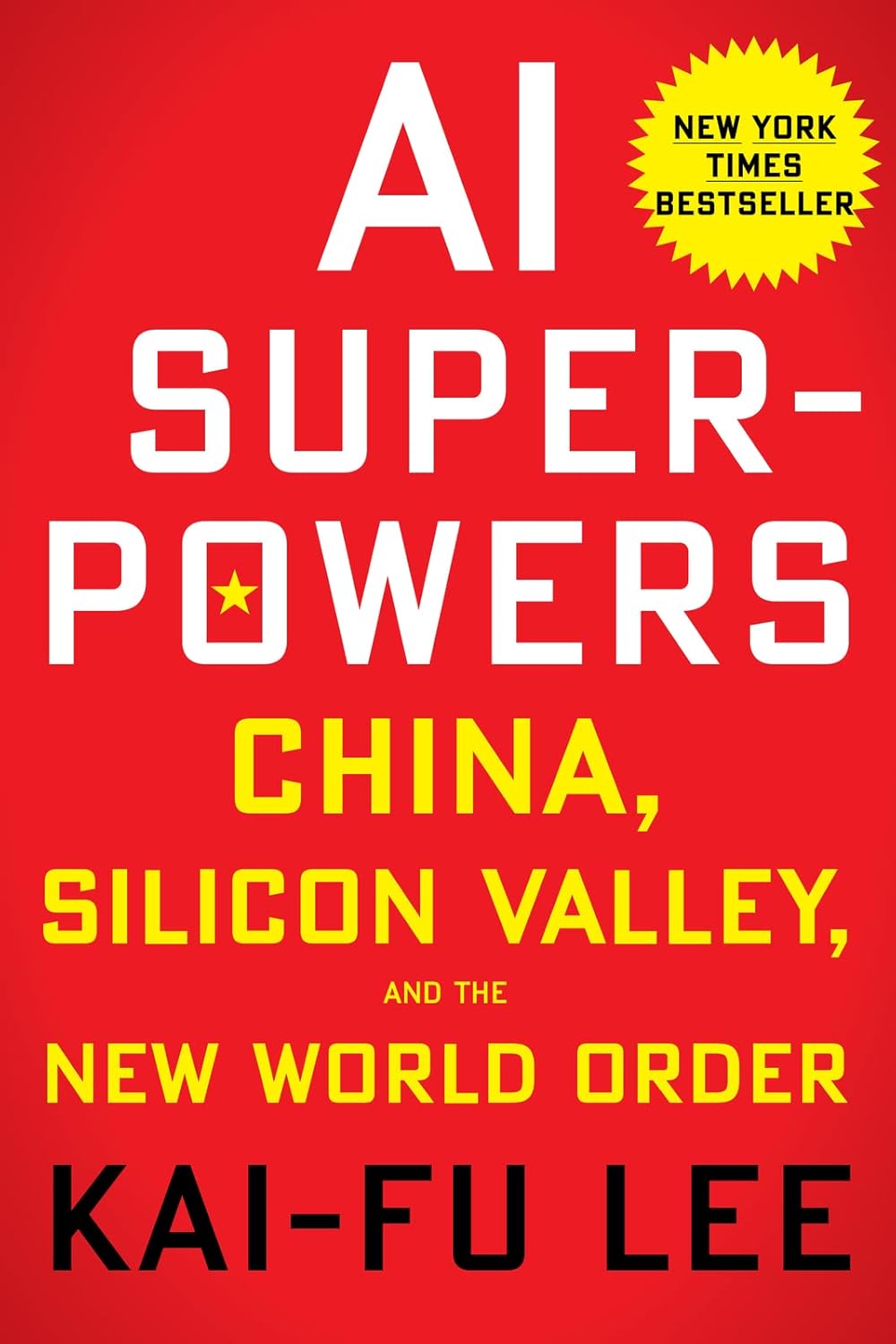
China vs.
As an Amazon Associate, Zendoric earns from qualifying purchases; the price does not change for you. · all our recommended books →
By Digital Watch Observatory · November 2, 2026.
The UN General Assembly's First Committee (Disarmament and International Security) approved on October 30, 2026 a resolution on artificial intelligence in the military domain (A/C.1/81/L.34). It was jointly sponsored by South Korea and the Netherlands. It received 171 votes in favor, four against and six abstentions, according to Digital Watch's tally.
North Korea, Israel, Russia and the United States voted against. Argentina, Belarus, Iran, Nicaragua, Saudi Arabia and South Sudan abstained. Committee approval is not final: the General Assembly plenary is expected to consider the text in December 2026.
The core is the timetable. There will be structured dialogues in Geneva in 2027 and 2028, with a three-day meeting each year. Member States and other stakeholders will take part: international organizations, academia, civil society and industry. The UN Office for Disarmament Affairs (UNODA) will provide organizational support and prepare factual summaries for the First Committee.
The process builds on the 2024 (A/RES/79/239) and 2025 (A/RES/80/58) resolutions and on the informal exchanges held June 15–17, 2026. Its scope goes beyond autonomous weapons: it includes intelligence analysis, surveillance, targeting support, military planning and operational decision-making. Risks cited include miscalculation, unintended escalation, loss of human control and accountability problems.
The resolution also welcomes UNIDIR's (the UN disarmament research institute) Centre of Excellence on AI, Peace and Security, announced in June 2026. It further encourages practical work such as common terminology and scenario-based exercises. The detailed agenda for 2027 and 2028 has not yet been set.
There is a second track: lethal autonomous weapons. On October 29, the same committee approved another text (A/C.1/81/L.37) calling for progress toward negotiations on an international instrument. It received 163 votes in favor, five against and nine abstentions; this time China abstained, and the U.S., Russia and Israel again voted against. That issue will go to the Seventh Review Conference of the Convention on Certain Conventional Weapons (CCW), November 16–20 in Geneva. Decisions there require consensus, and the outcome is uncertain.
**Our take.** My thesis is that this resolution is necessary but insufficient, and that its merit is having broadened the focus. For years the public debate has centered on the “killer robot.” Yet the short-term risk lies in less flashy systems: algorithms that prioritize targets, summarize intelligence or recommend decisions to commanders who must decide within minutes. There, the failure is not a machine that fires on its own, but a human who signs off with no time to doubt. Putting that on the agenda is the most valuable part of the text.
The limitation is obvious: there are no obligations and no treaty negotiation. And the votes against matter more than their number. That the United States, Russia and Israel, three actors with heavy AI integration in operations, reject even a dialogue forum suggests they do not want even the framework. An agreement without the main military users will end up being a norm-setting exercise for those who need it least. This is our inference, not a claim made by the source.
Nor should we fall into catastrophism. A dialogue with shared terminology and scenario exercises may seem bureaucratic, but that is how confidence-building measures were built in other security domains in their day. Defining what “meaningful human control” is, or how a decision-support system is audited, is technical groundwork that precedes any binding rule. In general, evidence-based governance, which we advocate, starts exactly like this.
The long term depends on this technology being channeled well. The same AI that accelerates medicine and abundance can, if poorly governed in the military sphere, trigger crises through miscalculation. The next test is near: the CCW conference in November and the plenary vote in December will show whether the dialogue remains a forum or turns into rules.
📚 Go deeper

Semiconductors as the oil of the 21st century: history, espionage, and why an island of 23 million people underpins the entire AI economy.

DeepMind co-founder on the dilemma of containing technologies that do not want to be contained.
As an Amazon Associate, Zendoric earns from qualifying purchases; the price does not change for you. · all our recommended books →
🔗 Related on Zendoric
- Guterres warns that AI is advancing faster than the rules and calls for a global pact to protect children · 2026-07-07
- The U.S. and China agree to hold their first AI dialogue under the Trump era in September · 2026-07-23
- NYC starts the school year with no AI rules: the largest city in the US tests how to tame artificial intelligence in the classroom · 2026-09-02