NYC starts the school year with no AI rules: the largest city in the US tests how to tame artificial intelligence in the classroom

🕒 Published on Zendoric: September 2, 2026 · 08:27
✨ AI-generated · how it's made
More than 4,000 new teachers begin the school year in New York, the largest school district in the US, without the classroom AI policy the city promised for before September 10. Between first-day excitement and fear of students who "outsource" their thinking, NYC is testing how to tame AI in schools.
📚 Go deeper
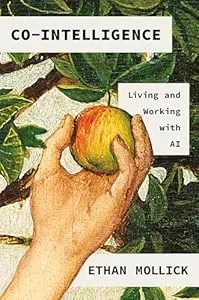
The best starting book if you're not technical: a Wharton professor explains how to work WITH AI — when to delegate, when to supervise, when to keep i
As an Amazon Associate, Zendoric earns from qualifying purchases; the price does not change for you. · all our recommended books →
By Zendoric · September 1, 2026.
More than 4,000 new teachers filled Brooklyn's Barclays Center this week for the orientation ahead of the first day of classes in the largest public school system in the United States, as Chalkbeat reports. Chancellor Kamar Samuels warned them to brace for a tough start —"probably the hardest year of my life," he said of his own experience as a rookie teacher— as the city tries to fill some 6,600 vacancies this school year to comply with a state mandate requiring class sizes to be cut to between 20 and 25 students. The Teaching Fellows program, the fast track into public school teaching, is bringing in about 1,100 new teachers this year, one of the highest figures in recent years.
The backdrop is more uncertain than usual: according to a survey by the publication Education Week cited by Chalkbeat, teacher morale in New York State is below the national average. And on the role of artificial intelligence in the classroom, the Department of Education itself still has not settled a question that has been pending for months. A draft AI policy published in March did not include clear safeguards on student use, drew harsh criticism and forced a delay of a more complete version, now expected before September 10, when classes begin.
Michael Mulgrew, president of the United Federation of Teachers union, summed up the city's dilemma to the press: he wants a "practical approach" with more control over which platforms schools use, but he is skeptical that an outright ban is workable. "How do you ban AI in a high school?" he asked. "Students use it anyway. It's already built into a huge number of platforms." It is a line that captures the underlying problem: the technology is already inside school tools before any rule exists to govern it.
Among the new teachers themselves, the concern is not abstract. Jasmine Hall, who is returning to a public high school in Queens after a stint at a charter school, said she hopes for "incentives to steer kids away from AI" because, in her recent experience, "they've gotten used to using it for everything." Moshab Rahman, 25, who graduated in environmental biology before joining the Teaching Fellows, acknowledged that he finds these tools useful himself, but admitted he has not worked out how to keep his students from "outsourcing" their thinking. He called it, bluntly, "a can of worms."
This tension is not a New York anecdote: it is the same pattern we already identified when analyzing how AI is reshaping employment in the education sector. The distinction that matters is not "with AI" or "without AI," but which kind of teacher survives the change. The winner is the teacher who orchestrates the tool —who uses it to personalize learning and frees up time for judgment, nuanced grading and the human relationship with the student—; the loser is the one who merely transmits content, because that is precisely what a language model already does for free and on demand. What New York is discovering, with 4,000 teachers thrown into the classroom without an instruction manual, is that this shift in role cannot be decreed from an office: it is fought out every day in front of a whole class of teenagers whose phone (already banned in the city's classrooms) has been replaced by a laptop with AI access.
As sector context, this regulatory vacuum is not unique to New York. Most school districts around the world share the same lag: adoption of generative AI among students advances at the speed of a mobile app, while education policymaking advances at the speed of a public administration. The outcome is predictable —teachers improvising their own rules, unions asking to "block platforms" instead of banning uses, drafts delayed for lack of safeguards— and it will repeat every school year until there is consensus on what a student is expected to be able to do unaided.
Our take is that the real short-term risk is not that students use AI, but that they use it without anyone teaching them to think with it rather than through it. That is the real problem Hall and Rahman describe: it is not a matter of catching cheating, it is a fundamental pedagogical question about which cognitive muscle atrophies when work is delegated by default. In the long run, however, the same experiment that is generating anxiety at Barclays Center today points toward something better: AI properly integrated into the classroom can become a personalized tutor that adapts to each student's pace, closing learning gaps that today depend on zip code, and freeing teachers from administrative, repetitive burdens so they can devote their time to what a model cannot replicate —mentoring, motivation, connection—. That is precisely the ground on which the teaching profession does not disappear, but becomes more human.
What is at stake in the AI policy New York must publish before September 10 is not a bureaucratic detail: as the country's largest school system, whatever it decides will serve as a de facto reference for many other districts watching without having resolved the same dilemma. If the final document treats AI merely as a filter for detecting plagiarism, it will have wasted the opportunity. If it treats it as a tool that must be taught to be used well, with real training for the teachers now improvising on the fly, New York could become the first large public system to show that the transition is hard, but manageable.
📚 Go deeper
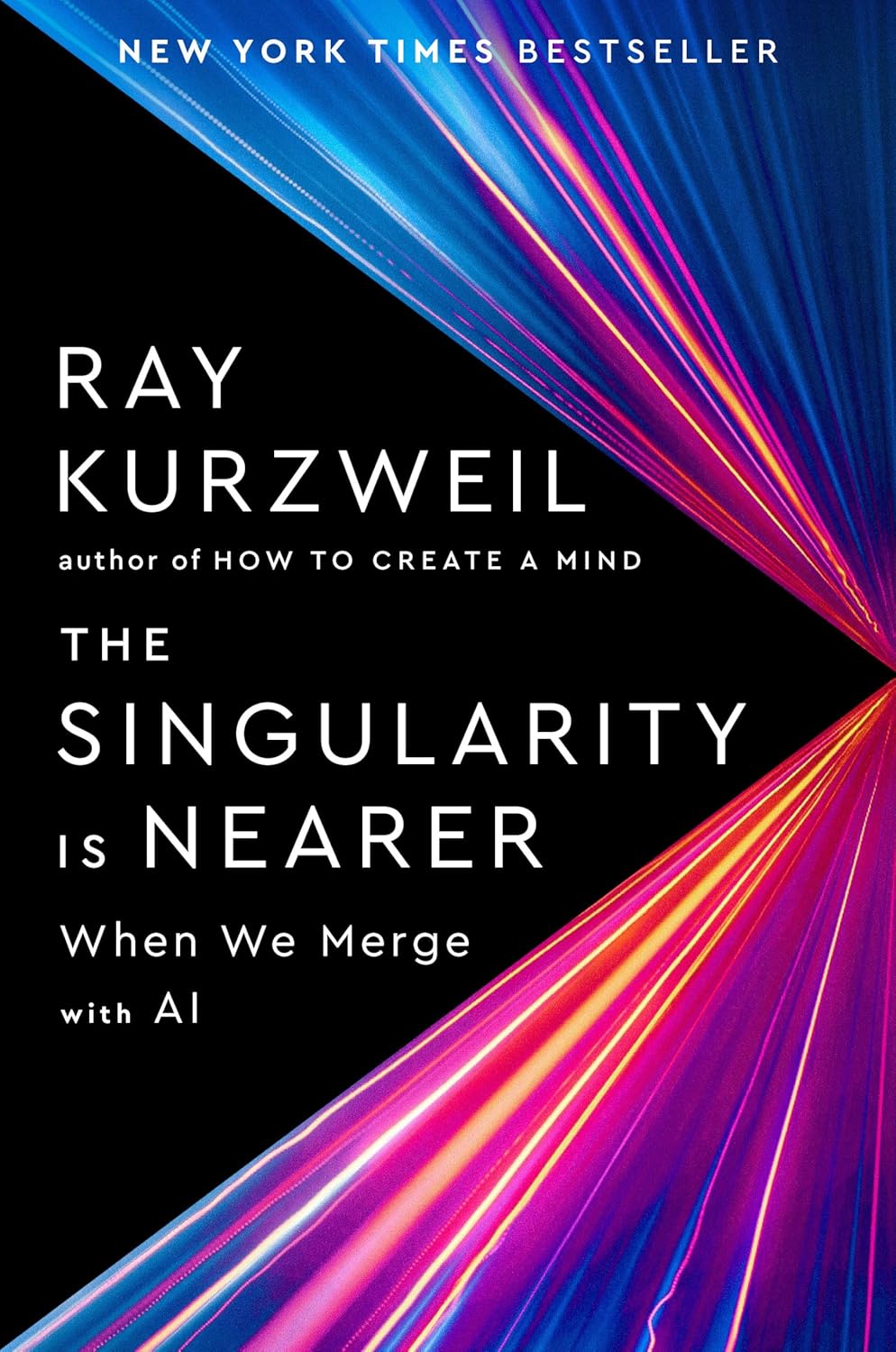
Twenty years after "The Singularity Is Near", Kurzweil revisits his predictions and keeps the date: human-AI merger around 2045.

AI as the latest chapter in the history of information networks, from gossip to the printing press to the algorithm.
As an Amazon Associate, Zendoric earns from qualifying purchases; the price does not change for you. · all our recommended books →
🔗 Related on Zendoric
- Rock Hill puts its house in order before the school year: why revising AI policy is now a matter of school governance · 2026-06-24
- New York halts school software purchases: AI in the classroom needs governance before a catalog · 2026-07-09
- Florida could require its school districts to set their own rules on AI in the classroom · 2026-07-22