Pew: Americans accept AI in healthcare, but only with a human in charge; just 6% want it working alone on scans
🕒 Published on Zendoric: October 31, 2026 · 09:09
✨ AI-generated · how it's made
A Pew survey shows the public accepts AI for administrative and support tasks but rejects giving it clinical autonomy: only 6% would let it read scans on its own. Trust, more than technology, will set the pace.
📚 Go deeper

How opaque algorithms decide who gets credit, a job or parole — and why they tend to punish the same people.
As an Amazon Associate, Zendoric earns from qualifying purchases; the price does not change for you. · all our recommended books →
By CBS Austin / KEYE (The National News Desk) · October 30, 2026.
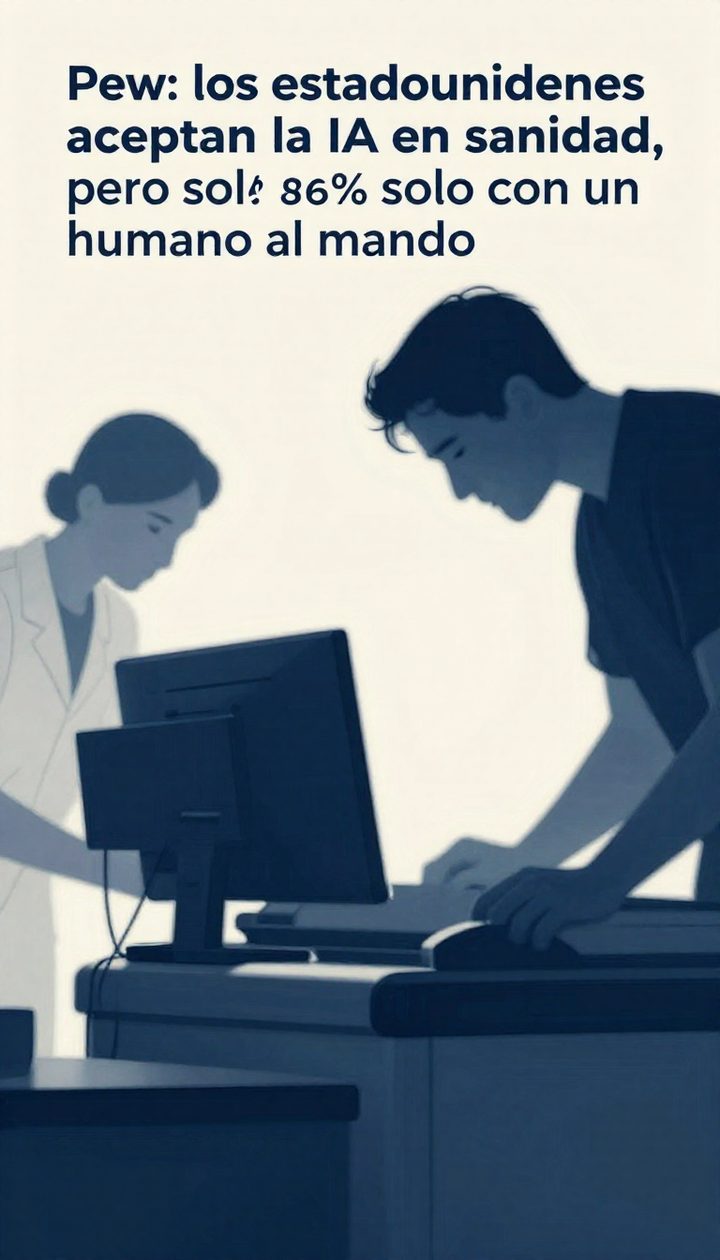
A new Pew Research Center survey shows that Americans are open to AI in some areas of medicine but are far from ready to hand over control of their health care. The most striking figure is that only 6% are comfortable with AI analyzing medical scans on its own.
Sixty percent would accept it with human oversight, and about a quarter don't want it doing that task under any circumstances. The same survey found that only minorities accept AI explaining lab results, making a diagnosis or deciding an insurance claim without human involvement.
Support tasks are better received. Most people are fine with AI, either alone or with human review, translating for patients, scheduling appointments, requesting prescription refills or taking notes during a visit. Even so, 60% say they would be uncomfortable with their doctor using AI for diagnosis and treatment.
The public is split on how AI will affect health outcomes: 37% think they will improve and 36% think they will get worse. Young people aged 18 to 29 are the most pessimistic, with 45% expecting outcomes to worsen, up from 29% in that group four years ago. Among those over 65 the opposite is true: 42% expect improvement, up from 34% back then.
More than half believe AI will make their personal information more vulnerable, and 47% fear it will harm the doctor-patient relationship. Doctors are the most trusted: 60% have at least "some" confidence that physicians will use AI in patients' interests. Hospitals, insurers and the government inspire less trust.
As an example of the prevailing approach, Michelle Stansbury of Houston Methodist says her hospital will always keep "a human in the loop." It uses AI to get patient records to doctors sooner, speed up replies in the patient portal, take notes through ambient listening and optimize operating rooms. She adds that more and more patients arrive with a self-diagnosis made using ChatGPT or Claude.
**Our take.** The 6% figure is not a rejection of the technology but a demand for accountability: people want to know who answers when something goes wrong. And that "human in the loop" is, for now, sound policy. With one caveat: overseeing is not the same as deciding. If AI ends up demonstrably outperforming the average radiologist, keeping a person on as a mere signature will cost lives. The prudent path is for autonomy to be earned through clinical evidence, auditing and transparency, not marketing.
The generational shift is the most interesting part. That young people are growing more pessimistic while older people, who use the most health care, are growing more optimistic suggests opinion is shaped by direct experience and by the noise around jobs and privacy. Overall, the gap between what AI already does well and what the public will tolerate will be closed by verifiable results, not campaigns.
In the long run, Zendoric's thesis holds: AI can bring us closer to eradicating diseases and to far earlier and more accessible medicine. But the road runs through earning trust, starting with administrative work, which frees up doctors' time for patients, and moving toward clinical tasks under supervision. Trust surveys don't halt that trajectory; they give it order. In the short term, the real risk is data privacy, where public skepticism is well founded.
📚 Go deeper

The definitive piece of investigative journalism on OpenAI: 260+ interviews, the clash between safety and speed, and the attempted firing of Sam Altma

The best starting book if you're not technical: a Wharton professor explains how to work WITH AI — when to delegate, when to supervise, when to keep i
As an Amazon Associate, Zendoric earns from qualifying purchases; the price does not change for you. · all our recommended books →
🔗 Related on Zendoric
- What AI cannot do in medicine, according to the industry that lives off patient trust · 2026-09-02
- URAC puts a quality seal on healthcare AI: trust is starting to be certified · 2026-07-11
- 69% of the U.S. already wants to expropriate half of AI companies: layoffs have politicized abundance · 2026-07-13