An AI that predicts where glioblastoma will recur before an MRI can see it: promising, but still at a very early stage

🕒 Published on Zendoric: October 26, 2026 · 08:28
✨ AI-generated · how it's made
A team from UCSF and the University of Michigan has trained a model that anticipates in which area of the brain glioblastoma will return after surgery. With only 80 patients, it is a proof of concept, but it points to a paradigm shift: treating the tumor before it becomes visible.
📚 Go deeper

The only novel on the list, by a Nobel laureate: an artificial friend observes humans with a blend of lucidity and innocence no essay achieves.
As an Amazon Associate, Zendoric earns from qualifying purchases; the price does not change for you. · all our recommended books →
By Cancer Health (with information from UCSF) · October 25, 2026.
Researchers at the University of California, San Francisco (UCSF) and the University of Michigan have developed an artificial intelligence model that predicts which areas of the brain are most likely to see a glioblastoma recur after initial surgery. According to the authors, the prediction could come before the tumor is visible on a magnetic resonance imaging (MRI) scan. The work was published on September 25 in Science Advances and is funded by the U.S. National Institutes of Health (NIH).
The context explains why it matters. Glioblastoma is the most common malignant brain tumor in adults and also the deadliest: median survival is around 17 months from diagnosis. Even if the surgeon removes all visible tumor and the patient receives follow-up treatment, the cancer almost always comes back, usually at the edge of the surgical cavity. The reason is that some tumor cells have already migrated into the surrounding healthy tissue, and MRI does not detect them until months later.
How it works, according to the study's description. The team analyzed tissue samples taken during surgery from UCSF Health patients, whose median time to recurrence was 5.5 months. The model was built with about 300 samples from 60 patients and tested separately on about 100 samples from another 20 patients.
The samples were turned into microscopic images and analyzed by Fast Glioma, an AI system developed by both universities. It scores each tissue sample for tumor infiltration, that is, the presence of cancer cells that have migrated into healthy areas.
The most interesting finding is a nuanced one. On its own, the AI score performed roughly on par with conventional pathology at predicting which areas would develop recurrence. The improvement came from combining it with clinical, imaging and molecular data and testing six machine learning models: one of them was significantly better at distinguishing sites that would relapse from those that would not. The authors add that the model performed well at predicting whether the cancer would return within 5 or 10 millimeters of the sampled tissue. The article we are reporting on gives no specific accuracy figures, so it is worth waiting for the full study to gauge that "well".
What could change in practice. Sanjeev Herr, the first author, speaks of "real-time guidance" for the neurosurgeon during resection. Shawn Hervey-Jumper, the senior author, points to concrete options: removing more tissue in the initial surgery when it is safe, or, if the area cannot be operated on, using higher-dose focal radiotherapy or drugs delivered directly into the tumor through a catheter. Todd Hollon, a co-author, sums up the goal: delaying the first recurrence in the hope that this translates into longer survival. That last step is a hypothesis, not a demonstrated result.
Our reading. This story illustrates well the kind of medical AI that works today: not one that "cures cancer", but one that improves a specific decision. Here the AI does not replace the pathologist or the surgeon; it tells them where to look and where to act. It is the same logic we see in other clinical cases that have withstood scrutiny: the value lies in directing human time and the human scalpel to where they matter most.
We also have to be honest about the limits. These are 80 patients from a single center, with validation on only 20. According to what has been published, prospective trials are still missing and, above all, so is the decisive test: showing that treating the predicted area extends patients' lives. Accurately predicting where a tumor will recur does not guarantee that intervening earlier changes the outcome. It is a solid first step, not a treatment.
Even so, the direction matters. For decades, glioblastoma has been synonymous with a grim prognosis. Medicine that combines digital pathology, imaging and molecular data to see the invisible, and act on it, is the kind of incremental progress that, accumulated, underpins Zendoric's core thesis: in the short term, modest and cautious results; in the long term, a credible path toward turning diseases that are almost always fatal today into manageable ones. What to watch is not the headline, but whether upcoming studies demonstrate survival, not just prediction.
📚 Go deeper
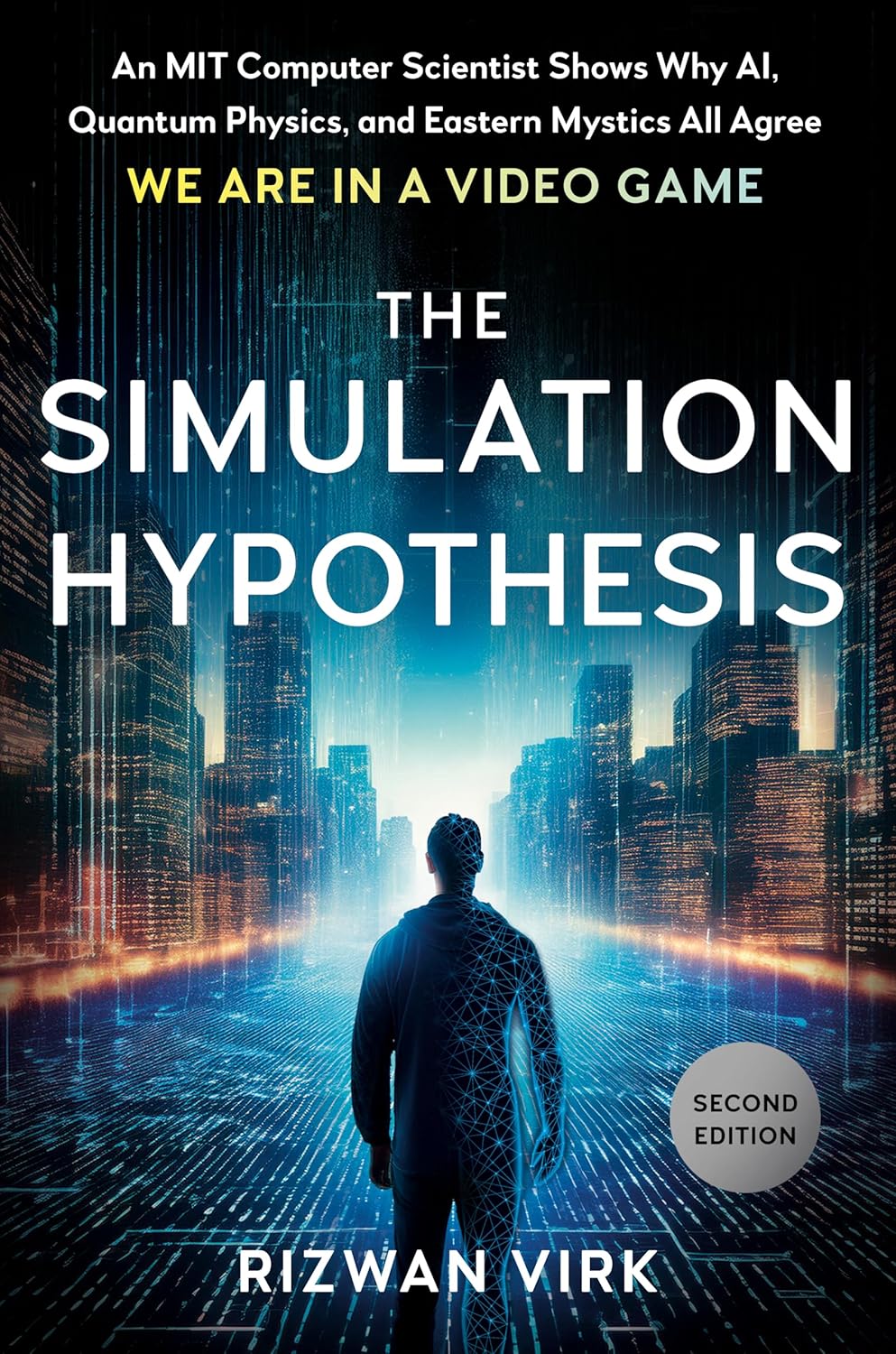
An MIT computer scientist connects AI, quantum physics and video games to take an uncomfortable question seriously: what if we live in a simulation? M

The memoir of the creator of ImageNet, the scientist who made the deep learning revolution in vision possible.
As an Amazon Associate, Zendoric earns from qualifying purchases; the price does not change for you. · all our recommended books →
🔗 Related on Zendoric
- Looking at the whole lung, not just the tumor: AI predicts immunotherapy response with an AUC of 0.79 · 2026-10-19
- AI that reads the invisible in a biopsy: Stanford predicts a tumor's ecosystem without raising diagnostic costs · 2026-07-07
- An AI reads routine breast biopsies and predicts relapse almost as well as genomic tests costing thousands of dollars · 2026-07-10