TecNM Tijuana at an AI and quantum seminar: the academic pipeline sustaining the technology frontier

🕒 Published on Zendoric: October 23, 2026 · 00:20
✨ AI-generated · how it's made
Researchers and students from TecNM Tijuana took part in CITEDI-IPN's seminar on AI and quantum computing. It's modest news, but it shows where the talent AI will need is being trained: at public universities, far from the big labs.
📚 Go deeper

An MIT computer scientist connects AI, quantum physics and video games to take an uncomfortable question seriously: what if we live in a simulation? M
As an Amazon Associate, Zendoric earns from qualifying purchases; the price does not change for you. · all our recommended books →
By Tecnológico Nacional de México – Tijuana · October 22, 2026.
On October 15, 2026, research professors from the Graduate Program in Computing and students from the Instituto Tecnológico de Tijuana (TecNM) took part in the Seminar on Artificial Intelligence & Quantum Computing 2026. The event was organized by the Centro de Investigación y Desarrollo de Tecnología Digital (CITEDI) of the Instituto Politécnico Nacional (IPN).
According to the institution itself, Patricia Melin and Oscar Castillo served as honorary members of the Technical Committee. Castillo also delivered the keynote lecture "Higher Type Fuzzy Systems for Robotics and Control," on higher-type fuzzy systems applied to robotics and control. Fuzzy systems are an approach to AI that handles uncertainty using degrees of truth rather than yes-or-no decisions. Several students presented papers on their work. The seminar was held both in person and online, although the source gives no attendance figures and does not detail the outcomes of the presentations.
This is an institutional press release and should be read as such: it announces no technical breakthrough and provides no measurable data, and we cannot assess the quality of what was presented. What can be verified is that there is an active AI research group and that its students have a forum in which to present their work.
Our take: AI does not advance only in the big labs of San Francisco or Beijing. It also advances thanks to a broad base of universities training people capable of using, adapting and governing it. That base matters especially in countries like Mexico, where the alternative to developing homegrown talent is total dependence on other people's models and decisions. This is where our thesis on democratization fits: if the open frontier rises quickly, the advantage will go to those with people prepared to make the most of it.
The short term will remain difficult for those entering the job market with routine profiles. That is why it matters that students engage with research and not just with using tools: value is shifting toward judgment and understanding of the systems. In the long run, quantum computing and AI are two of the levers that could most accelerate scientific discovery, with an eye to curing diseases and generating abundance. That is a long way from a university seminar, but it is built through gatherings like this one.
📚 Go deeper
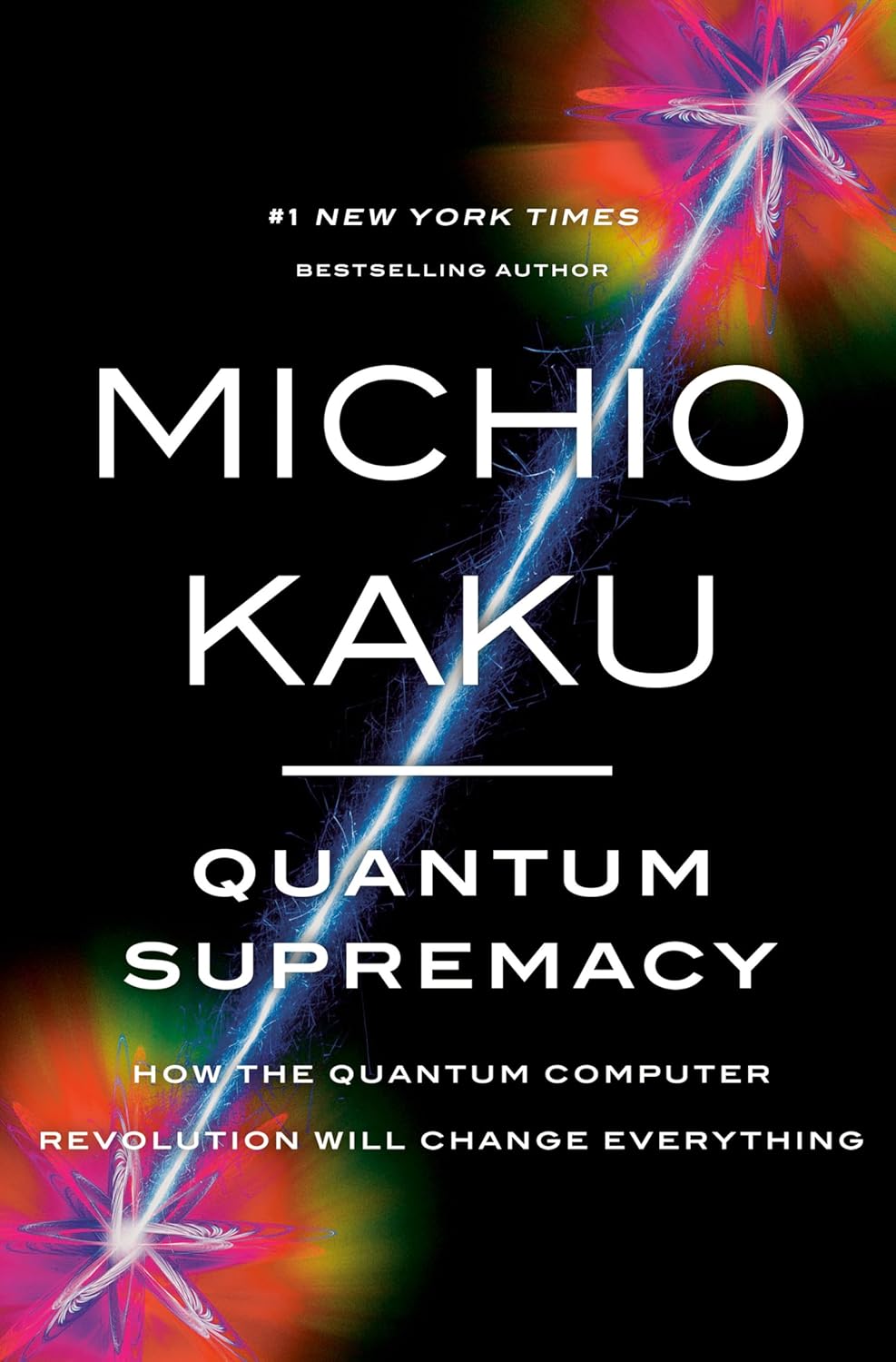
Physics' most-read popularizer explains what quantum computing will change — from drug discovery to machine learning.

The only novel on the list, by a Nobel laureate: an artificial friend observes humans with a blend of lucidity and innocence no essay achieves.
As an Amazon Associate, Zendoric earns from qualifying purchases; the price does not change for you. · all our recommended books →
🔗 Related on Zendoric
- A student prototype in Bengaluru points to AI's next frontier: everyday nutrition · 2026-07-04
- ANU, accused of being 'hysterical' over its anti-AI rules: Australian universities revive the oral exam · 2026-07-19
- Colombia trains 404 university students in multi-agent AI to monitor low orbit and space · 2026-09-30