ANU, accused of being 'hysterical' over its anti-AI rules: Australian universities revive the oral exam

🕒 Published on Zendoric: July 19, 2026 · 00:04
✨ AI-generated · how it's made
The Australian National University (ANU) is preparing to classify each exam as 'safe' or 'unsafe' against AI, and an internal academic calls the plan a 'hysterical' response. With 78.9% of students already using generative AI, the Australian university system is turning en masse toward the oral exam: the fastest solution to implement, not necessarily the fairest.
📚 Go deeper
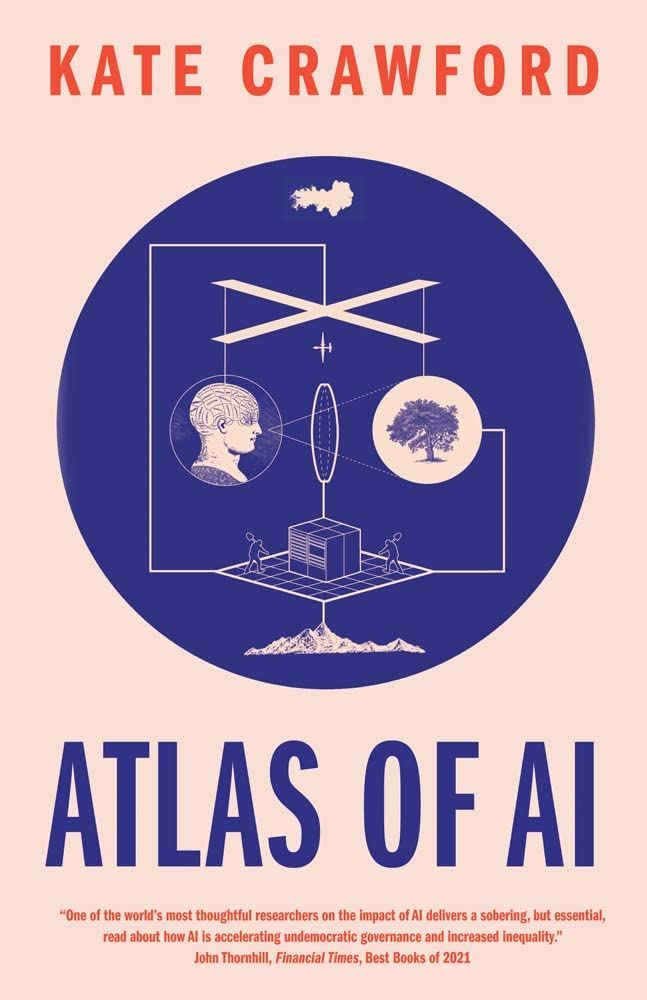
AI as an extractive industry: the lithium, the energy, the underpaid data-labeling work and the bodies behind the cloud.
As an Amazon Associate, Zendoric earns from qualifying purchases; the price does not change for you. · all our recommended books →
By Zendoric · July 19, 2026.
The Australian National University (ANU), one of the country's most prestigious, has sent its faculty a consultation document with three formulas to shield exams from artificial intelligence (AI): classify each assessment as "secure" (with no risk of AI use) or "insecure," or require the student to declare in which phases of the work they resorted to AI. As reported by The Guardian, an academic at ANU itself described the process as "reactionary" and even "hysterical," and warned that it could roll back the progress made on accessibility for students with disabilities or caregiving responsibilities. Another academic, more sympathetic to the goal, likewise acknowledged that the rollout has been "panicked": the second semester begins in less than two weeks and faculties are receiving instructions for more oversight with very little training and hardly any added resources.
It is not an isolated case. The University of Queensland has classified its assessments as "secure" and "open" since this year, and has drawn criticism for scheduling in-person oral exams at night and on weekends. Its deputy vice-chancellor of education, Kris Ryan, explained to The Guardian that a "secure" assessment can include AI use as long as the student demonstrates "critical appreciation" of how the tool arrived at its answer. The University of Melbourne is following the same path with more interactive oral exams, and Barney Glover, the new head of the Australian Tertiary Education Commission (the body that oversees the country's university reforms), confirms that the reintroduction of the oral exam is already a widespread trend in the sector.
The figure that explains the urgency: according to the 2025 Australian Digital Inclusion Index, 78.9% of secondary school and university students already use generative AI. ANU law professor Will Bateman, who researches AI regulation, frames the problem in almost geopolitical terms: if Australia does not restore educational rigor, it runs the risk of "sending our national intellectual capacity" to companies in California and China, in reference to the labs that develop the models students use to do their assignments.
Our reading is that this episode portrays, in miniature, the underlying problem of any institution that certifies knowledge: for decades, the bottleneck was producing a reasoned text; now that text is free and almost instantaneous, so the bottleneck shifts elsewhere —to defending out loud, in real time, that one understands what one has written—. The oral exam is not a nostalgic whim: it is the logical response when the final product ceases to be proof of anything. We already saw it with the business school EDHEC reintroducing pencil and paper as "deliberate friction": the goal is not to ban AI, but to keep sight of who is doing the thinking.
That said, the short-term cost is real and ANU's internal critique is right to point it out: designing mass oral exams, at decent hours and accessible to students with disabilities or caregiving burdens, requires time, money and teacher training that no consultation paper improvised in two weeks can replace. When a university goes from zero to "secure exam" in one semester, the risk of excluding those who already had it harder is high, and it costs nothing to avoid it if it is planned in advance instead of reacting out of panic.
In the medium term, we expect this transition to consolidate as permanent infrastructure rather than a patch: verified student identity, oral or in-person assessment combined with declared AI use, and less weight on the final document submitted alone in front of the computer. It is consistent with what we already argued when analyzing the impact of AI on employment in the education sector: the teacher —and the system— that learns to orchestrate AI as a tool for verifiable learning wins, and the one who only bans it or ignores it loses. If universities manage to make that transition without sacrificing inclusion, they will have solved something more valuable than a cheating problem: how to keep teaching people to think in a world where writing is no longer proof that someone did it.
📚 Go deeper
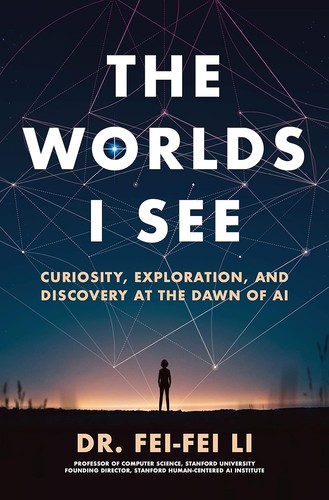
The memoir of the creator of ImageNet, the scientist who made the deep learning revolution in vision possible.

The only novel on the list, by a Nobel laureate: an artificial friend observes humans with a blend of lucidity and innocence no essay achieves.
As an Amazon Associate, Zendoric earns from qualifying purchases; the price does not change for you. · all our recommended books →
🔗 Related on Zendoric
- AI-generated CSAM at an Illinois school: the hardest abuse to detect no longer needs a hidden camera · 2026-07-04
- AI abuse case shows the harm arriving now, not in some distant future · 2026-07-10
- AI cheating reaches the Ivy League: the problem isn't the chatbot, it's what we measure as learning · 2026-07-10