Measuring a tumor's 'aging' to predict who will respond to immunotherapy: AI targets a key problem

🕒 Published on Zendoric: October 22, 2026 · 00:19
✨ AI-generated · how it's made
A study reported by Medical Xpress uses AI to identify tumor-aging patterns that could predict response to immunotherapy across several cancer types. It is a promising lead, though clinical validation is still needed.
📚 Go deeper

The only novel on the list, by a Nobel laureate: an artificial friend observes humans with a blend of lucidity and innocence no essay achieves.
As an Amazon Associate, Zendoric earns from qualifying purchases; the price does not change for you. · all our recommended books →
By Medical Xpress · October 21, 2026.
According to the Medical Xpress headline, a research team has used artificial intelligence to identify “aging” patterns in tumors. Those patterns could be used to predict response to immunotherapy across several types of cancer. We only have the headline and the feed description. We have not been able to check the full text, so we cannot give details on figures, cohort sizes or the specific cancer types. We prefer not to make them up.
Immunotherapy is a treatment that activates the patient's own immune system to attack the cancer. When it works, it can produce lasting remissions. The problem is that only some patients respond, and today there is no reliable way to know in advance who will benefit. A good predictor would avoid ineffective treatments, with their toxicities and cost, and shorten the path to the right therapy.
Our take: the underlying idea is interesting. If the biological state of tumor tissue, and not just its genetics, shapes the immune response, AI is very good at finding subtle signals in high-dimensional data that a human analyst cannot see. This fits a broader trend: AI does not cure on its own, but it sharpens diagnosis and treatment selection, which is where a great deal of time and money is lost.
Caution is still warranted. In general, predictive models in oncology shine on the data they are trained on and tend to lose performance when validated at other hospitals and in other populations. The claim that the pattern works “across multiple cancer types” will need to be backed by independent validation and, ideally, by prospective trials. A published correlation is not the same as a clinical tool.
We find the outlook hopeful. Every advance of this kind brings closer a future in which cancer medicine is personalized and far more effective, and in which cancer is no longer a death sentence. In the short term, the honest message is one of patience: going from a study to an approved, accessible test takes years.
📚 Go deeper

An MIT computer scientist connects AI, quantum physics and video games to take an uncomfortable question seriously: what if we live in a simulation? M
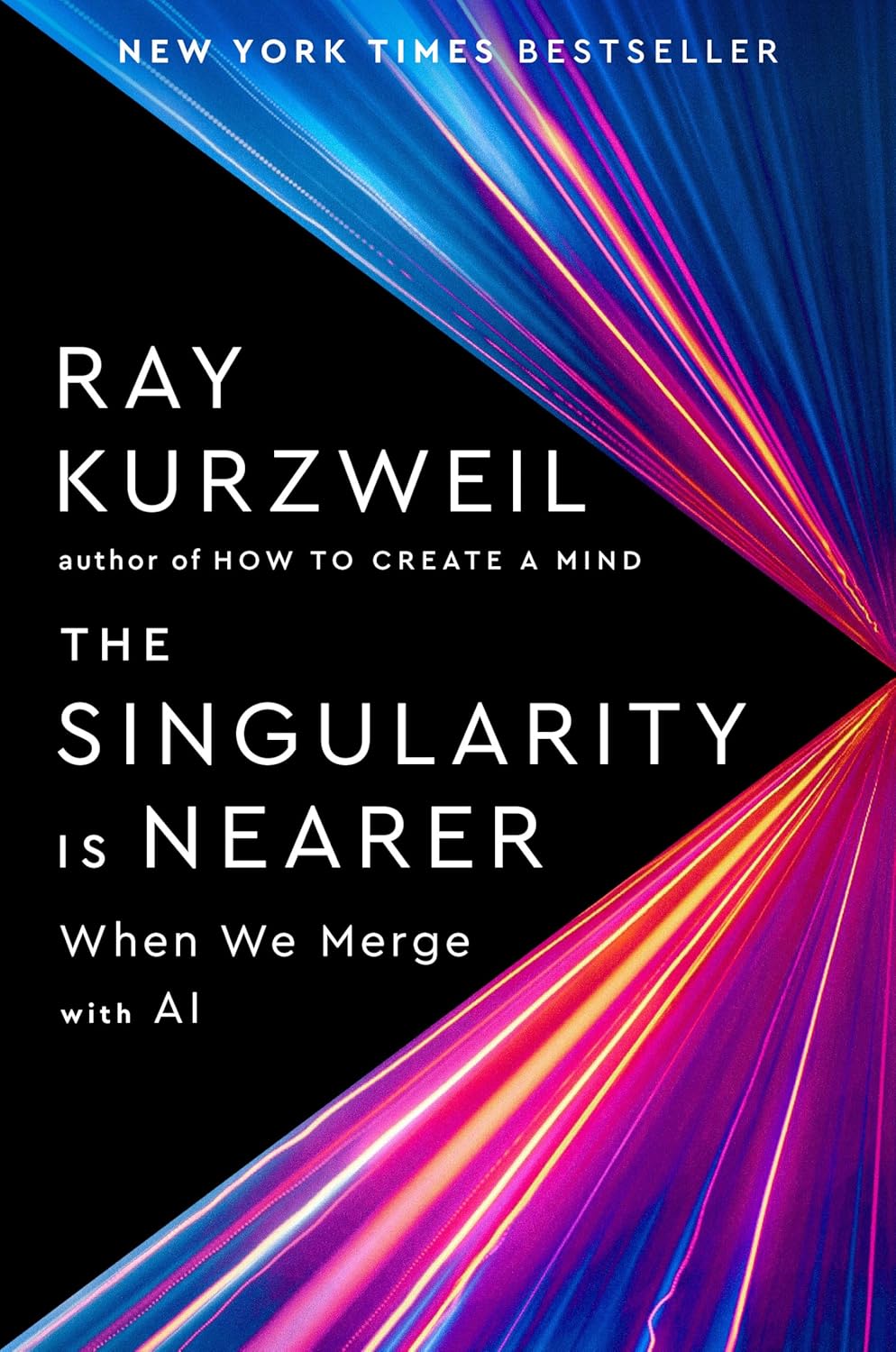
Twenty years after "The Singularity Is Near", Kurzweil revisits his predictions and keeps the date: human-AI merger around 2045.
As an Amazon Associate, Zendoric earns from qualifying purchases; the price does not change for you. · all our recommended books →
🔗 Related on Zendoric
- Looking at the whole lung, not just the tumor: AI predicts immunotherapy response with an AUC of 0.79 · 2026-10-19
- ISSSTE adds AI to mammography: detecting millimeter-scale lesions before breast cancer advances · 2026-07-20
- When medical AI learns from the wrong organ: ovarian cancer study trained on thyroid images retracted · 2026-10-08