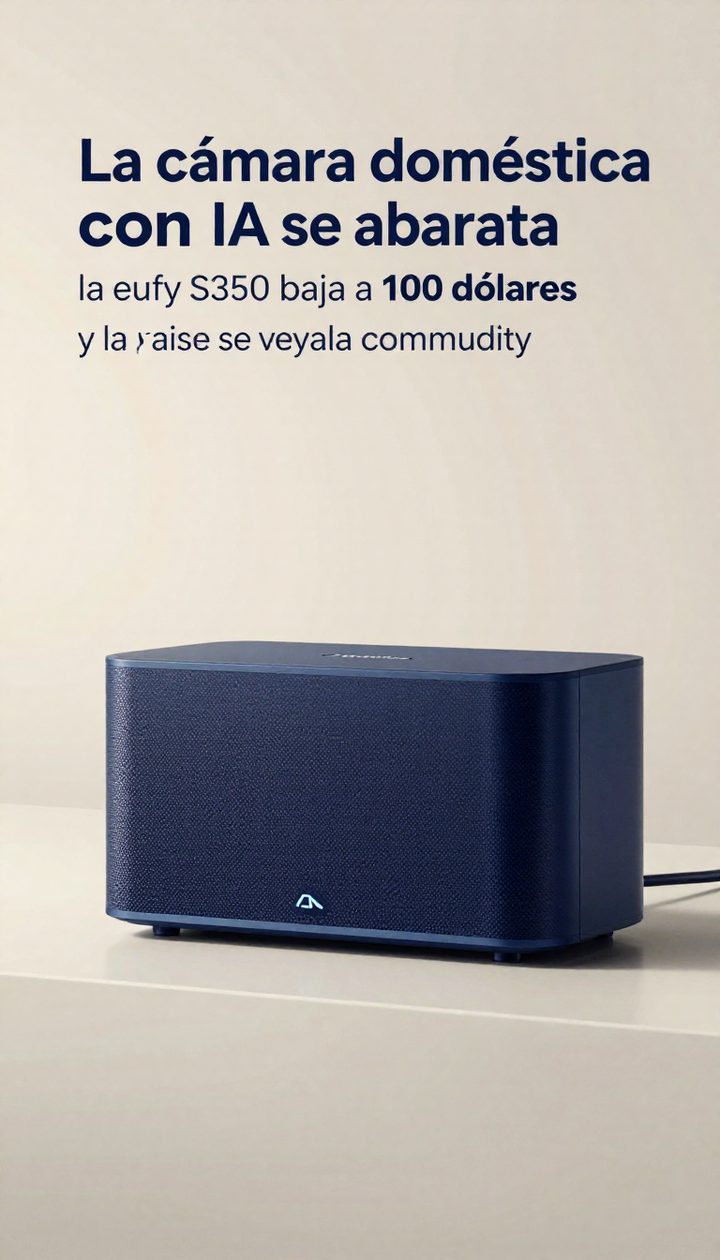
AI home cameras get cheaper: the eufy S350 drops to $100 and home surveillance becomes a commodity
🕒 Published on Zendoric: October 21, 2026 · 00:18
✨ AI-generated · how it's made
Anker's eufy S350, with dual cameras and AI tracking, falls to $99.99 on Amazon (regular price: $140). What matters is not the deal but how smart home surveillance is becoming normal, and the data governance it requires.
📚 Go deeper

The definitive piece of investigative journalism on OpenAI: 260+ interviews, the clash between safety and speed, and the attempted firing of Sam Altma
As an Amazon Associate, Zendoric earns from qualifying purchases; the price does not change for you. · all our recommended books →
By 9to5Toys · October 20, 2026.
Anker's eufy S350 4K indoor camera is selling for $99.99 shipped at the official eufyHome store on Amazon. Its list price is $140, so the discount is $40, and it is $40 cheaper than on the brand's own website, according to 9to5Toys.
It is not an all-time low. During Prime Day two weeks ago it dropped to $95, and throughout 2026 the outlet has mostly seen it between $120 and $100, with the occasional dip below that.
The device combines two cameras in one: a 4K wide-angle lens and a 2K telephoto lens. According to the outlet, that enables 8x zoom and 360-degree horizontal and vertical rotation. Infrared LEDs deliver a sharp image, day and night, up to about 32 feet (around 10 meters). Thanks to AI tracking, the outlet also pitches it as a way to keep an eye on children. It can be controlled from the app and by voice with Alexa or Google Assistant.
The deal coincides with other Anker discounts in the same catalog, such as a network video recording (NVR) system with cross-tracking cameras and a smart lock, and with the launch of a doorbell the brand calls “the world's first VR doorbell.” That last claim comes from the company itself and we have not verified it.
Our take: what is newsworthy here is not the discount, but the bar. A few years ago, automatically tracking a person with zoom and night vision was the domain of professional systems. Today it is a $100 consumer product. It is the usual pattern in technology: what was expensive becomes ubiquitous thanks to on-device AI and cheap hardware.
In general, that democratization cuts both ways. In the short term, it brings a real problem: millions of cameras with vision and tracking inside homes multiply the attack surface for privacy and cybersecurity (compromised accounts, unauthorized access, data in the cloud). The deal listing does not say where the video is processed or how it is stored, and that is the question any buyer should ask before looking at the price.
No doom-mongering: looking after children or older people, or protecting a home, are legitimate and valuable uses. In the long term, that same cheap visual perception is the foundation for assisted care, fall detection and in-home health monitoring, building blocks of a more preventive healthcare system. Getting there requires local processing, encryption and user control to be the norm rather than an extra.
The winner from this price drop is the consumer, and also Anker, which builds loyalty within its ecosystem. The one who should wake up is the regulator, because the entry price of surveillance is no longer a barrier.
📚 Go deeper

DeepMind co-founder on the dilemma of containing technologies that do not want to be contained.

How opaque algorithms decide who gets credit, a job or parole — and why they tend to punish the same people.
As an Amazon Associate, Zendoric earns from qualifying purchases; the price does not change for you. · all our recommended books →
🔗 Related on Zendoric
- NVIDIA lets an agent deploy 3D camera networks with a prompt: DeepStream 9.1 ends manual calibration · 2026-07-19
- AI Traffic Cameras That Watch More Than Traffic: When Convenience Quietly Becomes Surveillance · 2026-06-28
- AI Traffic Cameras Are Quietly Becoming Surveillance Networks—And Nobody Voted For It · 2026-06-29