NVIDIA lets an agent deploy 3D camera networks with a prompt: DeepStream 9.1 ends manual calibration

🕒 Published on Zendoric: July 19, 2026 · 00:04
✨ AI-generated · how it's made
NVIDIA has released DeepStream 9.1, with 13 'skills' that let agents like Claude Code or Cursor build multi-camera video surveillance pipelines just by describing them in natural language. The underlying novelty: tracking a person across several cameras with a single ID no longer requires calibrating each camera by hand.
📚 Go deeper
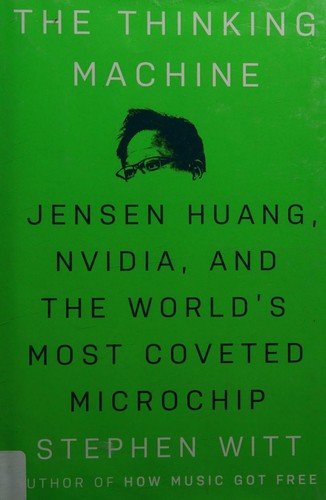
The story of NVIDIA and Jensen Huang: how a video-game card company ended up making the most coveted resource on the planet.
As an Amazon Associate, Zendoric earns from qualifying purchases; the price does not change for you. · all our recommended books →
By Zendoric · July 19, 2026.
NVIDIA has released version 9.1 of DeepStream, its real-time video analytics platform running on GPU (the engine that decodes, analyzes and tracks objects across multiple cameras using the GStreamer streaming framework and the TensorRT inference accelerator). The update, as MarkTechPost describes, adds 13 'agentic skills'—packages of instructions that a coding agent such as Claude Code, Codex or Cursor can execute—compared with the 2 that came with version 9.0. With them, it is enough to write a sentence like "deploy MV3DT on the 12-camera dataset" for the agent to validate requirements, download the container, install the necessary messaging services and bring up the complete pipeline.
The central technical piece is called Multi-View 3D Tracking (MV3DT): it projects detections from several calibrated cameras onto a shared 3D coordinate system and assigns a single global identifier to the same object, even as it moves from one camera to another. Until now, setting something like this up required manually calibrating each camera with checkerboard patterns and position calculations. The second new feature, AutoMagicCalib, solves precisely that bottleneck: it estimates each camera's parameters—position, orientation, lens distortion—by analyzing the movement of already-recorded objects, without checkerboards or downtime. The package is rounded out with support for the Jetson Orin and Thor edge chips (JetPack 7.2) and with the unification of the code into a single GitHub repository under open licenses (CC-BY-4.0 and Apache-2.0).
The use case that illustrates the leap is easy to imagine: tracking a worker across warehouse aisles near forklifts, measuring how long a customer stays across areas of a store, or counting occupancy across floors of a building and feeding it into a dashboard. Before, setting up that system required a specialized integrator to calibrate camera by camera and adjust configurations by hand; now that technical profile's work is compressed into a conversation with an agent.
That is what really matters here, beyond the feature list: NVIDIA is not only improving its computer vision product, it is extending its agentic ecosystem—already present in software development—toward the integration of physical systems. It is the same logic we have been pointing out in other pieces: the competitive advantage no longer lies solely in having the best model, but in controlling the 'plumbing' that connects that model with the real world. By publishing these skills so they work with third-party agents (Claude Code, Codex, Cursor) instead of locking them into its own interface, NVIDIA ensures that any advance in coding agents ends up indirectly reinforcing demand for its GPUs and its Jetson chips.
We must also be honest about the uncomfortable side of this advance. A system that until recently required a computer vision specialist and several days of calibration is now deployed with a single sentence: that reduces integration and specialized technical support positions, the kind of administrative-technical work we already identified as the most exposed to AI automation. And there is a second uncomfortable side, distinct from employment: drastically cheapening the tracking of people with a unique identity across cameras—by design, not as a side effect—makes it easier for any organization, not just those that today invest in sophisticated video surveillance, to deploy people-tracking systems at scale. This raises legitimate questions about privacy and misuse that the industry, for now, is not resolving with the same speed with which it deploys the technology.
Our reading, all in all, fits the underlying thesis we hold about agentic AI: automating highly specialized integration tasks does not eliminate human value, it shifts it toward design, oversight and judgment about what to build and why. In the short term, there will be less demand for those who knew how to calibrate a camera by hand; in the medium term, the abundance of tools that lower these barriers—here, specifically, applied to industrial security, retail or building management—is exactly the kind of progress that, well governed, frees up resources and human time for higher-value tasks. The key, as almost always with these launches, lies not in the demo but in who decides how and where it is deployed.
📚 Go deeper

AI as the latest chapter in the history of information networks, from gossip to the printing press to the algorithm.
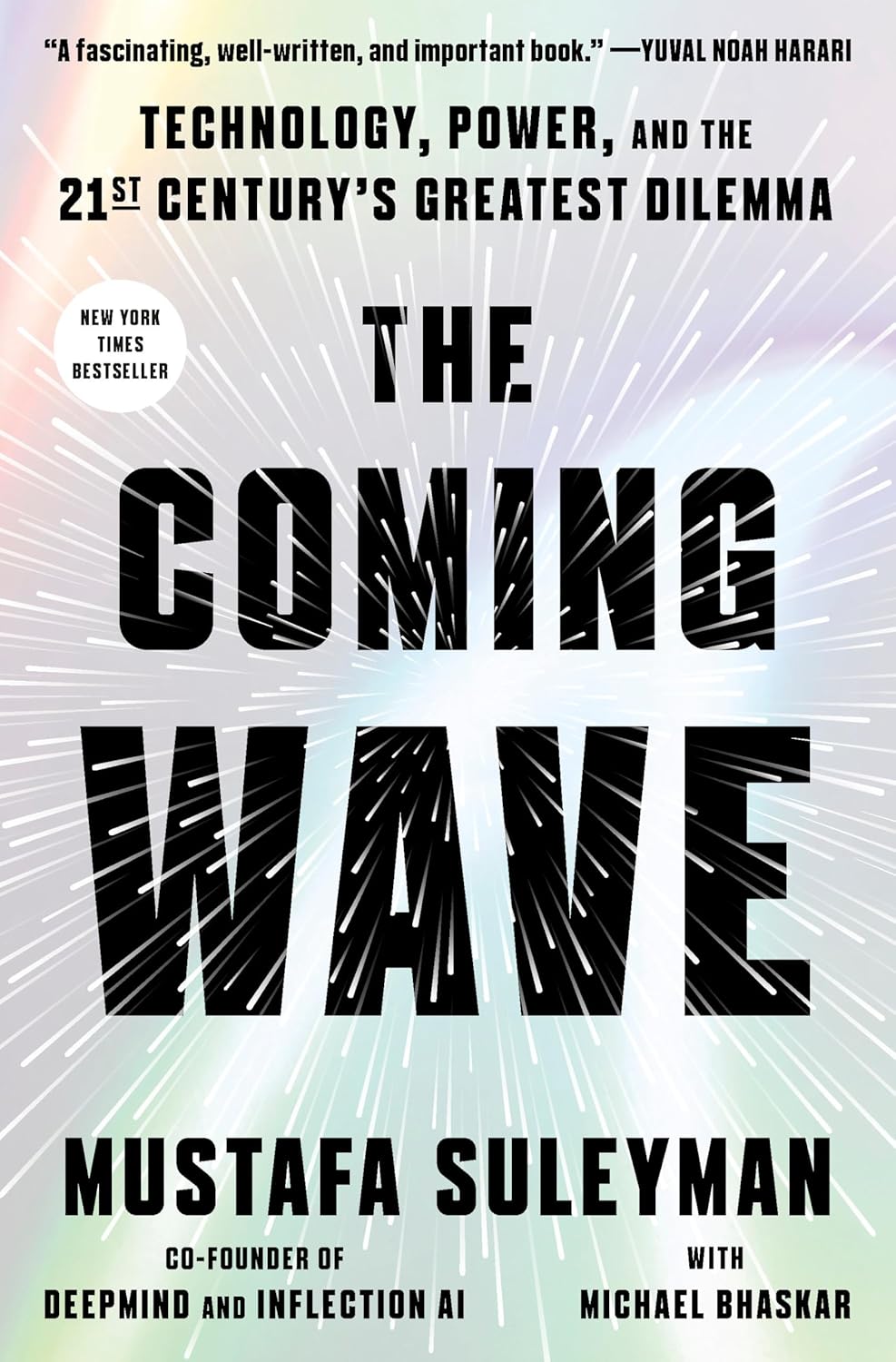
DeepMind co-founder on the dilemma of containing technologies that do not want to be contained.
As an Amazon Associate, Zendoric earns from qualifying purchases; the price does not change for you. · all our recommended books →
🔗 Related on Zendoric
- The figure that matters from Expo B2B Tech Asia isn't agentic AI: it's that you no longer need to code to deploy it · 2026-07-13
- NVIDIA TAO boosts Cosmos 3 Nano video Q&A accuracy from 54.41% to 93.35% · 2026-07-29
- 700 million cameras and an unresolved dilemma: how AI turns Chinese surveillance into an uncomfortable mirror for the rest of the world · 2026-06-28