The figure that matters from Expo B2B Tech Asia isn't agentic AI: it's that you no longer need to code to deploy it

🕒 Published on Zendoric: July 13, 2026 · 00:21
✨ AI-generated · how it's made
In Jakarta, agentic AI took center stage at a B2B expo focused on automating business processes without constant human intervention. But the most revealing gesture wasn't conceptual: it was watching someone with no technical knowledge create an agent by describing it in natural language, without writing a single line of code.
📚 Go deeper

The best starting book if you're not technical: a Wharton professor explains how to work WITH AI — when to delegate, when to supervise, when to keep i
As an Amazon Associate, Zendoric earns from qualifying purchases; the price does not change for you. · all our recommended books →
By MarketScale · July 12, 2026.
The B2B Tech Asia Expo 2026, held in Jakarta, placed agentic AI at the heart of its program: systems capable of executing multi-step processes, making operational decisions and acting autonomously within defined parameters, without depending on a human instruction at every stage. The speakers, according to coverage compiled by Enterprise IT News and reproduced by MarketScale, pointed to repetitive back-office work, customer support escalation and sales funnel tasks as the first candidates for automation. Also highlighted was the alignment between sales, marketing and customer experience as an area where these agents are already being deployed.
The most concrete figure to come out of the event concerned costs: deploying AI in customer experience used to require between 50,000 and 300,000 dollars, three to six months of implementation and a specialized team. A live demonstration showed a person with no developer profile building and deploying an agent by describing its behavior in natural language, through an 'AI studio'-type platform, without writing code or requiring specialists.
This should be read with the right filter. It is not a study or a benchmark: it is coverage of a trade fair, with figures that come from a stage demo and the words of the speakers themselves, not from an independent audit. The article itself is branded content produced by a B2B content marketing platform, which does not invalidate the facts it reports but does require treating them as industry testimony, not verified data. That said, the pattern it describes—a sharp drop in the cost and deployment time of agents via the no-code route—is consistent with what we have been observing in other pieces: enterprise automation is being democratized faster through the deployment interface than through any leap in the capability of the underlying model.
Our reading is that the real headline is not 'agentic AI arrives in Asia-Pacific,' but that the barrier to entry for automating administrative and customer service processes is collapsing, and that has a direct correlate with something we have already noted in our analysis of AI and employment by sector: back-office and repetitive administrative tasks are precisely the most exposed terrain, and here they are explicitly named as the first automation targets. When a business fair focused on closing commercial deals devotes its program to agentic AI, it is a sign that the conversation with vendors has already moved past the proof-of-concept stage and entered active deployment, at least in the sales pitch.
In the short term, this means additional pressure on support roles, first-level customer service and administrative coordination in the region, with Asia-Pacific acting as a leading indicator: the pricing models and tools closed there today tend to appear in Western markets six to twelve months later. In the long term, however, this same cost reduction—from three-to-six months and specialized teams to a demo done by someone with no technical profile—is exactly the kind of democratization that supports the underlying thesis: the more people and small organizations that can deploy automation without million-dollar budgets or dependence on scarce specialists, the closer we are to a broader distribution of the productivity that AI generates, not just concentrated among those who could already afford expensive integration. The challenge, as always, is that the intermediate transition—that of administrative jobs dissolving before the new roles of judgment and oversight appear—is not managed by looking the other way.
📚 Go deeper

The reference manual for building products on top of AI models: prompts, RAG, fine-tuning, agents, evaluation and deployment.
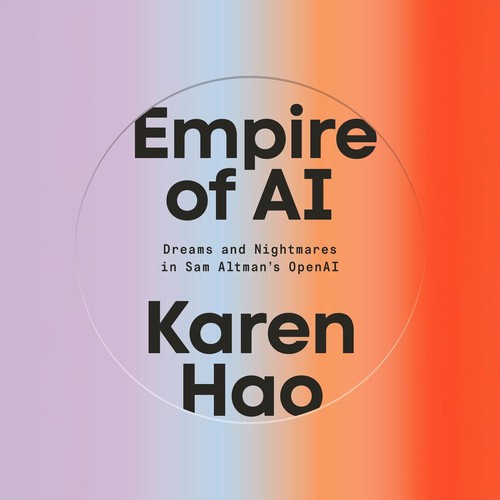
The definitive piece of investigative journalism on OpenAI: 260+ interviews, the clash between safety and speed, and the attempted firing of Sam Altma
As an Amazon Associate, Zendoric earns from qualifying purchases; the price does not change for you. · all our recommended books →
🔗 Related on Zendoric
- NVIDIA lets an agent deploy 3D camera networks with a prompt: DeepStream 9.1 ends manual calibration · 2026-07-19
- Cover Genius raises $100M (valued at $1.9B) to embed insurance inside AI-agent-driven commerce · 2026-07-25
- Gunslinger: when agentic AI comes down from the lab to the cockpit of a turboprop · 2026-06-27