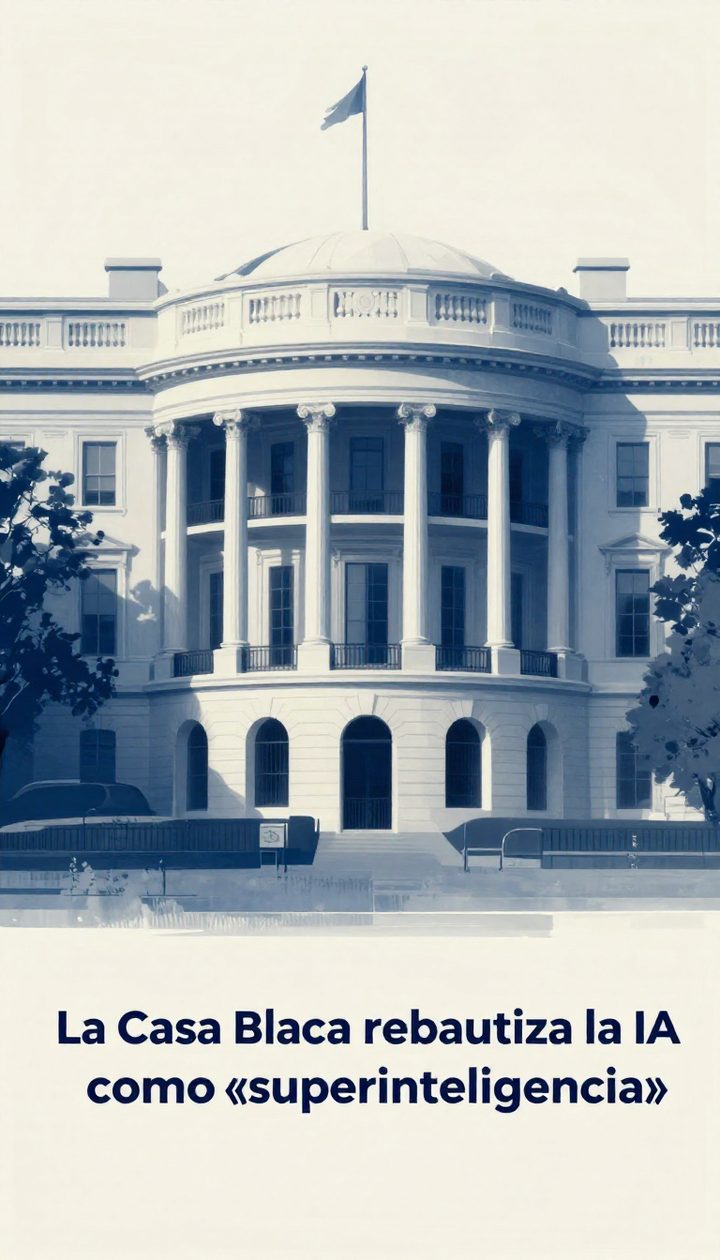
The White House rebrands AI as "superintelligence" and takes it into classrooms: more political branding than technical concept
🕒 Published on Zendoric: October 19, 2026 · 00:19
✨ AI-generated · how it's made
Melania Trump launches the Presidential Super Intelligence Challenge 2027 for U.S. schoolchildren. The educational initiative is useful, but the term "superintelligence" here describes today's AI, not the hypothetical one the industry debates.
📚 Go deeper

AI as the latest chapter in the history of information networks, from gossip to the printing press to the algorithm.
As an Amazon Associate, Zendoric earns from qualifying purchases; the price does not change for you. · all our recommended books →
By The Well News · October 14, 2026.
U.S. First Lady Melania Trump on Wednesday launched the Presidential Super Intelligence Challenge 2027, a national competition inviting K-12 students, teachers and schools to use artificial intelligence to solve real problems in their communities. She unveiled it in a short YouTube video.
The new element is the "First Lady Seal of SI Readiness," a seal for schools that complete and document what the White House calls "a rigorous set of milestones" showing they are preparing students and teachers to understand, use and engage responsibly with the technology. Registration is open until December 18, 2026, according to SI.gov.
The competition has three tracks: student projects (studying, developing or using an "SI" tool to tackle a community challenge), creative approaches from teachers and, new this year, participation by entire schools. This is the second edition: the first, launched in August 2025 as the Presidential AI Challenge, drew more than 20,000 students from all 50 states and from American schools abroad, according to the White House. The program stems from an April 2025 executive order on AI education, which also created a task force on the subject that the First Lady has championed.
The launch coincided with the debut of SI.gov, a website bringing together the administration's AI initiatives: the Genesis Mission (a November 2025 order that, according to the site, unites 15 federal agencies with industry, universities and the Department of Energy's national laboratories), the July 2025 orders on data center permitting and exporting American AI technology, and a "Pledge to America's Youth" under which companies and organizations commit resources to AI education. The site frames it all as a race: the country with the largest ecosystem "will set global standards" and reap the economic and security benefits.
There is a terminological detail that is far from minor. As the source itself notes, the government uses "super intelligence" (at President Trump's direction) to refer to today's AI tools. In the industry, by contrast, the term is reserved for hypothetical systems that would surpass human intelligence.
**Our take.** Thesis: training the next generation in AI is the right call; calling what already exists "superintelligence" is a branding decision that confuses more than it clarifies.
The valuable part first. Teaching children and teachers to use, question and apply AI to problems in their communities is probably the longest-term investment in the whole package. If the horizon we advocate—medicine that eradicates diseases, abundance that frees people to work on what they are passionate about—arrives, those who will manage it are sitting at school desks today. And the short-term transition, with displaced jobs and disruptions, will be less harsh for those who arrive with judgment rather than just passive consumption of tools.
The problem is the vocabulary. In technical debate, "superintelligence" is precisely the concept around which control and governance risks are discussed. Applying it to current assistants and models blurs the line between demonstrated capability and aspiration—exactly the distinction the public most needs. When an official website talks about a "race for superintelligence" and who "will set the standards," the implicit message is competitive, not pedagogical: the classroom as a piece of a geopolitical strategy.
Nor should we over-interpret. The available data concern participation (20,000 students) and the launch, not learning outcomes; we don't yet know what those "rigorous milestones" for the seal actually require. A seal without public, auditable criteria risks being decorative. In general, the AI literacy programs that endure are those that teach people to verify, to spot model errors and to understand their limits, not just to produce flashy projects.
The winners are students who gain access to resources and well-trained teachers; the risk, as always in education, is that the seal and the competition mainly benefit schools with the means to submit evidence. What to watch in a few months: what the seal entails, which companies honor their "Pledge" commitments and whether the program measures real learning. That will be the difference between an education policy and a campaign.
📚 Go deeper

DeepMind co-founder on the dilemma of containing technologies that do not want to be contained.
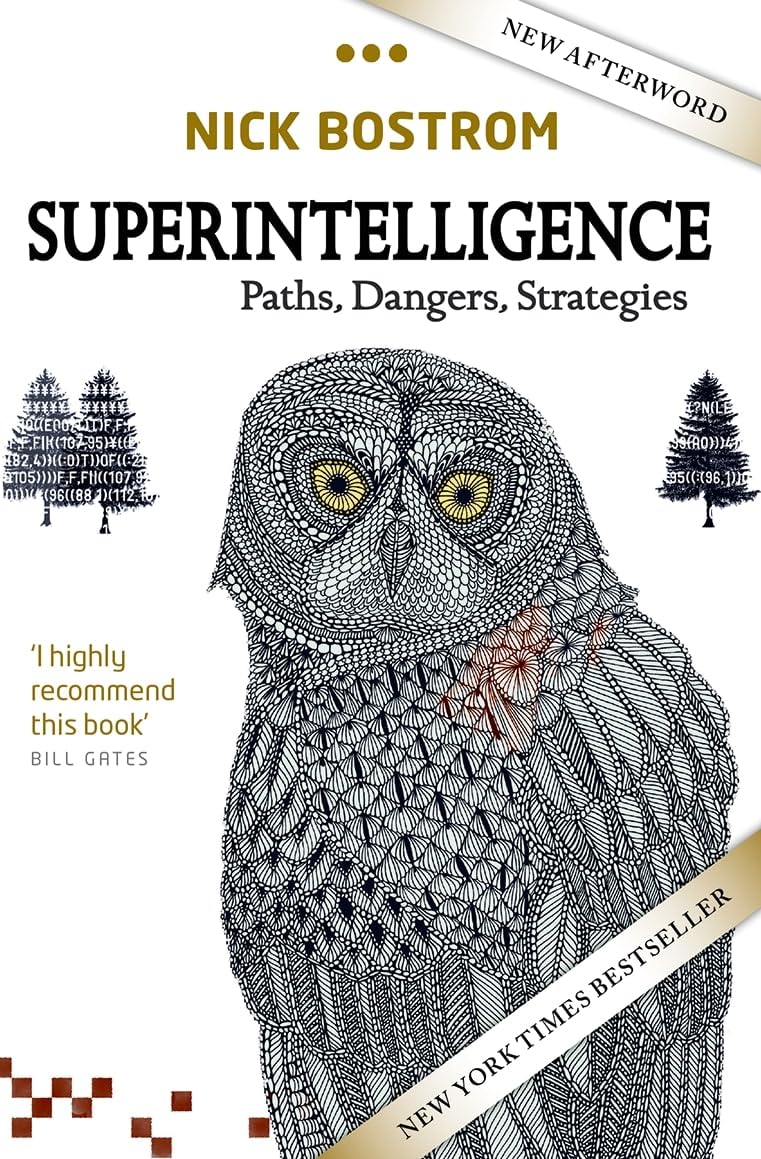
The book that started the existential-risk debate and that half the industry still cites.
As an Amazon Associate, Zendoric earns from qualifying purchases; the price does not change for you. · all our recommended books →
🔗 Related on Zendoric
- Renaming AI "superintelligence" is branding, not governance — and the timing makes it worse · 2026-09-30
- Trump puts his intelligence chief in charge of AI and bets on self-regulation by the labs · 2026-10-05
- Trump names Director of National Intelligence Jay Clayton as new artificial superintelligence "czar" · 2026-10-06