Cloning a voice no longer requires a lab: the defense is verifying, not listening

🕒 Published on Zendoric: October 18, 2026 · 11:06
✨ AI-generated · how it's made
Mexico warns of scams that use AI to imitate relatives' voices and urgently ask for money. Authorities urge verification through another channel; our take: if hearing no longer proves anything, trust must rest on protocols.
📚 Go deeper

How opaque algorithms decide who gets credit, a job or parole — and why they tend to punish the same people.
As an Amazon Associate, Zendoric earns from qualifying purchases; the price does not change for you. · all our recommended books →
By Récord · October 17, 2026.
Mexico's National Guard and the Secretariat of Security and Citizen Protection (SSPC) have issued recommendations against scams that use artificial intelligence to imitate voices. According to the outlet, criminals can pose as relatives, acquaintances or coworkers to request money or confidential information.
The technique, as explained by the SSPC, analyzes speech features such as tone, intonation and pronunciation to generate audio that sounds like the real person. According to the agency, the source material can be recordings shared on social media or digital platforms.
The typical script is familiar: an invented emergency (an accident, a robbery) and a request for an immediate transfer. The pressure and the familiarity of the voice are, according to the report, what make the deception hard to detect.
The measures recommended by the authorities are simple:
• Verify identity by contacting the person through another number or channel. • Do not give out passwords, PINs (personal identification numbers), verification codes or banking details over the phone. • Agree on a safe word with those close to you. • Avoid posting personal audio publicly. • Do not act under pressure: hang up and check. • Enable two-step verification on your accounts.
To file a report, the National Guard offers the 088 line. If there are unrecognized bank transactions, call the bank through its official channels.
Our take. The report is useful, but the underlying shift is bigger than a security tip: for more than a century, recognizing a voice was reasonable proof of identity. That proof no longer holds. And what has changed is the cost: imitating someone no longer requires special resources; in general, public audio and accessible tools are enough. The report itself provides no figures on cases or losses, so it is best not to gauge the scale with data we do not have; what can be said is that the vector exists and that the authorities consider it real enough to issue an alert.
The most valuable advice is also the least technological: the safe word and verification through another channel. They work because they do not try to win the race to detect fake audio—a race that generally favors the attacker as models improve—but instead replace a test that is no longer reliable (the voice) with one that is (a shared secret or an independent channel). It is the same underlying logic we advocate with AI: what is scarce is not generation, but verification.
Those who lose out in the short term are, above all, those least familiar with the technique: older people and families unaccustomed to these scams. That is why spreading the warning, as the authorities request, is not a mere formality. In the medium term, banks and carriers can be expected to adopt more robust verification protocols, just as two-step verification eventually became the norm.
There is no reason for doom-mongering: the same technology that enables fraud also enables defenses, and social norms around verification adapt. But the transition is uncomfortable and has real victims. In the meantime, agreeing on a code word with your family today takes a minute and closes one of the easiest doors to this fraud.
📚 Go deeper
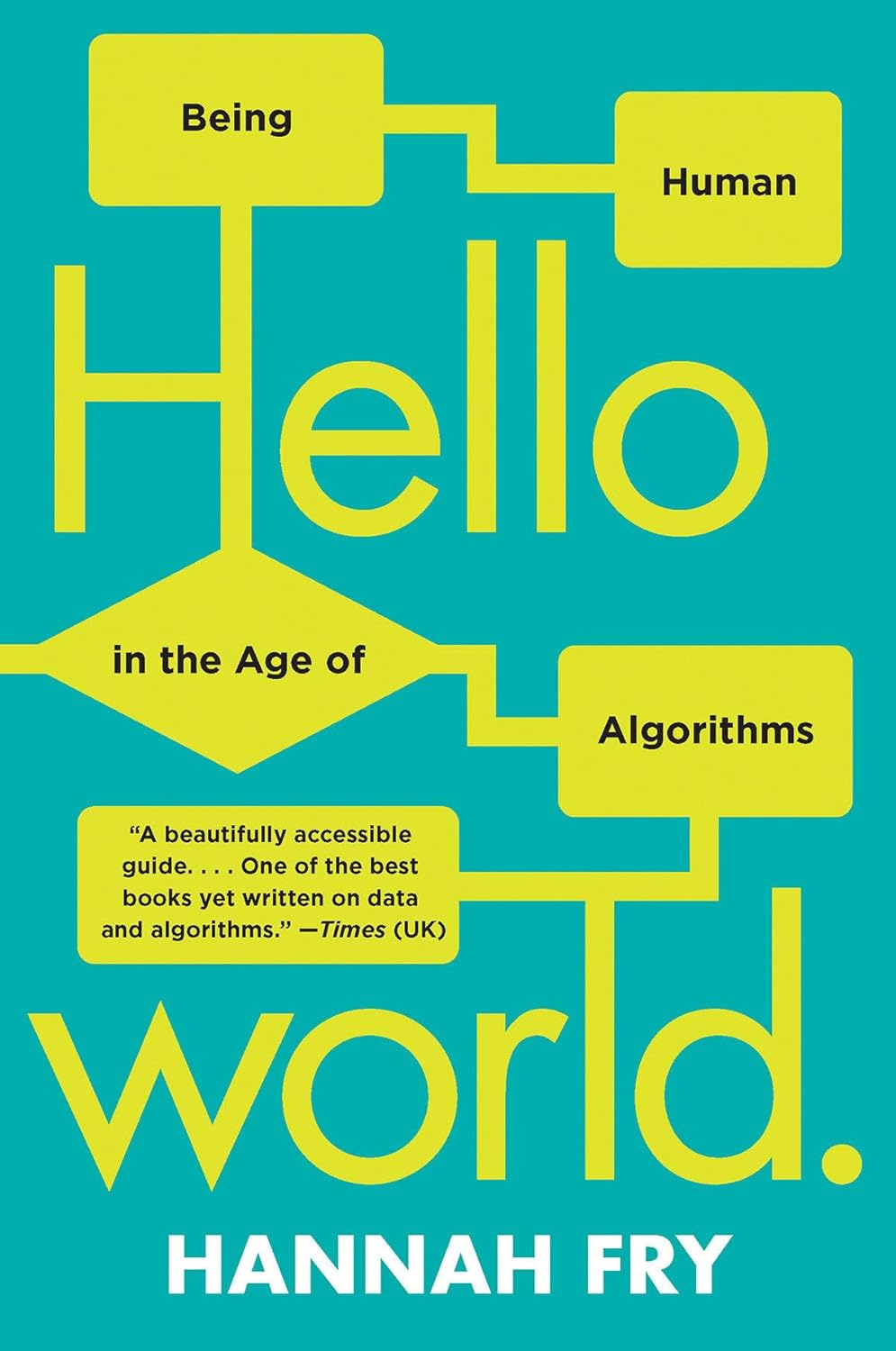
Algorithms in justice, medicine, cars and art, explained with British humor and mathematical honesty.

The best starting book if you're not technical: a Wharton professor explains how to work WITH AI — when to delegate, when to supervise, when to keep i
As an Amazon Associate, Zendoric earns from qualifying purchases; the price does not change for you. · all our recommended books →
🔗 Related on Zendoric