Only 7% of older adults feel confident facing AI scams, according to an AARP survey

🕒 Published on Zendoric: October 9, 2026 · 00:18
✨ AI-generated · how it's made
A Senior Planet (AARP) survey reveals that barely 7% of older adults feel very confident protecting their information online, and 70% don't know what is safe to share with AI. The reason: scammers are already cloning voices and creating fake videos of relatives in distress to urgently ask for money.
📚 Go deeper

How opaque algorithms decide who gets credit, a job or parole — and why they tend to punish the same people.
As an Amazon Associate, Zendoric earns from qualifying purchases; the price does not change for you. · all our recommended books →
By Zendoric · October 9, 2026.
A survey by Senior Planet, the digital literacy program run by AARP (the US organization that defends the interests of people over 50), delivers an uncomfortable finding: only 7% of older adults feel very confident about protecting their personal information online, and 70% do not feel confident knowing what is safe to share with artificial intelligence. The figures are reported by WZMQ 19 News, which also carries remarks from Tom Kamber, executive director of OATS (Older Adults Technology Services), the AARP branch focused on technology training for seniors.
Kamber describes a qualitative leap in fraud: scams are no longer distinguishable from a legitimate banking or healthcare website, and generative AI (the technology capable of producing synthetic images, audio or video from real data) makes it possible to take a photo of a relative posted on Facebook and turn it into a video in which that person claims, for example, to have been kidnapped or to be in jail and asks for money immediately. It is the evolution of the classic telephone "grandparent scam", now with image and voice that look real.
The warning sign, according to Kamber, is still the same as ever: urgency. A message demanding a money transfer within the next hour "should stop us dead in our tracks", no matter how convincing the video or the audio may be. The complementary advice is to treat personal data as if it were cash: do not share with a chatbot detailed financial or health information that you would not normally post online. Added to that are familiar measures Kamber insists on underlining: password managers (programs that generate and store strong, unique keys for each service) and multi-factor authentication (a layer of verification on top of the password, such as a code sent to your phone).
Our reading is that this case precisely illustrates the short-term problem we have been flagging in these pages: the harm from generative AI is neither hypothetical nor evenly distributed. It is concentrated among those with the least practice in telling the synthetic from the real and, often, the smallest immediate support network to verify a cry for help before acting. The current asymmetry clearly favors the attacker: generating a fake video or voice of a relative costs little and requires only a public photo; verifying its authenticity demands deliberate human friction —hanging up, calling back through another channel, agreeing on a family code word— that no one has yet automated in their favor.
That asymmetry is temporary, not structural. The same models that today clone a voice in seconds are the technical basis for biometric verification tools, synthetic content detection and assistants capable of raising a real-time alert during a fraud attempt; as industry context, the financial sector and the big platforms are working on it, though with less media urgency than the scams themselves generate. While that defensive infrastructure matures, the response remains artisanal: programs such as Senior Planet, digital education within the family, and the habit of distrusting haste. It is exactly the kind of transition cost worth naming plainly: the abundance and security AI promises in the long run do not exempt anyone from managing, today, the concrete risk run by anyone with a parent or grandparent who has a public profile on social media.
📚 Go deeper

Algorithms in justice, medicine, cars and art, explained with British humor and mathematical honesty.
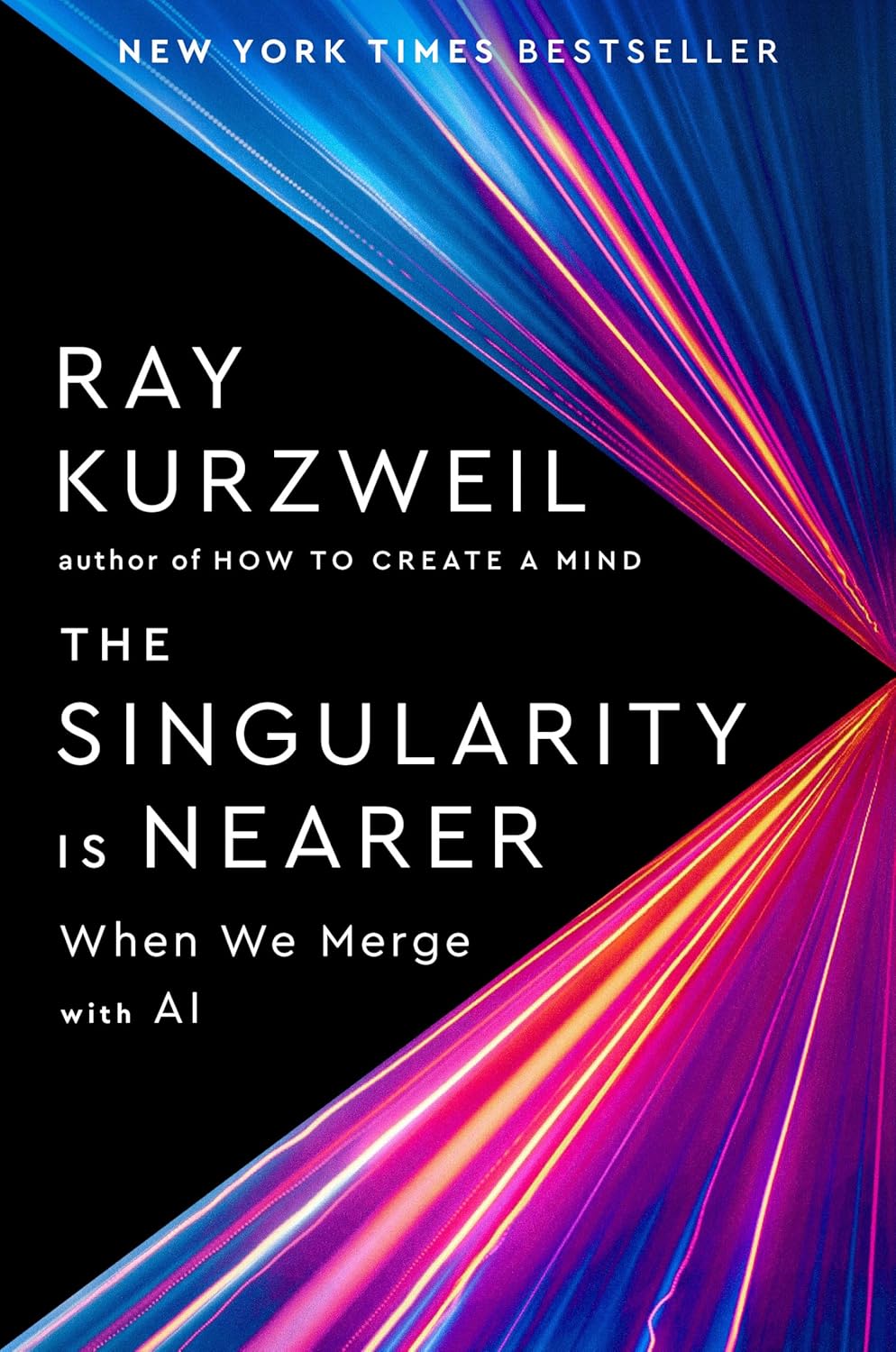
Twenty years after "The Singularity Is Near", Kurzweil revisits his predictions and keeps the date: human-AI merger around 2045.
As an Amazon Associate, Zendoric earns from qualifying purchases; the price does not change for you. · all our recommended books →
🔗 Related on Zendoric