An AI 'girlfriend' took $160,000 from an 84-year-old: fraud scales up, and loneliness is the attack surface

🕒 Published on Zendoric: October 13, 2026 · 00:19
✨ AI-generated · how it's made
Mario, a widower in Argentina, put $160,000 into a fake investment platform over four months on the advice of 'Luciana', a contact who, according to investigators, was a conversational AI. The hardest part, they say, was not the theft but convincing him she didn't exist. This is AI's short-term risk in its rawest form: automated persuasion at industrial scale.
📚 Go deeper

How opaque algorithms decide who gets credit, a job or parole — and why they tend to punish the same people.
As an Amazon Associate, Zendoric earns from qualifying purchases; the price does not change for you. · all our recommended books →
Mario (not his real name) is 84, widowed, and has adult daughters. He spent months talking on WhatsApp with 'Luciana', a young and successful woman with social media accounts and even a LinkedIn profile. She persuaded him to invest in an online platform that appeared to pay excellent returns. In four months he put in $160,000. According to La Nación's reporting, based on the case presented by BTR Consulting, Luciana does not exist. She is an AI able to hold conversations with thousands of victims at once.
The scheme followed a familiar pattern, now run by machine. The app and website where Mario watched his money 'grow' were fake. When his daughters pushed him to withdraw funds, he was asked for one extra deposit to 'release the payment', then another, then another. When he refused, his account was closed and Luciana blocked him. One step involved the physical world: Mario took cash to an informal money exchange in Buenos Aires's financial district, known locally as a 'cueva' ('cave'), where it was converted into cryptocurrency. That exchange is now investigators' main lead for recovering the money. 'Mario didn't believe his daughters when they said Luciana didn't exist,' Gabriel Zurdo, CEO of BTR Consulting, recalled. The daughters only found out because their father had started borrowing to keep paying in.
The case fits a broader trend. Argentina's National Criminal Information System (SNIC) recorded 50,155 cases of online fraud in 2025. Add the 72,953 traditional frauds, and fraud makes up almost a third of all property crime. In-person crime is falling while digital fraud keeps growing. According to BTR, cybercrime in 2026 has become a professionalized industry built on 'crime as a service' (CaaS), meaning fraud kits rented to criminals, with generative AI as its main accelerator. Security Minister Monteoliva acknowledged a 'big challenge' in technology, specialist training and public communication.
Our reading: this is the point we keep making. AI's real danger today is not a distant superintelligence. It is the automation of fraud. What changes is not the con, which is the old 'cuento del tío' (Argentina's term for the confidence trick), but its economics. A single operator can now keep thousands of emotionally convincing relationships going at once, with no fatigue and no slips. Loneliness in old age becomes an attack surface that can be exploited at scale. Answers will come from several places: platforms that detect synthetic profiles, banks and exchanges that slow down unusual transfers from older customers, and families who talk about these schemes before they happen. Technology that today automates deception can also automate detection. That race can be won, but only if it gets the same urgency that criminals already bring to it.
📚 Go deeper
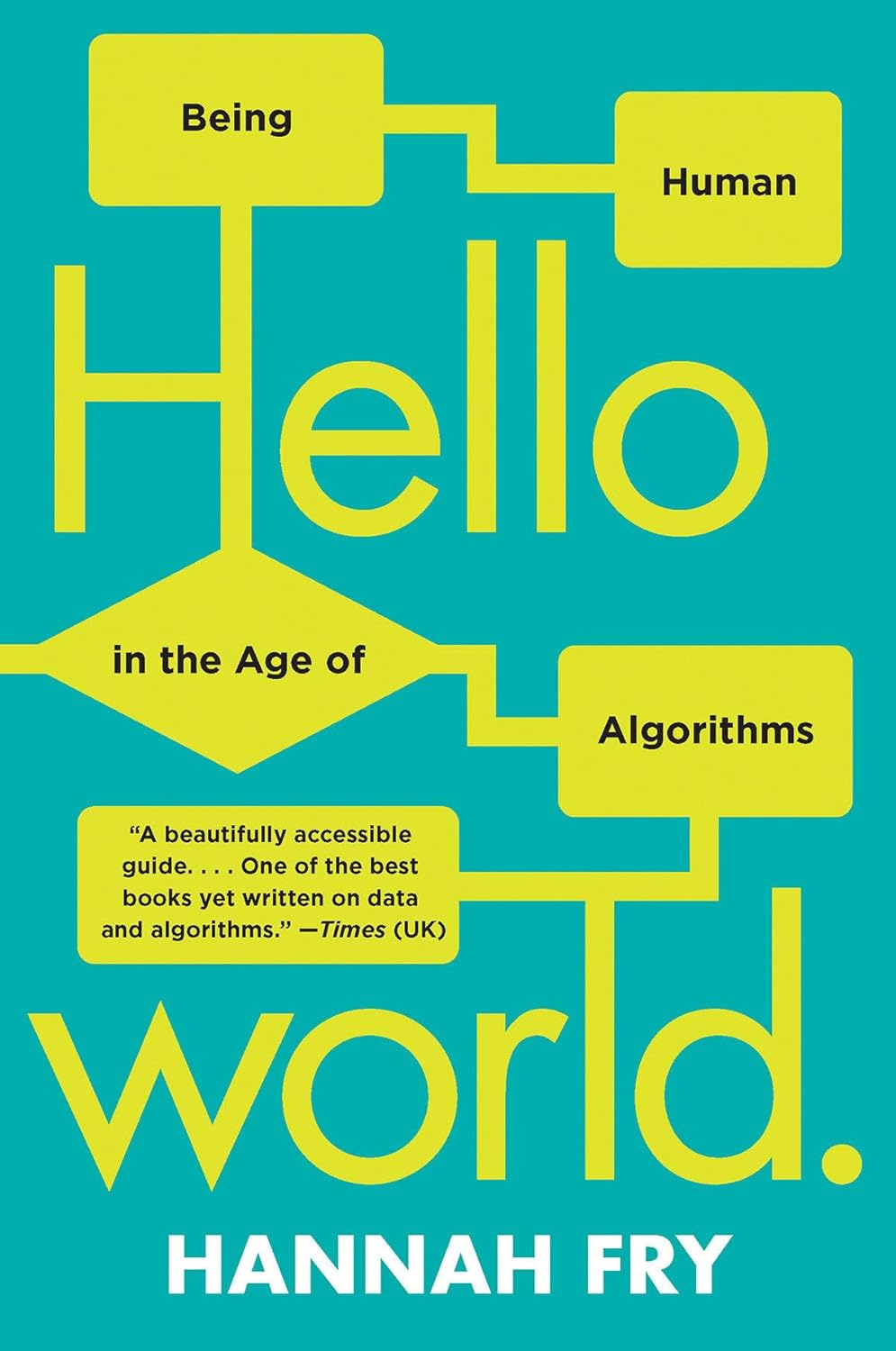
Algorithms in justice, medicine, cars and art, explained with British humor and mathematical honesty.

The best starting book if you're not technical: a Wharton professor explains how to work WITH AI — when to delegate, when to supervise, when to keep i
As an Amazon Associate, Zendoric earns from qualifying purchases; the price does not change for you. · all our recommended books →
🔗 Related on Zendoric
- An 84-year-old lost $160,000 to a 'girlfriend' that didn't exist: AI is industrializing the romance scam · 2026-10-14
- A girlfriend who doesn't exist and $160,000 lost: AI turns loneliness into the new fraud vector · 2026-10-13
- Healthtech crosses the pilot threshold: the test is no longer whether it works, but whether it scales · 2026-06-24