An 84-year-old lost $160,000 to a 'girlfriend' that didn't exist: AI is industrializing the romance scam

🕒 Published on Zendoric: October 14, 2026 · 00:19
✨ AI-generated · how it's made
In Argentina, a widower sent $160,000 in four months to an online partner who, according to investigators, was an AI persona built for fraud. Even after his family found out, he refused to believe she wasn't real. The case shows that the cheapest part of the scam, the conversation, is now automated at scale, while protection is still mostly done by hand.
📚 Go deeper

How opaque algorithms decide who gets credit, a job or parole — and why they tend to punish the same people.
As an Amazon Associate, Zendoric earns from qualifying purchases; the price does not change for you. · all our recommended books →
An 84-year-old Argentine widower lost $160,000 in four months to a romance scam. According to cybersecurity firm BTR Consulting, the 'girlfriend' at the center of it was an AI persona able to chat with thousands of victims at the same time. The case was reported by La Nación on October 12. The man, given the pseudonym Mario, still struggled to accept that she didn't exist.
The pattern is classic, but the scale is new. 'Luciana' contacted him on WhatsApp and was presented as young, attractive and successful. She had social media accounts and even a LinkedIn profile. The relationship grew over months of conversation at all hours, including shared family photos. She then persuaded him to put his savings into an online investment platform. A fake app and website showed his money growing. At one point he was sent to an informal exchange house in Buenos Aires' financial district, where his cash was converted into cryptocurrency. Investigators say that exchange house is their best lead for recovering the money. The scam fell apart when, at his daughters' urging, he tried to withdraw funds. He was asked for one 'release' deposit, then another, then another. When he refused, his account was closed and Luciana blocked him. Gabriel Zurdo, CEO of BTR Consulting, said the hardest part was that Mario didn't believe his daughters. They found out by chance, when he started borrowing money to keep investing.
The wider data shows this is not unusual. BTR describes cybercrime in the first half of 2026 as a professionalized, automated industry built on 'crime as a service' models, with generative AI as its main accelerator. Official figures from Argentina's National Criminal Information System (SNIC) point in the same direction. In 2025 there were 50,155 reported online scams and fraud cases. Traditional robberies still outnumber them nearly eight to one. But add 72,953 traditional fraud cases and fraud as a whole makes up almost a third of all property crime. Security Minister Alejandra Monteoliva acknowledged a 'great challenge ahead'. She named three priorities: better technological tools, specialized training and public awareness campaigns.
Our thesis: AI hasn't invented a new crime. It has driven down the cost of the most expensive input in a romance scam, which is patient and personal attention. A human con artist can keep only a handful of 'relationships' going at once. A model can keep thousands, never tires, and adapts to each victim. That is why we've argued that the most urgent AI danger is short-term and mundane: fraud automated at industrial scale, not a distant superintelligence. The victims are often the loneliest people, which is what makes this so painful. The emotional bond is the actual product being sold, and that is why Mario defended Luciana against his own daughters.
Where this is heading: the response can't rely only on telling elderly people to be careful. The weak points are elsewhere. They include platforms that allow fake profiles complete with LinkedIn pages, messaging apps that don't flag new contacts pushing investments, and informal exchange houses that turn cash into crypto without questions. The same technology can also defend. Models can spot scripted manipulation patterns, flag fake investment dashboards, and warn families about unusual transfers. Our long-term optimism holds: AI will make safety cheaper too. But defense always lags attack. Until platforms, banks and regulators automate protection as quickly as criminals have automated deception, cases like Mario's will keep multiplying.
📚 Go deeper
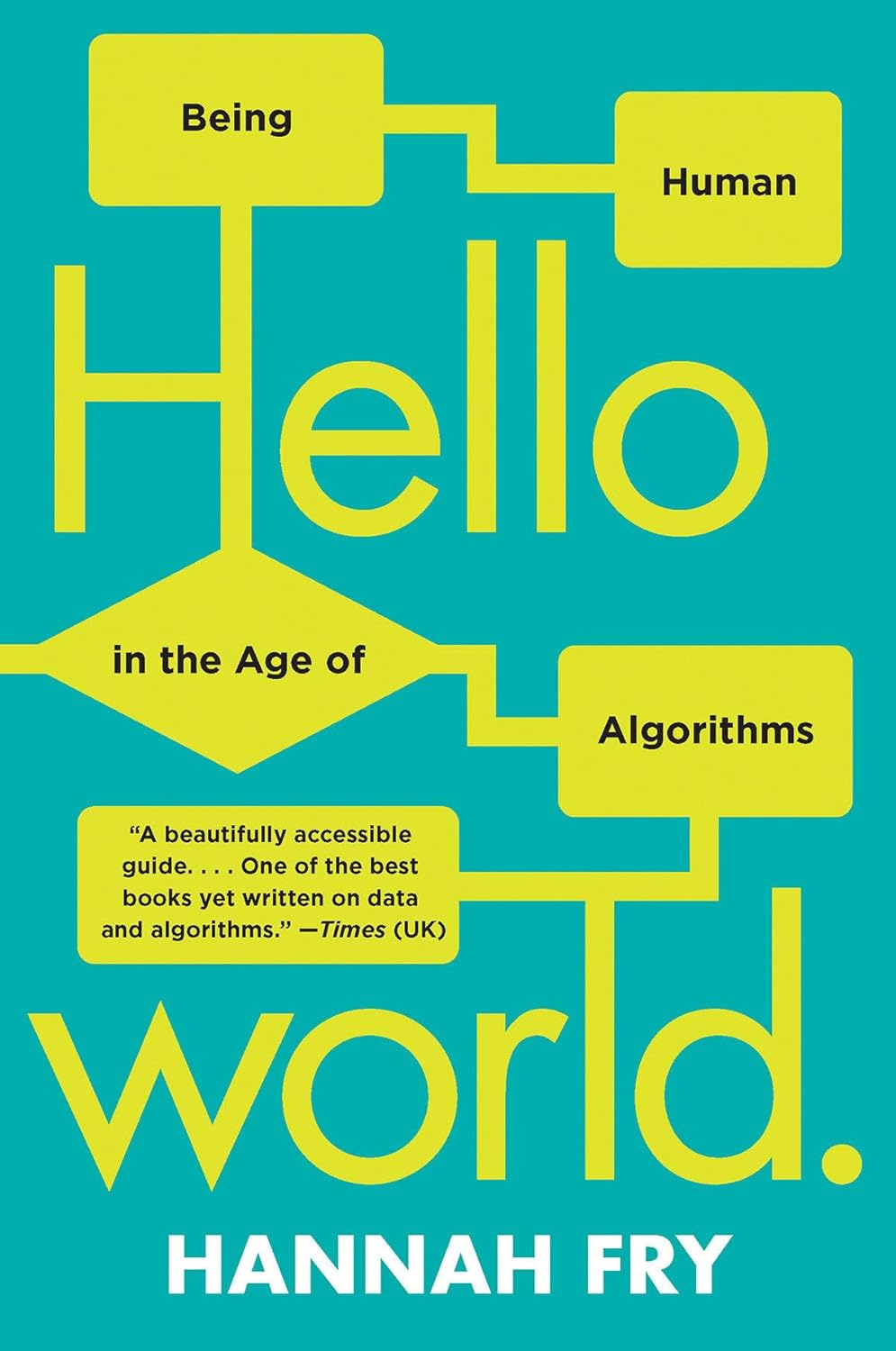
Algorithms in justice, medicine, cars and art, explained with British humor and mathematical honesty.

AI as the latest chapter in the history of information networks, from gossip to the printing press to the algorithm.
As an Amazon Associate, Zendoric earns from qualifying purchases; the price does not change for you. · all our recommended books →
🔗 Related on Zendoric
- An AI 'girlfriend' took $160,000 from an 84-year-old: fraud scales up, and loneliness is the attack surface · 2026-10-13
- An AI-built persona as a young doctor cost one man RM110,000. Impersonation's price floor has collapsed · 2026-09-25
- A girlfriend who doesn't exist and $160,000 lost: AI turns loneliness into the new fraud vector · 2026-10-13