Reflection unveils Beam, its first open-weight AI model to rival Chinese models at lower cost

🕒 Published on Zendoric: October 7, 2026 · 00:19
✨ AI-generated · how it's made
Reflection AI, a two-year-old startup based in Brooklyn, has officially unveiled Beam, its first frontier-level open-weight AI model.
📚 Go deeper

Semiconductors as the oil of the 21st century: history, espionage, and why an island of 23 million people underpins the entire AI economy.
As an Amazon Associate, Zendoric earns from qualifying purchases; the price does not change for you. · all our recommended books →
Reflection AI, a two-year-old startup based in Brooklyn, has officially unveiled Beam, its first frontier-level open-weight artificial intelligence model. The company claims Beam matches the performance of the leading Chinese open models —such as those from DeepSeek, Qwen and Z.ai— on advanced reasoning benchmarks, but at a markedly lower computational cost. The announcement, published in a lengthy blog post, confirms earlier Axios reports that had pointed to an imminent launch over the weekend.
According to the company itself, Beam is a text model (not multimodal) based on a mixture-of-experts architecture, trained with high-compute reinforcement learning to perform especially well on reasoning, coding and agentic tasks. Reflection claims it achieves these results at "a fraction of the cost per token and inference compute" its rivals need. In concrete numbers: Beam has 501 billion total parameters, of which only 23 billion are active per inference, was pretrained on 23.8 trillion tokens and offers a 1 million token context window. For reference, Z.ai's GLM-5.2 has some 744 billion total parameters with 40 billion active.
It is important to stress that these performance figures come from Reflection itself and have not been independently verified. By its benchmarks, Beam would tie with GLM-5.2 on advanced reasoning and beat the current leading Western open models, using 3 to 4 times less inference compute. The company describes it as a "workhorse" model aimed at enterprises, the public sector and developers, and positions itself simultaneously against closed labs such as Anthropic and OpenAI, against Chinese open models, and against Western players like Mistral, Meta and Cohere. Its most direct US rival would be Inkling, the open model from Mira Murati's Thinking Machines Lab released in July; Reflection maintains that Beam beats Inkling on all four coding tests where both report results, though it notes that Inkling is multimodal while Beam is text-only.
Reflection's financial context helps explain the bet: founded in 2024 by two former Google DeepMind researchers, it has raised around $4.7 billion from investors such as Nvidia, Sequoia Capital and Lightspeed Venture Partners, at a $25 billion pre-money valuation in its latest round, according to PitchBook. It also closed deals worth more than $7 billion this summer with SpaceX and Nebius to secure access to Nvidia's GB300 chips through 2029, a key move to be able to train frontier models capable of competing with both closed labs and cheaper Chinese open models.
Beyond Beam itself, Reflection is targeting a business model centered on "AI factories": a product that would let companies and sovereign nations train customized versions of its models on their own proprietary data. That vision aligns with the one long promoted by Nvidia CEO Jensen Huang —a Reflection investor— who is keen to strengthen the open AI ecosystem, which in turn boosts demand for his company's GPUs. According to Axios, hedge funds and trading firms are among those interested in this kind of infrastructure, and Reflection has already begun testing the "sovereign AI factory" concept in a partnership with South Korean group Shinsegae.
Reflection has announced that it will publish Beam's weights and full technical documentation this month, with distribution through hyperscalers and neoclouds, plus integrations with open-source libraries from launch. The company did not respond in time to TechCrunch's additional questions. The move comes amid an increasingly intense race to offer a solid Western alternative to Chinese open models, at a time when inference cost is emerging as a competitive factor as important as model performance itself.
📚 Go deeper

The story of NVIDIA and Jensen Huang: how a video-game card company ended up making the most coveted resource on the planet.
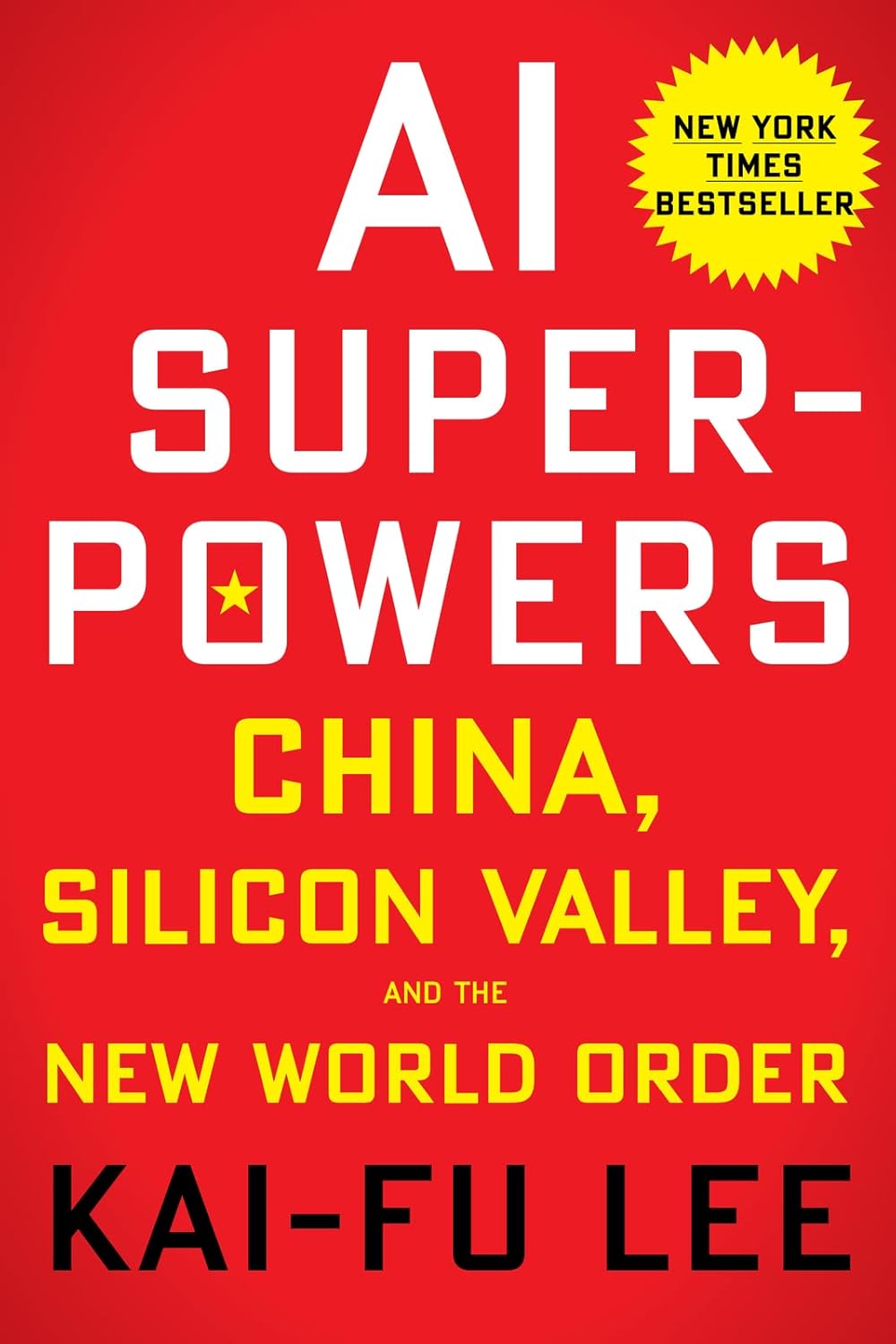
China vs.
As an Amazon Associate, Zendoric earns from qualifying purchases; the price does not change for you. · all our recommended books →
🔗 Related on Zendoric
Sources & references
- techcrunch.com — Reflection unveils Beam, its first open-weight AI model to rival Chinese models at lower cost
- siliconangle.com — Reflection AI launches Beam, a 501-billion-parameter open model taking on China's giants
- Bloomberg — Price pressure: big customers are pushing OpenAI and Anthropic toward open models