Moonshot unveils Kimi K3, the world's largest open model, and China narrows the AI gap with the U.S.
🕒 Published on Zendoric: July 18, 2026 · 01:58
✨ AI-generated · how it's made
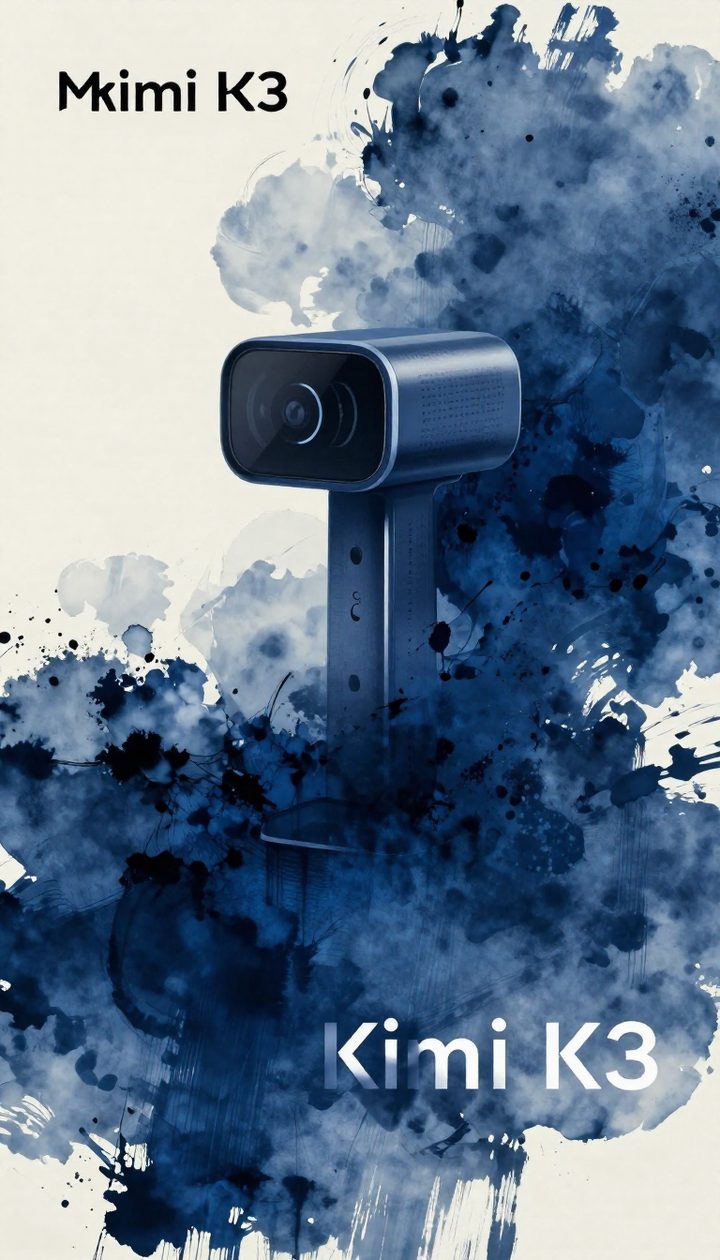
Chinese startup Moonshot has unveiled Kimi K3, a 2.8-trillion-parameter model that the company describes as the world's largest open-weight AI system, with performance approaching that of the Fable model from U.S.-based Anthropic.
📚 Go deeper
The definitive piece of investigative journalism on OpenAI: 260+ interviews, the clash between safety and speed, and the attempted firing of Sam Altma
As an Amazon Associate, Zendoric earns from qualifying purchases; the price does not change for you. · all our recommended books →
The Chinese startup Moonshot has unveiled Kimi K3, a 2.8-trillion-parameter model that the company describes as the world's largest open-weight AI system, with performance approaching that of the Fable model from US-based Anthropic. According to Reuters, it is the first open model to come close to 3 trillion parameters and is designed for advanced reasoning, long-horizon programming and complex knowledge tasks, with a 1-million-token context window that lets it process and retain far more information in a single prompt than previous generations.
The launch comes just a month after Anthropic's Fable and Mythos models were abruptly withdrawn by the US government on security grounds, which, according to the article, underscores how quickly China's open AI ecosystem is closing the gap with the most advanced US systems. Companies such as Moonshot, Z.ai and MiniMax are releasing increasingly powerful models at a significantly lower cost, challenging the widespread view in the West that Chinese developers are months behind their US peers.
Moonshot claims that Kimi K3 "performed competitively with Fable 5 (with fallback) and widely outperformed Anthropic's Opus 4.8, GPT 5.6 Sol and GPT 5.5" in GPU kernel optimization, a set of techniques that maximizes the use of AI hardware and reduces latency. The model has also scored well in independent evaluations: Arena.ai ranked it first in a test on building web interfaces, Vals AI placed it second in its overall ranking (behind Fable 5 and ahead of GPT-5.6 Sol), and Artificial Analysis noted performance comparable to OpenAI's GPT-5.5 and Anthropic's Claude Opus 4.8, especially in tests of complex multi-step tasks.
The news had an immediate impact on the Hong Kong stock market: shares of Chinese competitors Zhipu and MiniMax fell sharply, by 27.7% and 16.5% respectively, shortly before the close of the session.
The article frames this launch within a general acceleration in Chinese firms' model-release cycles, against a backdrop of an intensifying global AI race. This trend had already become visible with the debut of Z.ai's GLM-5.2, which surprised industry analysts by scoring close to the leading US closed models, calling into question the Western consensus that Chinese models were at least six months behind.
Lian Jye Su, chief analyst at Omdia, explains that Chinese models are gaining traction because they can be deployed at a much lower cost —"a fraction of what OpenAI charges its customers," in his words— though he warns that Kimi K3's scale "doesn't necessarily mean you have the best performance by default." Moreover, the model's very size limits its practical adoption: Ryan Fedasiuk, a researcher at the American Enterprise Institute, noted on LinkedIn that running a 2.8-trillion-parameter model locally would require hundreds of thousands of dollars in computing equipment, so few users will be able to host it themselves despite it being an open-weight release.
As for the context of the Chinese industry, before Kimi K3 the LongCat-2.0 model from Meituan and V4-Pro from DeepSeek led with 1.6 trillion total parameters, and several other domestic rivals had already crossed the trillion-parameter threshold. The article notes, however, that a direct comparison with US frontier models is difficult, since companies like Anthropic and OpenAI do not disclose the parameter counts of systems such as Fable, Mythos or GPT-5.5.
Moonshot says Kimi K3 incorporates two significant architectural improvements that increase computational efficiency and allow it to complete long-horizon programming tasks with minimal human oversight. The startup, backed by giants such as Alibaba and Tencent, has been aggressively expanding its capacity and capital to stay at the industry's cutting edge: according to Bloomberg information cited in the article, last month it was seeking $2 billion in new funding, at a valuation close to $30 billion, ahead of an eventual Hong Kong listing.
📚 Go deeper
China vs.

Semiconductors as the oil of the 21st century: history, espionage, and why an island of 23 million people underpins the entire AI economy.
As an Amazon Associate, Zendoric earns from qualifying purchases; the price does not change for you. · all our recommended books →
🔗 Related on Zendoric
- U.S. Treasury threatens sanctions against China's Moonshot over alleged distillation of Anthropic's Fable model · 2026-07-24
- Anthropic launches Claude Opus 5: close to Fable 5's frontier intelligence at half the price · 2026-07-28
- Anthropic launches Claude Fable 5.1 and Mythos 5.1: more performance, lower cost and first scientific advances · 2026-09-03