Beam, Reflection AI's new 501-billion-parameter open-weight model

🕒 Published on Zendoric: October 6, 2026 · 07:39
✨ AI-generated · how it's made
Reflection AI has unveiled Beam, its first open-weight model, a sparse Mixture-of-Experts system with 501 billion total parameters, of which only 23 billion are activated per token.
📚 Go deeper

Semiconductors as the oil of the 21st century: history, espionage, and why an island of 23 million people underpins the entire AI economy.
As an Amazon Associate, Zendoric earns from qualifying purchases; the price does not change for you. · all our recommended books →
Reflection AI has unveiled Beam, its first open-weight model, a sparse Mixture-of-Experts system with 501 billion total parameters, of which only 23 billion are activated per token. The company positions it explicitly for coding, reasoning and agentic workflows, and presents it as an advance for the Western open-weight frontier, in a field so far dominated by open models from Chinese labs such as GLM, Qwen, Kimi or DeepSeek. For now the model is in the final stage of red-teaming and evaluations; Reflection has opened a waiting list for early access and says it will release the weights, the technical report, the model card and developer tools later in the same month as the announcement.
As for capability, the company itself places Beam in an intermediate position in the competitive landscape: according to its benchmarks (SWE-Bench Pro, Terminal-Bench 2.1, AIME 2026, HLE, GPQA Diamond, among others), the model is competitive with GLM 5.2 and comes close to Qwen 3.8-Max on coding and agent tasks, while models such as Kimi K3 retain an edge in raw capability. Reflection's central argument is not winning on every metric but efficiency: it claims Beam matches GLM-5.2 on advanced reasoning benchmarks while using three to four times less inference compute, and that this advantage widens further against models in the 2-trillion-plus parameter family such as Qwen 3.8-Max. It is worth noting that these compute estimates (FLOPs approximated from active parameters and generated tokens) exclude prompt prefill, context-dependent attention and serving overhead, so they are approximate comparisons rather than direct measurements of real cost; moreover, the data on other models comes from third parties (Artificial Analysis and DataCurve), not from independent tests verified by the newsletter.
The main technical headline of the announcement is the scale of the reinforcement learning (RL) training. Reflection says it deployed 10,500 NVIDIA GB300 GPUs over four weeks to generate more than 100 million rollouts, with a maximum context length of 256,000 tokens, using approximately 1.3 billion sandboxes for training and evaluation, and drawing on a repository of close to one million high-quality environments in coding, terminal use and STEM. To give a sense of scale, the company compares this figure with the 30 million rollouts used to train Inkling and the 753,000 of MiMo, and argues that the model's capabilities kept improving as RL compute increased, with no sign of a plateau throughout the entire campaign.
On the algorithmic side, Reflection highlights the use of large-scale asynchronous policy gradients, a method that requires dealing with policy staleness: parts of a long rollout may have been generated by model versions far older than the one being trained at that moment. According to the company, it developed proprietary algorithms that keep training stable even when the data used is a day old, that is, generated by a version up to 107 weight updates earlier. It also incorporated a controllable length penalty: in the early phases of RL the model learned to solve tasks with fewer reasoning tokens, and in later phases, as it developed more sophisticated agentic capabilities, responses grew longer again but with associated performance gains. The practical result is a user-adjustable "reasoning effort" parameter, which allows choosing between shorter, cheaper answers or more extensive reasoning for demanding tasks.
One of the most striking points of the announcement is the generalization to behaviors that were not explicitly trained. Reflection claims that, during a training phase focused on reasoning, software engineering and terminal use, the model also improved at web browsing tasks even though these were not part of the RL mix, and that it spontaneously learned to search and to query other language models, as well as to use OCR APIs to read documents, despite Beam being a text-only model. As demonstrations of this generalization, the company shows examples such as a 3D p5.js game of an astronaut dodging asteroids, a live New York subway dashboard built from public MTA data, and a fine-tuning notebook for the Gemma-4 model (a task outside its training distribution) which, it claims, increased Gemma's accuracy on its held-out test set by 66.5%. In a geographic generalization experiment (recreating a viral puzzle that asks whether each point on a longitude/latitude grid is land or water), Beam got 95.5% of a 16,200-point grid right, a figure Reflection places between the 92.5% it attributes to "Opus 5" and the 97.8% it attributes to "Fable 5" (without detailing the methodology of those comparisons).
The announcement also details, with a considerable profusion of figures, the infrastructure built to sustain this volume of RL: an average of 110,000 concurrent rollouts, an inference-to-training GPU ratio that ranged between 3.9:1 and 5.4:1, weight updates that reached the inference fleet in a median of about 12 seconds thanks to hierarchical distribution (which according to Reflection cut cross-rack traffic by 75% and sped up adoption of new versions by 2.2 times), capacity for up to 170,000 concurrent sandboxes and more than one billion sandbox creation requests processed across more than 20 clusters, two clouds and four regions. The company also reports having handled 71 inference incidents without halting training, with a median recovery of eight minutes and a capacity loss of just 0.02% of total serving GPU-minutes, as well as dynamic packing that kept training batches 99.99% full on average.
On pretraining, Beam was trained on 23.8 trillion diverse, curated tokens, combining web data, public sources and licensed proprietary datasets. Reflection describes an aggressive curation process: close to 95% of raw internet tokens are discarded through deduplication and quality filtering, but it claims to have identified and kept approximately 1.8 trillion high-quality tokens —including 87% of its curated web code tokens— that conventional industry filters would have thrown away, thanks to proprietary quality classifiers for web, code and STEM content, and to filters tuned individually by programming language. It also built a high-throughput pipeline to process PDF documents using a vision-language OCR model, designed to give the model broad technical and scientific knowledge. Architecturally, the model combines interleaved local and global attention, fine-grained expert routing, auxiliary-loss-free load balancing (based on prior work by DeepSeek-AI) with cosine decay of routing biases, and several techniques to keep signal flow stable across the model's 52 layers, which according to Reflection translates into almost perfectly uniform expert utilization (the most used expert reaches barely 1.04 times the average load).
Taken together, the Beam announcement is, above all, a technical statement of intent and a demonstration of infrastructure: a relatively new lab in the open-weight arena claiming it can compete, on efficiency if not always on raw capability, with the big Chinese open models, backed by massive investment in large-scale asynchronous RL. It is important to bear in mind that all the performance, efficiency and infrastructure figures come from Reflection AI's own announcement, with comparisons based on internal benchmarks and third-party data cited by the company, and that as of the announcement date there are no public weights, technical report or model card that can be independently verified: that external validation will come, according to the company itself, when the full artifacts are released later in the month.
📚 Go deeper

The story of NVIDIA and Jensen Huang: how a video-game card company ended up making the most coveted resource on the planet.
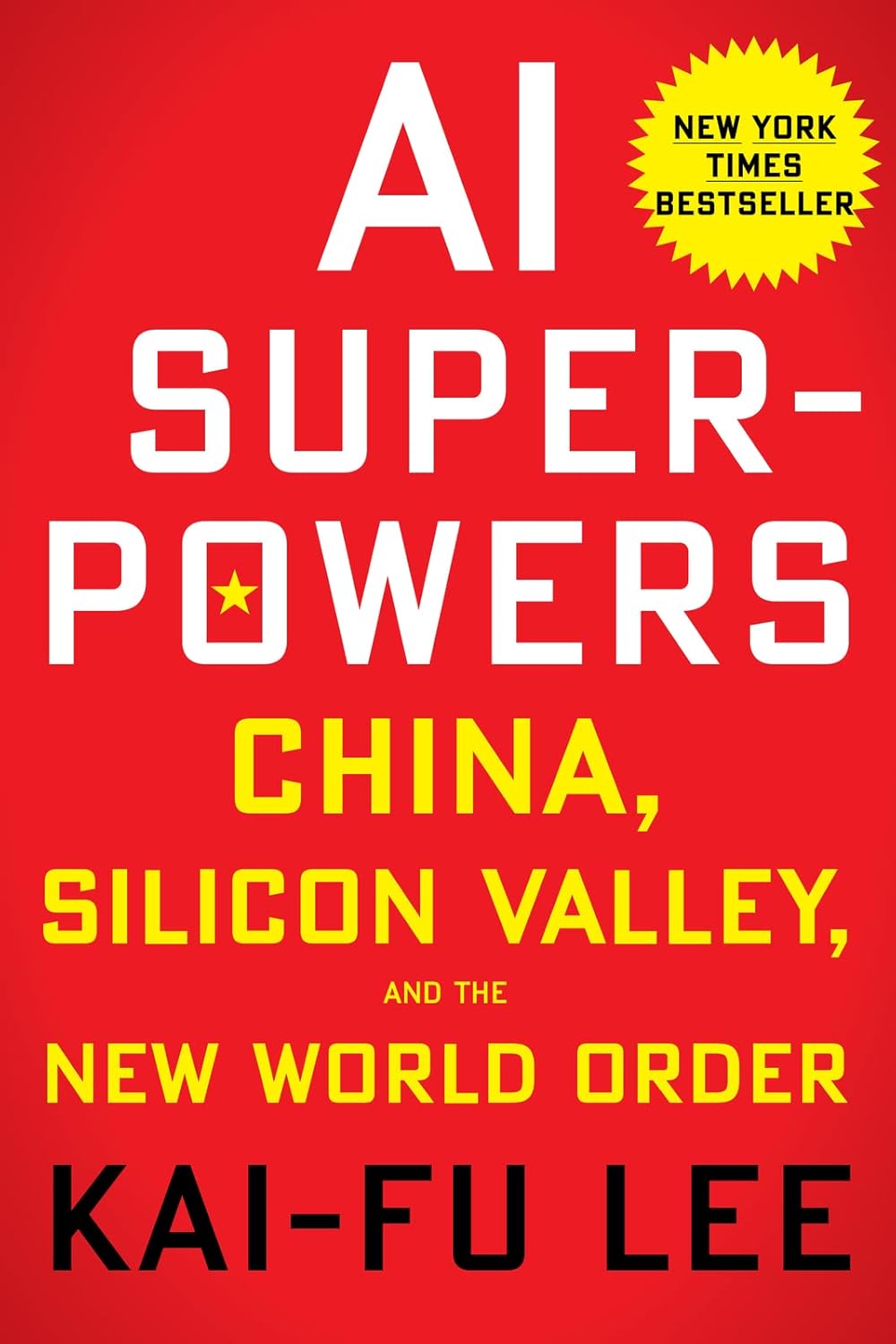
China vs.
As an Amazon Associate, Zendoric earns from qualifying purchases; the price does not change for you. · all our recommended books →
🔗 Related on Zendoric
- Reflection AI launches Beam, a 501-billion-parameter open model taking on China's giants · 2026-10-07
- Thinking Machines, Mira Murati's lab, launches Inkling: an open model with 975 billion parameters · 2026-07-17
- Moonshot unveils Kimi K3, the world's largest open model, and China narrows the AI gap with the U.S. · 2026-07-18