US bets $83.4M on agentic AI to streamline its own bureaucracy: the federal back office as first testing ground

🕒 Published on Zendoric: October 3, 2026 · 02:03
✨ AI-generated · how it's made
The Technology Modernization Fund is allocating $83.4 million to four agentic AI projects at the State, Agriculture and Transportation departments, according to the agency itself. This isn't the AI that worries Silicon Valley: it's the kind that processes airline complaints and federal payroll, where automation already delivers measurable results.
📚 Go deeper
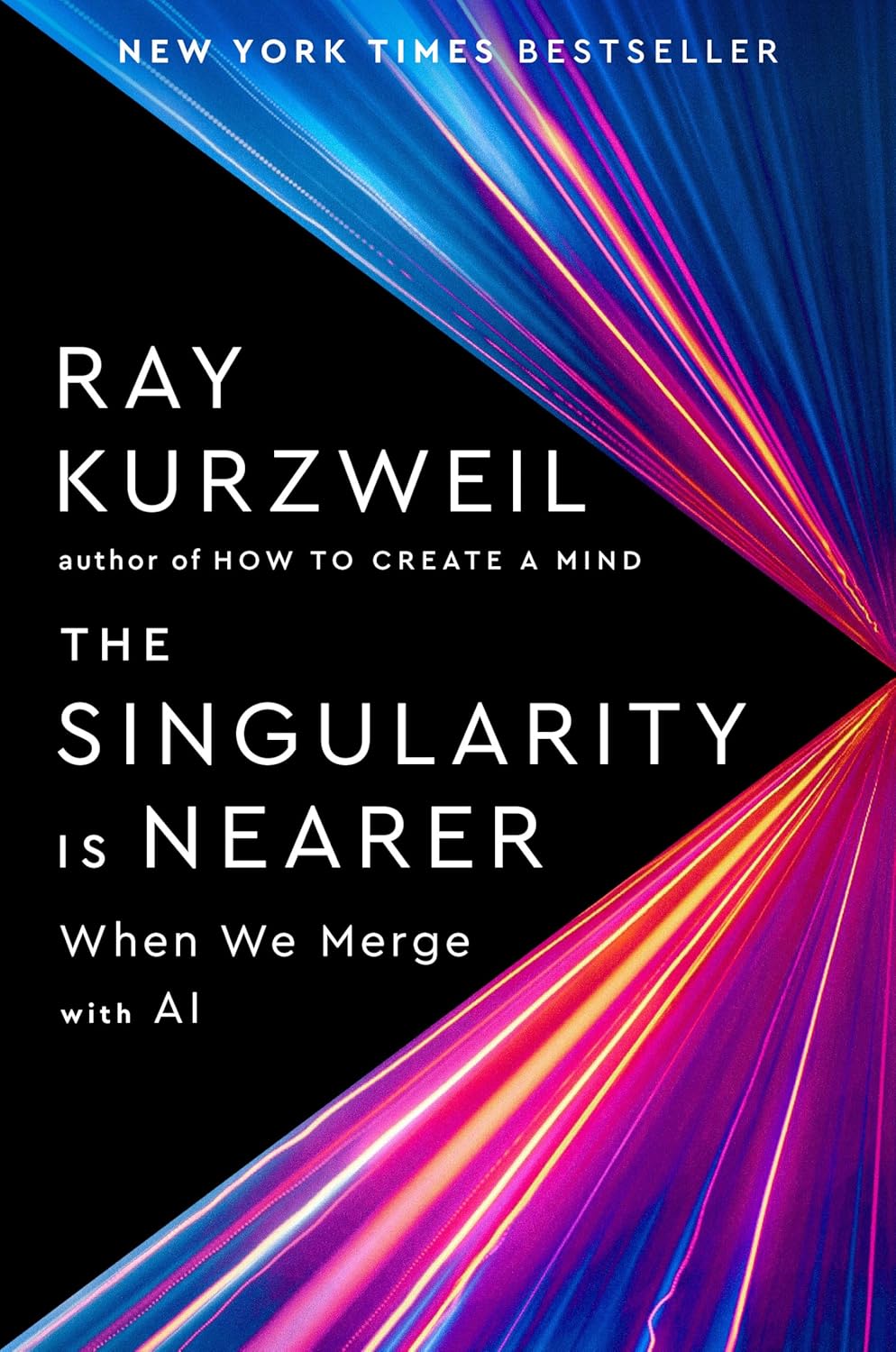
Twenty years after "The Singularity Is Near", Kurzweil revisits his predictions and keeps the date: human-AI merger around 2045.
As an Amazon Associate, Zendoric earns from qualifying purchases; the price does not change for you. · all our recommended books →
By FedScoop · October 2, 2026. The Technology Modernization Fund (TMF), the US federal fund that finances agencies' technology modernization through a revolving repayment mechanism, approved four new investments this week totaling $83.4 million, according to the update posted on its website on Wednesday. The four projects —spread across the Departments of State, Agriculture and Transportation— share the same script: using commercial products to embed AI into agency systems —agentic AI in the State Department's case: systems capable of autonomously carrying out multi-step tasks, not just answering questions— and to speed up internal procedures and environmental permits.
The first breakdown: $17.3 million for the State Department, which will deploy agentic AI in its internal help desk, research support and scenario planning, as well as letting employees build their own automated agents. TMF calculates that, once operational, it will save more than 100,000 work hours a year and generate some $15 million in savings in the first year, up to $20 million in the second. The project started in July and has already transferred more than half of the funds.
At Agriculture, $10 million will consolidate ten review systems scattered across the department's agencies into a single platform, with AI to identify which applications are candidates for a fast-track approval path. TMF's forecast: 1.8 million work hours saved a year and 78% of fast-track applications processed almost in real time, compared with the weeks or months they used to take. A second Agriculture project, worth $52.3 million —the largest of the four—, will replace the National Finance Center's payroll system, described by TMF itself as "high risk," with a cloud platform built on AI and automation, aligned with the Office of Personnel Management (OPM) HR 2.0 plan to modernize human resources systems across the entire federal government.
The fourth project, $3.8 million at the Department of Transportation, adds AI to the Office of Aviation Consumer Protection's complaint system to classify claims automatically, detect duplicates and retrieve public records faster. TMF expects to identify complaint trends up to 80% faster and cut response times to records requests by up to 75%. In the State and Transportation projects, according to TMF's own fact sheet, a person reviews every automated decision: no deployment without declared human oversight.
The timing is no accident. TMF's acting director, Jessie Posilkin, explicitly called this summer for AI and permitting proposals, and has said she wants to commit funds before the next funding deadline, December 11, can stall new projects —a race against the clock that captures the fragility underpinning technology modernization in Washington. The Government Accountability Office (GAO, Congress's auditor) calculated in July that TMF's investments as a whole will save more than $1 billion in the coming years. The fund also added the Environmental Protection Agency's CIO, Carter Farmer, to its board last month; he has also been named the next federal CIO.
What matters about this package is not the figure —$83.4 million is a minor fraction of federal technology spending— but where it lands. None of the four projects promises scientific reasoning or discoveries: they classify airline complaints, route permit applications, calculate payroll and answer help-desk questions. It is the same pattern we have been documenting in other sectors: AI delivers first, and measurably, in the operational back office, not in judgment calls. A model misclassifying a permit application is a cheap error to correct; getting a medical diagnosis wrong is not. That difference is what makes these deployments easier to justify, audit and defend politically than any promise of wholesale replacement.
There is also a governance signal worth underlining: in the State and Transportation projects, TMF requires human review of every automated decision. It is the same "augmenting, not replacing" adoption pattern we have been seeing in other areas of the public and private sectors: AI speeds up routine work, but final responsibility for the decision stays with a person. It is a prudent way to introduce automation into systems with real consequences —payroll for hundreds of thousands of employees, environmental permits, passenger rights— and a useful contrast to the wholesale-replacement rhetoric that sometimes dominates the debate about AI and public employment.
This connects with something we repeat in this section when analyzing AI's impact on employment sector by sector: administrative and back-office work is the first to absorb automation, both in the private sector and, now, in the machinery of the state. If TMF meets its own forecasts —100,000 hours freed at State, 1.8 million at Agriculture—, what is freed is not just money: it is human capacity currently consumed by repetitive tasks that, reassigned well, could go to what is also scarce in government, expert judgment and direct attention to citizens. It is abundance applied to the small and the unglamorous, not to curing diseases, but built on the same underlying mechanism: freeing human time for what really matters.
The short-term risk is less technological than political and operational. TMF itself acknowledges that the race against December's budget calendar shapes which projects move forward, and the track record of modernizing legacy systems in the US government —the same one now trying to replace the USDA's "high-risk" payroll system— is hardly a collection of quick wins. Replacing critical legacy infrastructure, with aging code and ever fewer programmers who know it, with an AI-based platform is in itself a risk management project as demanding as the artificial intelligence one. If AI adoption in the public sector has shown anything so far, it is that the merit lies not in announcing the budget, but in sustaining execution beyond the headline cycle.
📚 Go deeper

AI as the latest chapter in the history of information networks, from gossip to the printing press to the algorithm.

DeepMind co-founder on the dilemma of containing technologies that do not want to be contained.
As an Amazon Associate, Zendoric earns from qualifying purchases; the price does not change for you. · all our recommended books →
🔗 Related on Zendoric
- Healthtech crosses the pilot threshold: the test is no longer whether it works, but whether it scales · 2026-06-24
- International students read the market before anyone else: they choose AI over the MBA · 2026-07-23
- Three seconds of audio is enough: AI voice fraud is winning because every defense arrives after the money is gone · 2026-08-31