Microsoft redesigns Copilot with Home, Code and Autopilot, and adds an IT-managed runtime for employee apps

🕒 Published on Zendoric: September 29, 2026 · 08:25
✨ AI-generated · how it's made
Microsoft has unveiled a sweeping overhaul of Copilot that reorganizes the app around three new pieces —Home, Code and Autopilot— and which, according to the announcement signed by Jared Spataro (Chief Marketing Officer, AI at Work), aims to broaden what any person or organization can build with AI without depending…
📚 Go deeper

DeepMind co-founder on the dilemma of containing technologies that do not want to be contained.
As an Amazon Associate, Zendoric earns from qualifying purchases; the price does not change for you. · all our recommended books →
Microsoft has unveiled a sweeping overhaul of Copilot that reorganizes the app around three new pieces —Home, Code and Autopilot— and that, according to the announcement signed by Jared Spataro (Chief Marketing Officer, AI at Work), aims to broaden what any person or organization can build with AI without depending exclusively on development teams. The rollout begins through the Frontier program in the coming weeks, with Autopilot entering private preview at the end of the month.
Home becomes Copilot's single starting point, merging Chat (for quick questions, searches and instant drafts) and Cowork (for delegating complete end-to-end tasks, such as an RFP response, a launch kit or a financial close). Microsoft also announces that, soon, users will not have to choose the mode: they will simply describe what they need and Copilot will decide whether to route the work to Chat, Cowork or Code. Added to this is "Office in Copilot", which integrates Word, Excel and PowerPoint directly into the experience: real, shared documents can be created or edited from Home, with edits synced in real time if a colleague is mentioned. The announcement also highlights specific improvements already available in the Office apps, such as automatically maintaining brand style in PowerPoint, summarizing changes along with the reason behind them in Excel, automatic chart recommendations and so-called "Skills", packages of specialized expertise (financial in Excel, legal in Word) that organizations can reuse as role-based workflows.
The Code component is perhaps the most significant from a structural standpoint: it lets users describe an app, a dashboard, a tracker or an automation in natural language, and Copilot chooses the approach and builds it, whether as a persistent desktop widget, an interactive dashboard or an internal application hosted in the cloud and shareable with the team. Code uses the same underlying technology as GitHub Copilot, runs in a sandboxed environment and can be hosted securely inside the organization's tenant, with work context supplied by Microsoft IQ and automatic plugin syncing. Software developers continue to use GitHub Copilot for their day-to-day work, now with more connectivity to the Copilot platform. The Frontier launch is slated for the end of the month, with broad availability in the following weeks, and it will reach Microsoft 365 Premium and Pro subscribers in preview later this year.
To sustain that proliferation of homemade applications, Microsoft is introducing the Microsoft Copilot Managed Runtime: a hosting infrastructure that allows that code to run securely inside the company's Microsoft 365 environment. It is a scheme designed so that IT retains governance —permissions, auditing, control— while the end user simply shares the app with colleagues, connects it to live data and accesses it from anywhere, with no visible friction. That same runtime foundation is not reserved for Code: it also serves apps built in Cowork and in Copilot Studio, and Microsoft says it is opening it up to external and professional-code developers. Copilot Managed Runtime is already in preview and will also be accessible from within Code. In practice, it is Microsoft's answer to a well-known "shadow IT" problem created by low-code tools: instead of barring employees from building their own solutions, the company is trying to offer an execution lane that is born under corporate oversight.
Autopilot, previously called Scout, is positioned as a "digital companion": it is given a name, a role and a goal, and it works autonomously, monitoring channels, following up on threads, running recurring tasks and picking projects back up days later without waiting for a new instruction. The example Microsoft gives is the full management of a vendor review process: calendar, work plan, meeting prep, follow-ups and even direct contact with stakeholders to request updates. Because it is hosted in the cloud, it keeps working while the user sleeps or is busy with something else. Autopilot lives inside the tenant with its own identity, memory, "computer" and workspace, relies on Microsoft IQ to understand how the organization actually operates, and shows up in the same places where people already work —Teams, Outlook, chats, channels, documents— and can be mentioned like a colleague, always with permissions, auditing and governance behind it. The user sets the goal and the boundaries; Autopilot handles the rest while keeping its supervisor informed.
This entire ecosystem rests on Microsoft IQ, described as the unified business intelligence platform that connects how the business operates with the knowledge it holds, in a governed, secure real-time view for Copilot and agents. On that foundation, Fabric IQ contributes data context —including more than 20 million Power BI semantic models— and is already generally available in Chat and Cowork, with integration into Code planned through Frontier soon. In parallel, over the next month Copilot will connect in public preview with Dynamics 365 and Power Platform data and flows, so that, for example, a salesperson drafting a proposal can automatically pull in deal history or support tickets without switching applications. Also announced is a new unified plugin registry —for Microsoft, partner and custom plugins— that IT can approve and manage centrally, while developers and partners publish once to extend Copilot across the different supported experiences; the rollout is immediate, with general availability on several surfaces in the coming weeks.
On the economics, Microsoft distinguishes between two billing models. The per-user license (USL) covers everyday AI usage —quick answers, drafts, summaries, analysis— at a fixed cost, with Auto as the central engine that weighs accuracy, speed and cost on each request in order to route it to the most suitable model; it includes Copilot in Chat and in Word, Excel, PowerPoint, Outlook and Teams, model selection and new capabilities. Agentic work, by contrast, requires usage-based billing (UBB), which gives full control to choose models and match cost to value; Cowork, Code, Autopilot and frontier models such as Astra and Fable run under this scheme. Alongside this pricing change, Microsoft is introducing "FinOps for AI", a set of capabilities for managing and optimizing AI spending: Agent 365 cost management extends from Cowork and the Work IQ APIs to Code and Copilot Managed Runtime, with support for Copilot Studio agents planned for October; administrators will be able to set spending policies at scale via API, route credit requests into existing approval flows and decide which model families are available to different user groups —settings that also shape what Auto can choose—; business leaders will be able to see which Cowork tasks produce the best results; and end users will be able to check their credit consumption, remaining balance and history directly in Copilot.
The announcement also includes a preview of future features. "Today", which will come to Home, is framed as a proactive, personalized command center that cross-references email, calendar, Teams threads, meetings and tasks to show what has been overlooked, what needs immediate attention and what can wait, with drafts already written or schedule changes proposed; it will enter private preview in Copilot in October, and will later reach Outlook and Teams as well. Likewise, invoking @Copilot inside a Teams channel, group chat or meeting will give the whole team the same context and permissions: Copilot will be able to explain why a product decision was made by tracing earlier conversations, and if that decision affects manufacturing, packaging or the launch schedule, it will offer to prepare a cross-functional review with dependencies, owners and open questions. This @Copilot feature in Teams will enter private preview at the end of the month. Microsoft closes the announcement by pointing to more news at the Ignite conference, scheduled for November 17-20 in San Francisco and online.
Taken together, the move confirms a strategy Microsoft has been consolidating: moving away from selling Copilot as a simple conversational assistant and turning it into a platform for building and running software and agents inside the corporate perimeter. The most relevant piece for security and IT teams is probably the Copilot Managed Runtime, because it implicitly acknowledges that employees are already creating applications and automations on their own and, instead of trying to stop it, Microsoft is offering a managed lane with built-in permissions and auditing. The rest of the announcement —Home unifying working modes, Autopilot as a persistent agent with its own identity, Fabric IQ and the plugin registry expanding business context, and the pricing split between everyday use (USL) and agentic work (UBB)— sketches an increasingly dense ecosystem in which many of the pieces remain in Frontier or preview and whose real adoption will depend on how organizations balance the promise of productivity against the spending and governance controls Microsoft itself acknowledges are necessary.
📚 Go deeper

The reference manual for building products on top of AI models: prompts, RAG, fine-tuning, agents, evaluation and deployment.
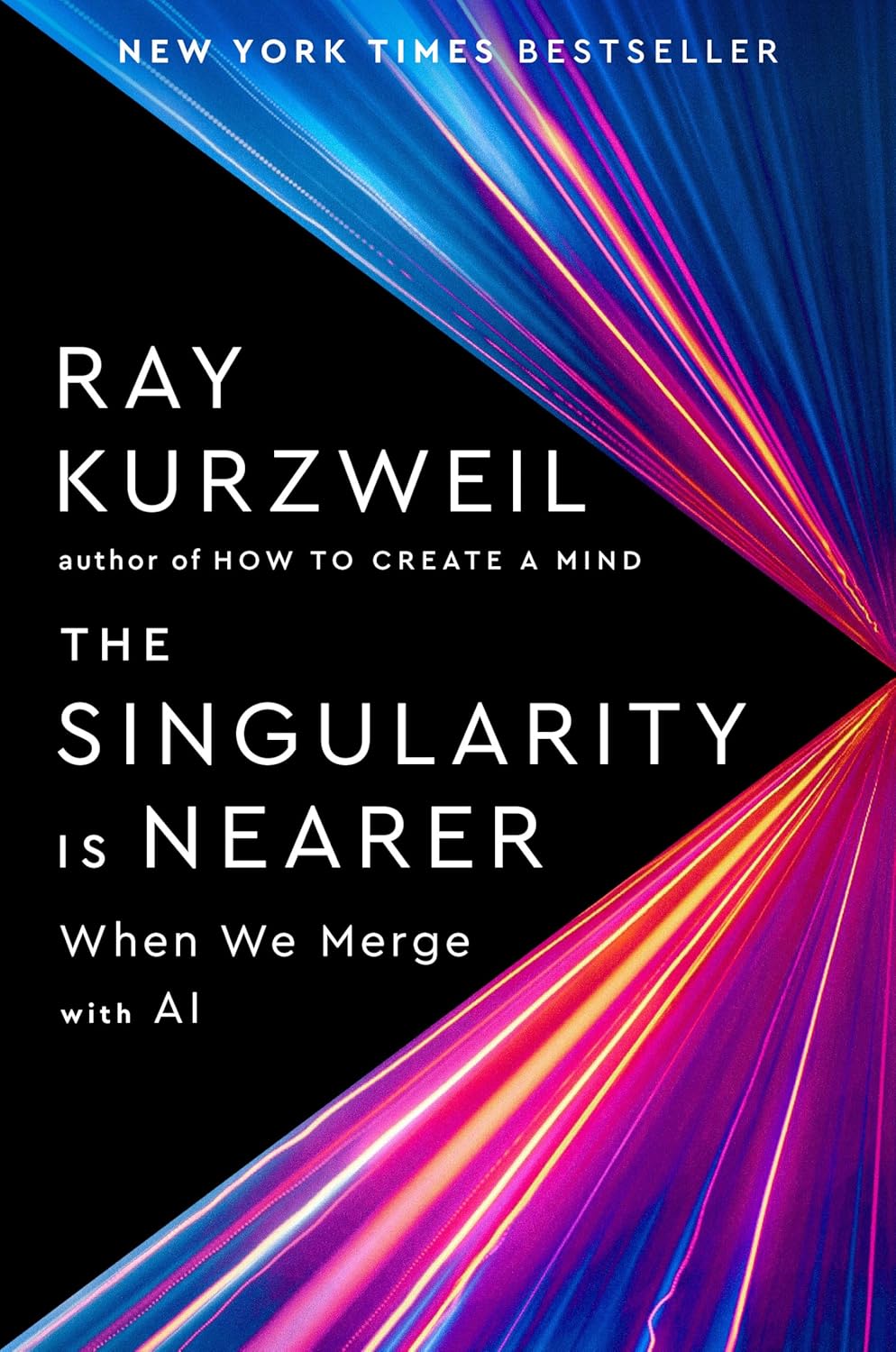
Twenty years after "The Singularity Is Near", Kurzweil revisits his predictions and keeps the date: human-AI merger around 2045.
As an Amazon Associate, Zendoric earns from qualifying purchases; the price does not change for you. · all our recommended books →
🔗 Related on Zendoric
- Google launches Gemini 4 Argon, its frontier model for engineering, science and professional work · 2026-10-15
- Argentina proposes "automated companies" managed by AI, but unable to do without humans · 2026-07-07
- Amazon cuts its own general AI division: those who build the models are also caught in the adjustment · 2026-07-24