Google launches Gemini 4 Argon, its frontier model for engineering, science and professional work

🕒 Published on Zendoric: October 15, 2026 · 00:13
✨ AI-generated · how it's made
Google unveiled Gemini 4 Argon, its latest frontier model, on October 13, 2026. The announcement is signed by Koray Kavukcuoglu, SVP of Google DeepMind and Google's Chief AI Architect. According to the company, Argon is available globally from day one.
📚 Go deeper
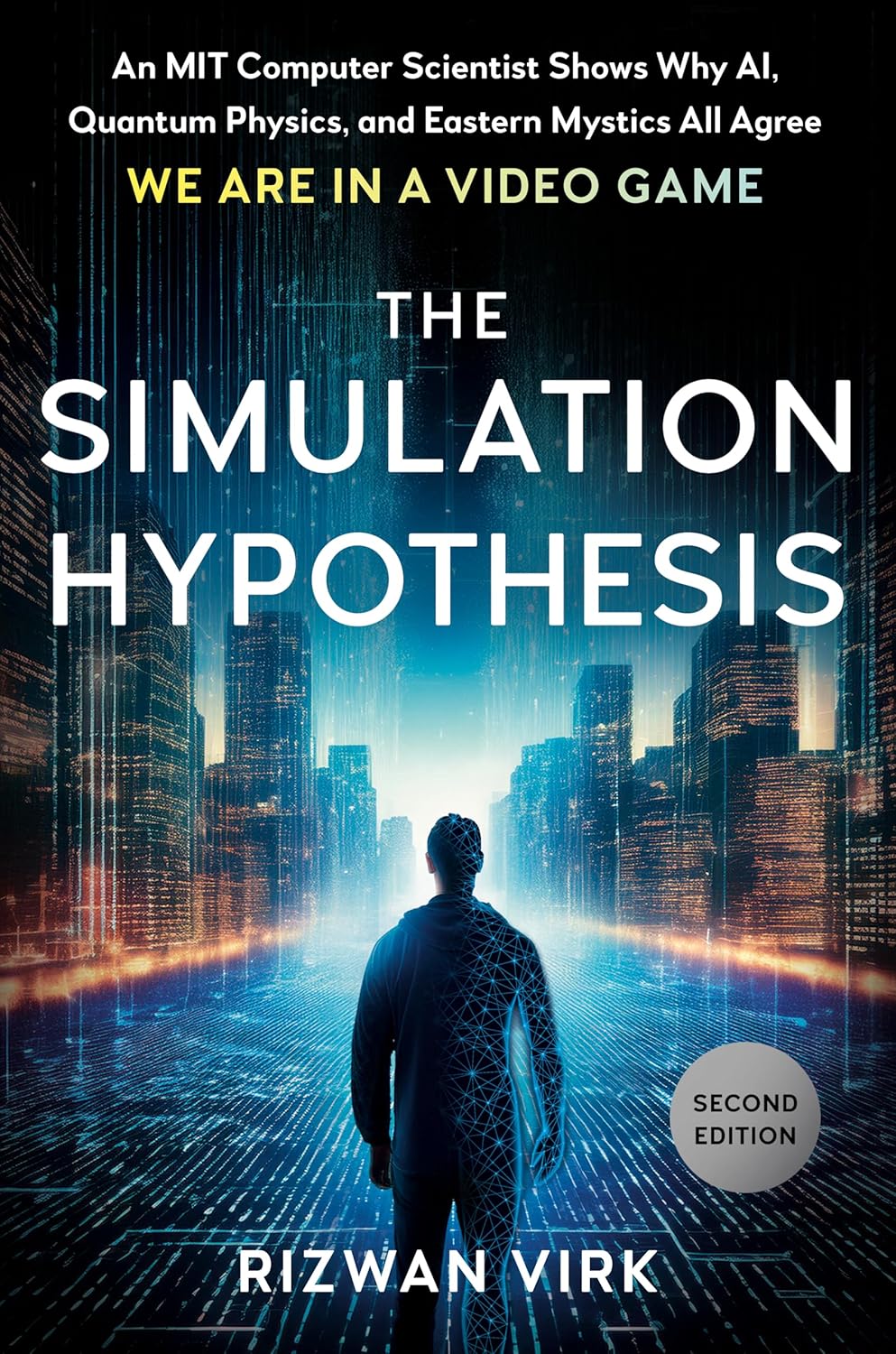
An MIT computer scientist connects AI, quantum physics and video games to take an uncomfortable question seriously: what if we live in a simulation? M
As an Amazon Associate, Zendoric earns from qualifying purchases; the price does not change for you. · all our recommended books →
Google unveiled Gemini 4 Argon, its latest frontier model, on October 13, 2026. The announcement is signed by Koray Kavukcuoglu, SVP of Google DeepMind and Chief AI Architect at Google. According to the company, Argon is available globally from day one. Developers and enterprises can use it through the API in AI Studio and the Gemini platform. It is also available to Google AI Ultra subscribers in Google Antigravity, and to Google AI Ultra and Pro subscribers in the Gemini app and in AI Mode in Search.
A note on the source material: the downloaded text cuts off midway through the safety section, so this summary does not cover the final part of the article. Nearly all figures come from Google itself and the text contains no independent verification, except for the Vals Index leadership, which Google attributes to that index.
Google presents Argon as a model for deep work on complex real-world tasks: programming, finance, law, cybersecurity and science. It claims the model outperforms other frontier models on benchmarks across several domains and ranks first on the Vals Index. That index measures performance in economic sectors such as finance, programming, law and taxation.
The launch price is introductory: $2 per million input tokens and $10 per million output tokens. Cached input tokens get a 95% discount.
Software engineering. Google says it uses Argon internally on its hardest engineering problems. According to the company, Argon in Antigravity has helped teams increase agentic code submissions by more than 35% and cut code rollbacks by nearly a third. It cites several cases:
• Chrome: Argon helped separate the core handling of web pages from a legacy folder of about 6 million lines, within Chromium's 40 million lines. Google says the refactoring spanned hundreds of files and completed in weeks work that would have taken months. The goal is to let pages move between tabs, side panels and floating windows without reloading, which would eliminate an entire category of browser bugs.
• Agent Development Kit (ADK): the team gave Argon its skills rulebook and a one-paragraph objective. According to Google, the model worked autonomously overnight. The optimizations, already published in google/adk-python, cut in-memory session preparation time by 40% in long sessions and speed up cold imports by 21%.
• xTB: this widely cited open-source quantum chemistry package is used to predict 3D molecular structures and screen drug and materials candidates. Google researchers made it up to 2.3 times faster at structure prediction and 1.8 times faster at conformer search. The changes have been contributed to the official repository.
• Gemma: Google achieved a 2.85x end-to-end inference speedup on an A100 with vLLM. Throughput rose from about 37,900 to more than 108,000 tokens per second on Gemma 4 E2B, with full token parity and no loss of quality. According to the company, this was done in a few days, compared with the months it usually takes.
3D visualization and creativity. Google highlights improvements in spatial reasoning, mathematical precision and visual programming. It shows demos built with multi-agent loops in Antigravity: a pagoda modeled in Blender, a miniature racing game based on photos of a real desk, and a 3D game with physics and a single-player AI. Another demo is a 3D ray tracing engine written in pure Python with no external libraries, which generated a video with Gemini 3.8 TTS voiceover and music from Lyria 3.5.
Professional workflows. Google says Argon combines reasoning, visual perception, deeper domain knowledge and better writing. According to the company, it responds more candidly and with less hedging, repeats itself less, avoids clichés and follows style instructions better than its previous models. Examples include a 3D reconstruction of Chaco Canyon from about 50 GB of LiDAR scans, CAD files and NPS archive files, and a Gemini app that turns a folder of context into a client presentation and sends it by email. It also cites Isomorphic Labs, which uses Argon to synthesize complex PDFs and patents, a process Google says goes from weeks to hours.
Cybersecurity. Google says Argon helps defenders and researchers test hypotheses, audit critical codebases and formal proofs, and detect zero-day vulnerabilities and subtle logic flaws. The expansion of the Fairwind program to hundreds of additional partners begins today. Wiz is already using it in its free "Scan for Good" initiative. Two cases Google cites:
• With a federal agency, Argon helped identify and fix a flaw that risked exposing sensitive data and government infrastructure.
• In healthcare infrastructure, it chained vulnerabilities and uncovered an oversight in public file downloads that exposed a master key and granted administrator access. According to Google, this protected hundreds of thousands of patient records.
Science. Google presents several results:
• Quantum computing: Argon translated an internal version of AlphaQubit, its quantum error-correction decoder, into a single highly optimized hardware kernel. This nearly doubled its inference throughput. In separate work, an implementation of the arcsin block written by Argon and formally verified in Lean reduces spacetime cost by more than 100 times compared with a published reference based on quantum CORDIC.
• Nuclear fusion: a Google team together with Professor Matt Landreman (University of Maryland) discovered a broader class of counterexamples to Grad's conjecture, which has stood since 1967. The counterexamples serve as benchmarks for testing stellarator simulation codes.
• Rare diseases: Gamow Labs used Argon to analyze de-identified genomes of newborns with developmental lung disorders. In one case, the model flagged a chromosomal rearrangement that standard software had missed for years. In private evaluations by Gamow Labs, Argon ranked first on RareBench (57% on rare disease diagnostic assistance) and on LabBench (52.2% on wet-lab reasoning).
• Enzyme design: within hours, Argon gathered data, fine-tuned models and proposed biochemical filters, arriving at five new serine esterase designs. Lab tests confirmed robust catalytic activity in all of them.
Google is also offering 10,000 scientists the highest usage tier of Antigravity free for six months. Onboarding will be gradual and subject to eligibility, capacity and selection. Applications are now open.
Robotics. Google says Argon scores 87% on the ERQA embodied reasoning benchmark, ahead of other frontier models, using pure reasoning. In an internal test, the model watched a video of a person playing cornhole, mapped the environment, calculated the joint movements and built the simulation code. When transferred to Apptronik's Apollo humanoid, the robot landed seven shots in a row in a real-world test. Google describes it as a "Video-to-Sim-to-Real" workflow that compresses weeks of manual modeling into a few hours.
Safety. The available text extends only to the start of this section. Google says Argon has its most comprehensive safety stack to date and that it worked with third parties to measure capabilities and safeguards. Under its Frontier Safety Framework, it deployed layered defenses against misuse and jailbreaks. According to the company, external red teaming in biology managed to unlock less than 1% of the biological subtasks evaluated. On an adversarial set, violations were nearly halved compared with previous models.
On agent alignment, Google says it trained Argon to respect system boundaries, report negative results honestly and ask for human confirmation before irreversible actions. On programming benchmarks, shortcut attempts fell to 2%. It then mentions an automated misalignment monitor as an additional layer, but the text breaks off there and no further details are known.
Overall, the announcement is a showcase of capabilities with a strong emphasis on long-running agentic tasks, applied science and cybersecurity. Nearly all figures come from internal tests or early-access partners, so independent evaluations are worth awaiting before taking Google's claimed leadership for granted.
📚 Go deeper

DeepMind co-founder on the dilemma of containing technologies that do not want to be contained.
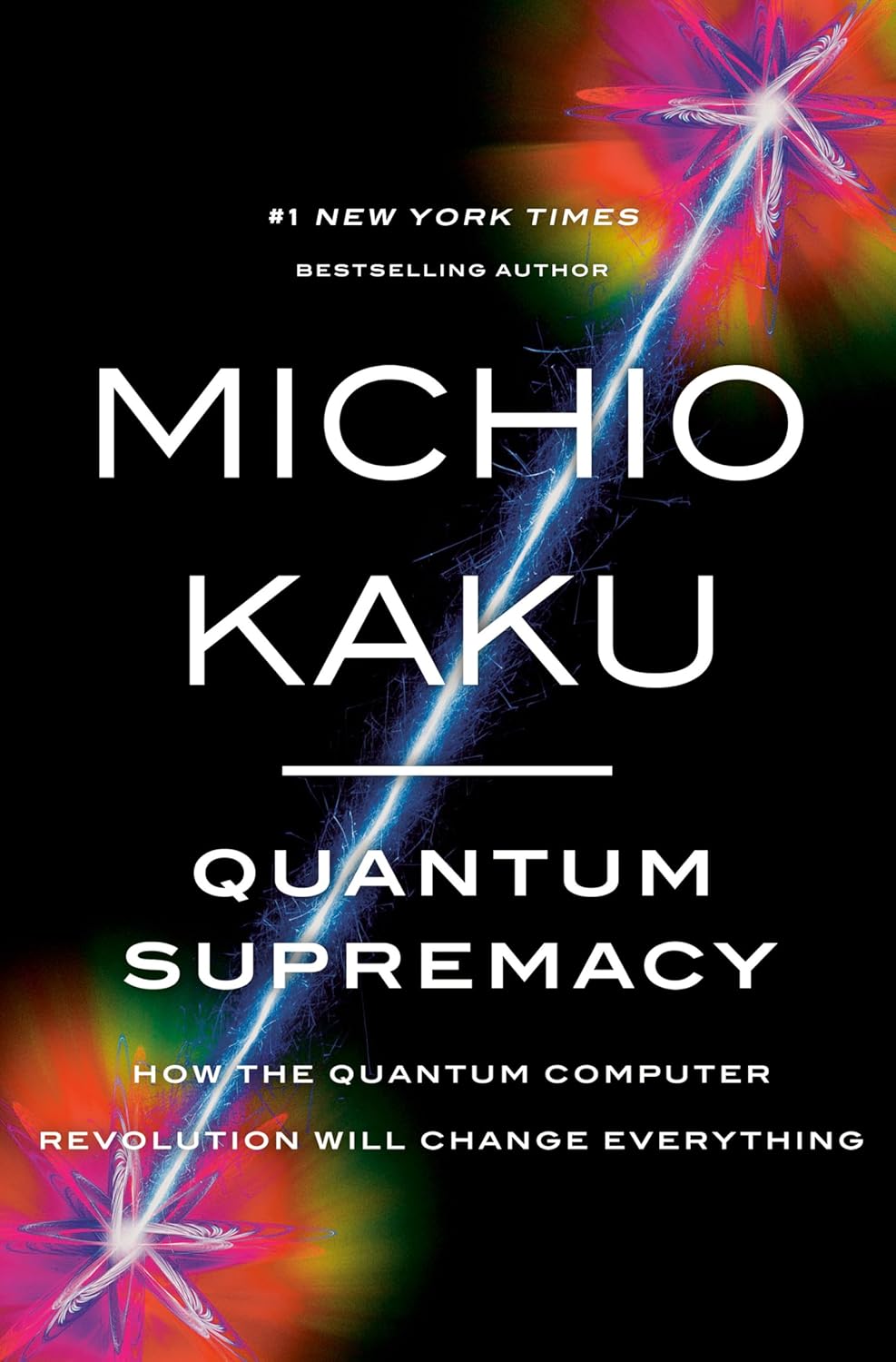
Physics' most-read popularizer explains what quantum computing will change — from drug discovery to machine learning.
As an Amazon Associate, Zendoric earns from qualifying purchases; the price does not change for you. · all our recommended books →
🔗 Related on Zendoric
- Gemini 4 Argon tops the Vals Index, but the real benchmark is the customer · 2026-10-08
- Google fuses perception and action in Gemini 3.5 Flash: the agent that watches the screen is no longer a separate model · 2026-06-26
- Google launches Gemini 3.5 Flash Cyber, a lightweight model to find and patch vulnerabilities at scale · 2026-07-24