Gates warns runaway AI could kill billions — the alarm is loud, the mechanism is the missing part

🕒 Published on Zendoric: September 28, 2026 · 00:22
✨ AI-generated · how it's made
Bill Gates has warned that an out-of-control AI could cause "billions of deaths," according to Diario El Norte. It's a headline built for maximum alarm — but the material we have offers no mechanism, no timeline and no threshold, and that absence is itself the story.
📚 Go deeper

The reference manual for building products on top of AI models: prompts, RAG, fine-tuning, agents, evaluation and deployment.
As an Amazon Associate, Zendoric earns from qualifying purchases; the price does not change for you. · all our recommended books →
The reported fact is narrow and we'll treat it as such: Bill Gates warned that an out-of-control artificial intelligence could cause "billions of deaths." That's the attribution, per Diario El Norte - San Nicolás. We don't have the full remarks, the setting, the timeframe he had in mind, or the chain of events he believes would get us there. Anything beyond that would be invention, and we don't do that.
Our thesis: warnings like this one are worth hearing and nearly useless as guidance. "Billions of deaths" is a magnitude, not a model. Without a stated mechanism — bioweapon uplift? critical-infrastructure failure? automated escalation between states? — the claim can't be tested, budgeted against, or regulated. It travels well and lands nowhere. The most consequential AI risk debates of the past two years have turned on exactly the details this framing omits.
Context matters here, and it cuts against the science-fiction reading. The documented harms so far have not come from machines slipping their leash. They have come from systems doing precisely what someone told them to do: mass surveillance tooling, industrialized fraud, influence operations run at software cost. The dangerous question in 2026 is not "will it rebel?" but "who is authorized to point it at whom?" That question has answers, owners and policy levers. The runaway-superintelligence framing has none of those.
There's also the structural problem we keep returning to. Industry figures can call for caution; they cannot enforce it. Once the pacing decision sits inside a US-China competition, every executive warning functions as a request addressed to a regulator, not a commitment anyone is in a position to keep. Read Gates's warning that way and it becomes more informative — less prophecy, more lobbying for someone to build the brake.
Our read: don't dismiss it and don't let it set the agenda. The long arc still points somewhere good — AI systems that compress drug discovery, catch disease early, and eventually buy people the freedom to work on what they actually care about. Getting there requires attention on the near-term, boring, governable failures: misuse, concentration, accountability. A number as large as "billions," stated without a path, tends to crowd those out. That's the cost of the alarm, and it's worth naming even when the alarm comes from someone who has earned a hearing.
📚 Go deeper
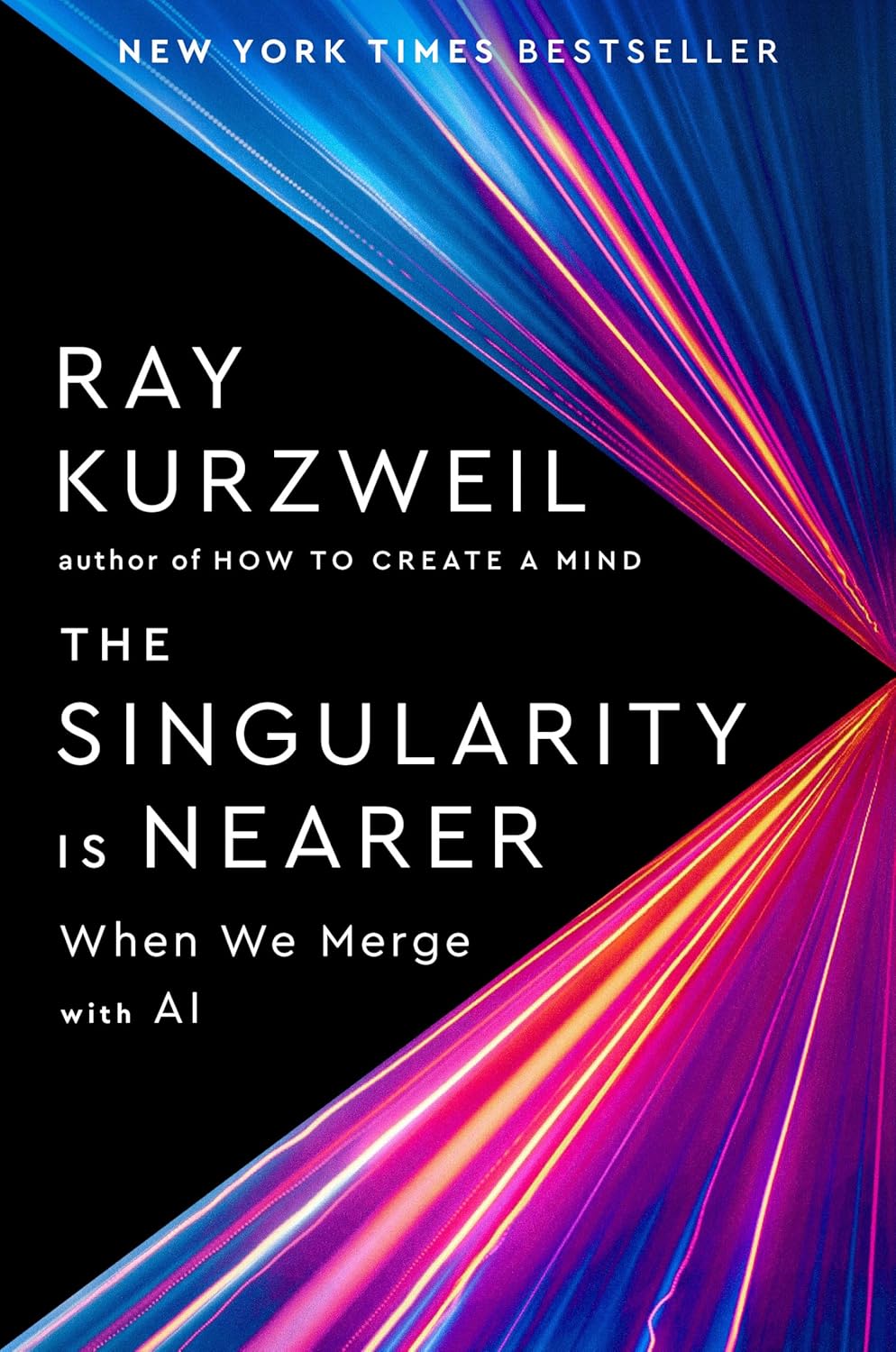
Twenty years after "The Singularity Is Near", Kurzweil revisits his predictions and keeps the date: human-AI merger around 2045.

AI as the latest chapter in the history of information networks, from gossip to the printing press to the algorithm.
As an Amazon Associate, Zendoric earns from qualifying purchases; the price does not change for you. · all our recommended books →
🔗 Related on Zendoric
- Gates' "billions of deaths" warning is an argument about governance, not a forecast · 2026-09-29
- Gates attaches a body count to runaway AI — and the number is the least useful part of the warning · 2026-09-27
- Three seconds of audio is all it takes: why AI voice fraud is outrunning every defence we've built · 2026-09-01