Three seconds of audio is all it takes: why AI voice fraud is outrunning every defence we've built

🕒 Published on Zendoric: September 1, 2026 · 00:48
✨ AI-generated · how it's made
The FBI counted more than $893 million lost to AI-driven crime in 2025 — and $352 million of it came from victims over 60. The technical barrier to cloning a voice has collapsed to three seconds of audio, while every safeguard the industry offers works only after the money is gone. That asymmetry, not the cloning itself, is the real story.
📚 Go deeper
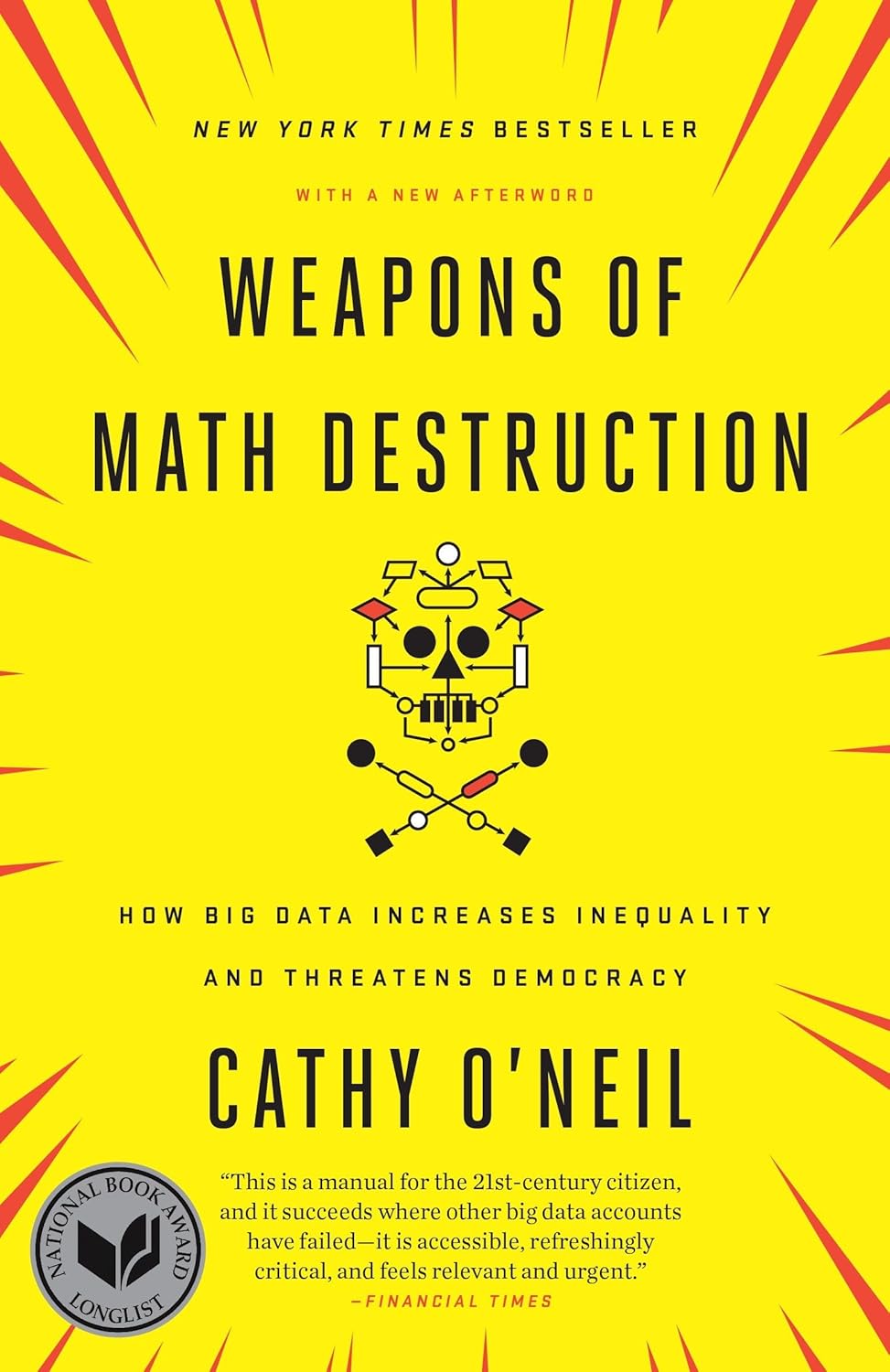
How opaque algorithms decide who gets credit, a job or parole — and why they tend to punish the same people.
As an Amazon Associate, Zendoric earns from qualifying purchases; the price does not change for you. · all our recommended books →
The numbers are now official. In April 2026, the FBI's Internet Crime Complaint Center published its 2025 annual report on online crime and, for the first time in the report's 26-year history, broke out "AI-driven fraud" as its own category: more than 22,000 complaints and losses exceeding $893 million. Victims aged 60 and over accounted for $352 million of that — roughly 40% of the total from a single age bracket. The FBI itself notes the figures cover only what victims recognised and reported.
The mechanics are documented in a piece by engineer Tim Green, "The Three-Second Theft," published on SmarterArticles and picked up by GIGAZINE. Green's account centres on Sharon Brightwell, a resident of Hillsboro County, Florida, defrauded in July 2025. The call opened with what Brightwell described as "hearing my daughter crying" — an AI clone claiming to have hit a pregnant woman while driving, phone confiscated by police. A second voice, posing as her lawyer, asked for $15,000 in cash for bail and instructed Brightwell not to state the purpose of the withdrawal at the bank, warning it "could damage her daughter's reputation." Within an hour the money was handed to a courier presenting himself as court-affiliated. The real daughter had been nowhere near an accident.
The technical fact that makes this scalable is the three-second threshold. Current voice-cloning systems need roughly three seconds of clean audio to produce speech that a family member cannot distinguish from the original. Three seconds is a voicemail greeting, a podcast clip, a story on Instagram. As Green puts it, a grandchild in a single TikTok video supplies everything a fraudster needs. Compare that with the state of the art five years ago, when usable cloning demanded minutes of studio-grade recording and technical skill; the input cost of the attack has fallen by orders of magnitude while the payoff — an American household's cash savings — has not.
The defence side is where the analysis gets uncomfortable. Consumer Reports has assessed the major voice-cloning products — Descript, ElevenLabs, Lovo, PlayHT, Resemble AI, Speechify — and found most lack effective safeguards against misuse. ElevenLabs, the most prominent, does more than most: a usage policy banning impersonation, a public classifier that flags audio likely generated by its own system, provenance tracking that links output to the account that made it, and blocked-voice protection for specific individuals during election periods. Green's critique is not that these are trivial. It is that they are almost entirely **reactive** — they help investigators trace a fraud after the savings are gone, and do essentially nothing to stop a clone being generated from a three-second clip in the first place. His diagnosis of why is structural: preventive verification costs conversions, and a fast-moving competitive market will not impose that cost on itself voluntarily.
Why the elderly? Green's answer is coldly economic. Older targets hold higher average savings, so a successful call yields far more per attempt. And the standard advice fails at exactly the moment it's needed: "even if you explain 100 times that voices can be faked, that knowledge goes out the window when an AI voice clone pretending to be your child asks for help." Fraud awareness is a cognitive defence; this attack is engineered to bypass cognition entirely by routing through panic.
**Our reading.** This is the clearest current example of a pattern we keep returning to: the near-term harm from AI is not rogue superintelligence, it is the industrialisation of ordinary crime. The same generative capability that will let a stroke patient speak in their own voice again is, today, a cash-extraction tool aimed at grandparents. Both things are true, and pretending otherwise in either direction is dishonest. The policy lever Green points at — identity verification at the point of tool use, so that every clone is traceable to a real, accountable human — is unglamorous and would slow signups, which is precisely why no vendor will adopt it unilaterally. That is a textbook case for regulation: not banning the capability, which is genuinely valuable and already open-source, but making provenance a condition of operating a commercial cloning service. Long term, we still expect this technology to end up net-positive — voice synthesis is a genuine accessibility breakthrough. Short term, the honest verdict is that the offence is compounding faster than the defence, the $893 million figure should be read as a floor rather than a ceiling, and the burden is being carried disproportionately by the people least equipped to spot it. Meanwhile the practical countermeasure remains embarrassingly analogue: agree a family code word, and hang up and call back on a known number.
📚 Go deeper
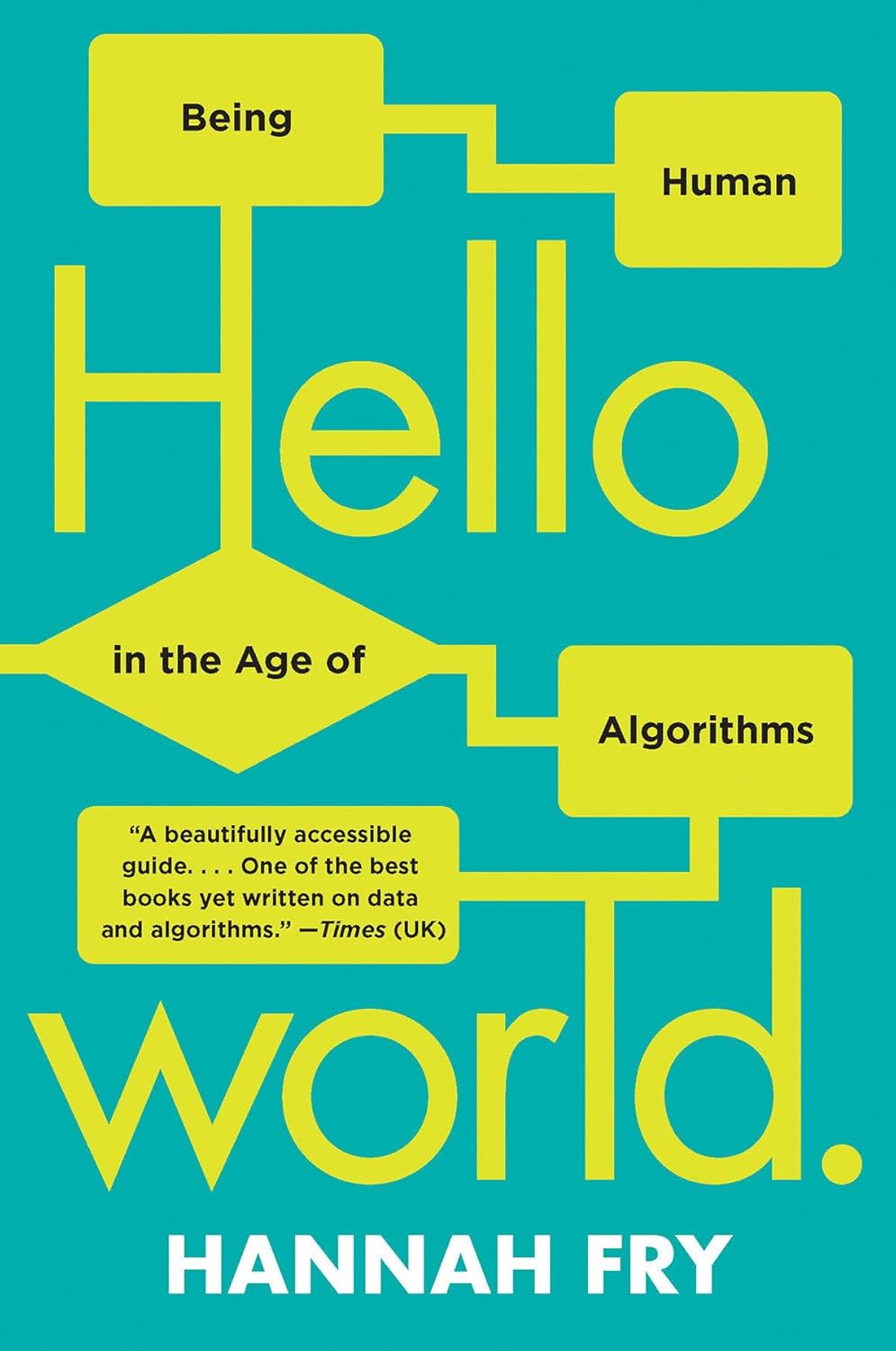
Algorithms in justice, medicine, cars and art, explained with British humor and mathematical honesty.

AI as the latest chapter in the history of information networks, from gossip to the printing press to the algorithm.
As an Amazon Associate, Zendoric earns from qualifying purchases; the price does not change for you. · all our recommended books →
🔗 Related on Zendoric
- Three seconds of audio is all it takes: AI voice fraud wins because the safeguards are built to arrive too late · 2026-09-01
- Three seconds of audio is enough: AI voice fraud's flaw is that every defense arrives after the money is gone · 2026-07-28
- Three seconds of audio, $893M in losses: AI voice fraud is a design failure, not a user-education problem · 2026-07-31