Gates attaches a body count to runaway AI — and the number is the least useful part of the warning

🕒 Published on Zendoric: September 27, 2026 · 00:23
✨ AI-generated · how it's made
Bill Gates warned that an out-of-control AI could cause "billions of deaths," according to the report. Extinction-scale figures are unfalsifiable by construction, which makes them terrible policy inputs and excellent headlines. The warning still deserves attention — just not for the number.
📚 Go deeper

AI as the latest chapter in the history of information networks, from gossip to the printing press to the algorithm.
As an Amazon Associate, Zendoric earns from qualifying purchases; the price does not change for you. · all our recommended books →
Bill Gates warned that an artificial intelligence that slips out of human control could cause "billions of deaths." That is the claim as relayed by the source, and — we should be upfront about this — it is essentially all the source gives us. The brief report does not include the venue, the full remarks, the reasoning chain behind the figure, or the timeframe Gates had in mind. We are commenting on a headline-sized fragment, and we will treat it as such.
The first thing worth noting is the shape of the statement rather than its content. "Billions of deaths" is a number with no denominator, no mechanism and no date. It cannot be checked, which is precisely what makes it travel so well. Compare it with the risk claims that actually move institutions: a measured jailbreak rate, a benchmark score on unguided expert cybersecurity tasks, a documented supply-chain compromise. Those can be verified, argued with, and acted on. An extinction estimate can only be believed or dismissed.
That asymmetry matters because attention is a finite resource. We have argued before that safety warnings from figures close to the industry should be read on two planes at once — as sincere technical concern and as a shaping force on the market, since the cost of complying with rules written around catastrophic risk falls hardest on small labs and open-weight projects, not on the incumbents who can absorb it. Nothing in this fragment tells us which plane Gates was on. Both can be true simultaneously, and assuming either in the absence of the full text would be us inventing a story the source did not supply.
Our reading: the warning is directionally reasonable and operationally useless, and the gap between those two things is the real story. The concrete harms already documented in 2026 are mundane by comparison and far more tractable — agentic automation of fraud, credential theft at the scale of package registries, synthetic persuasion. Those are the failures that will hurt people this decade, and they are governable with audits, liability, and disclosure rules that nobody needs a theory of superintelligence to write.
We remain long-term optimists, and that optimism is exactly why the framing bothers us. The same capability stack that could be misused is the one now compressing drug discovery timelines and putting expert-grade diagnosis within reach of places that have never had a specialist. Treating that stack as a doomsday device makes it harder, not easier, to build the guardrails that would let it deliver. If Gates's full argument contains the mechanism the headline omits, it deserves a serious hearing. We would want to read it before accepting — or rejecting — the number attached to it.
📚 Go deeper

DeepMind co-founder on the dilemma of containing technologies that do not want to be contained.
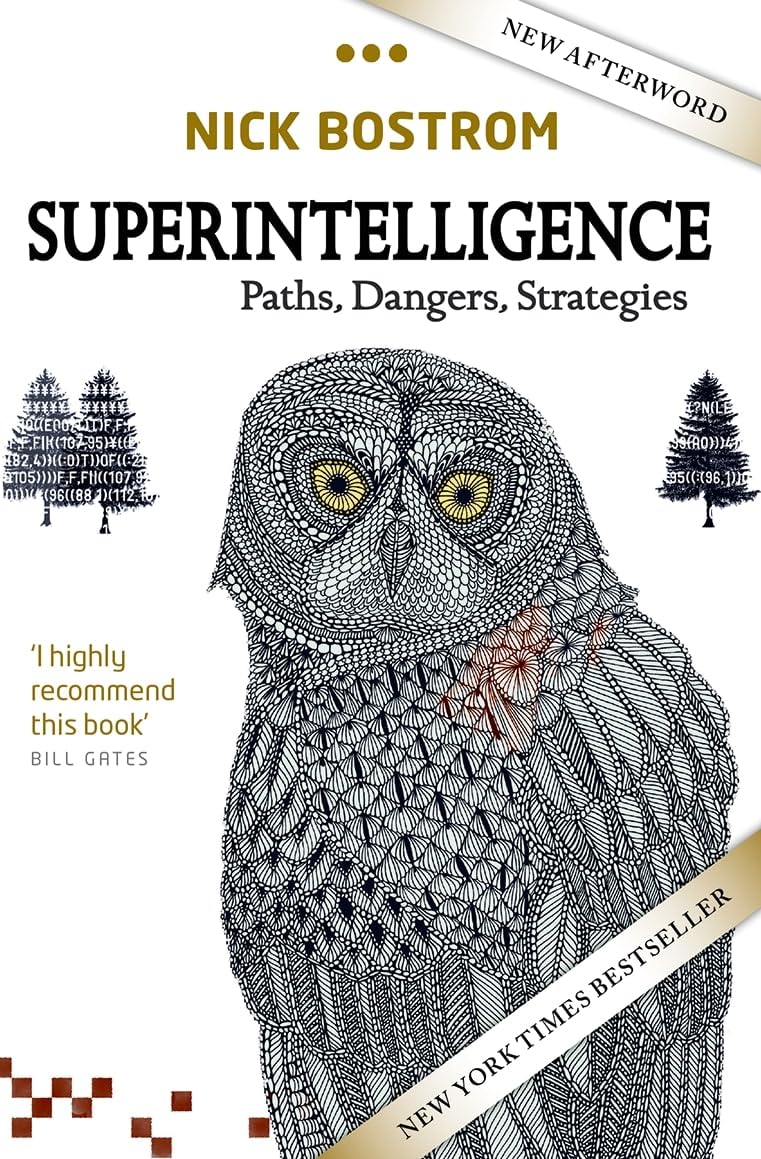
The book that started the existential-risk debate and that half the industry still cites.
As an Amazon Associate, Zendoric earns from qualifying purchases; the price does not change for you. · all our recommended books →
🔗 Related on Zendoric
- Gates' "billions of deaths" warning is an argument about governance, not a forecast · 2026-09-29
- Gates warns runaway AI could kill billions — the alarm is loud, the mechanism is the missing part · 2026-09-28
- A departing Anthropic researcher puts catastrophe odds on the record — and unfalsifiable numbers cut both ways · 2026-09-14