Gartner: 55% of companies will explore alternatives to VMware before 2029, though it still sees it as a leader

🕒 Published on Zendoric: September 24, 2026 · 00:26
✨ AI-generated · how it's made
Gartner has published its Magic Quadrant for Distributed Hybrid Infrastructure (DHI) —that is, for hybrid cloud platforms— and opens it with a striking "strategic planning assumption": by 2029, 55% of enterprises will have begun proofs of concept with alternative hybrid infrastructure products…
📚 Go deeper

DeepMind co-founder on the dilemma of containing technologies that do not want to be contained.
As an Amazon Associate, Zendoric earns from qualifying purchases; the price does not change for you. · all our recommended books →
Gartner has published its Magic Quadrant for Distributed Hybrid Infrastructure (DHI) —that is, for hybrid cloud platforms— and opens it with a striking "strategic planning assumption": by 2029, 55% of enterprises will have started proofs of concept with alternative distributed hybrid infrastructure products to replace their VMware-based deployments and adopt hybrid cloud infrastructure delivery, up from 25% in 2026.
The 2029 date is no accident: it marks six years since Broadcom closed its acquisition of VMware. Many VMware customers renewed three-year subscriptions just before that deal closed, and migrating to a rival platform is a risky, complex project, so numerous customers prefer to stay with Broadcom longer while they design their exit plans. If those organizations renew another three-year subscription during 2026, 2029 would be the natural point to make the jump.
Several competitors in the virtualization space have been trying for some time to win over VMware customers, but progress is slow. Nutanix CEO Rajiv Ramaswami has repeatedly said that some customers are still several years away from being ready to move. Meanwhile, although Gartner expects most VMware customers to consider a switch, Broadcom's business unit will keep most of them for at least three more years, and it has recently focused on revamping its entry-level vSphere Standard product, a move that gives it a chance to retain more current users.
In the DHI Magic Quadrant, Gartner places VMware as a market leader alongside AWS, Nutanix, Microsoft and Oracle, and rates its core virtualization technology, its formal sovereign cloud ecosystem and its AI-native infrastructure as strengths. However, the first weakness Gartner mentions is telling: VMware has seen a rise in negative sentiment among Gartner clients, particularly regarding communication, business practices and support delays, compared with other market leaders.
Gartner repeats similar observations in another report, the Magic Quadrant devoted to Server Virtualization Platforms, the first the firm has published in a decade. There it rates VMware as the technology leader in the sector across all the use cases considered, praising its technology and AI integration, but it also notes that Gartner clients have reported that the transition to per-core subscriptions has brought significant cost increases, with little flexibility in negotiations, leading many infrastructure and operations leaders to actively evaluate migration alternatives.
VMware is not the only one to draw criticism. In the DHI Magic Quadrant, Gartner notes that Nutanix's licensing and pricing models can be complex and less competitive than those of other market leaders, and that AWS's on-premises Local Zones carry premiums of between 15% and 35% over their parent regions in the most expensive metropolitan areas, along with additional "substantial premiums." In the server virtualization quadrant, Gartner warns that Nutanix licensing can be complex and that pricing often exceeds expectations, recommending that potential migrations be carefully assessed for return on investment. On Microsoft, the firm warns that administrators must juggle multiple disconnected management consoles —Azure Portal, Windows Admin Center and System Center Virtual Machine Manager— to carry out routine operational tasks.
The server virtualization quadrant also includes new players, since no dedicated one had been published in ten years. HPE lands in the "Challenger" category, as Gartner considers that its products lack important features and that the company has yet to establish a solid track record in this area. Proxmox, a VMware alternative that The Register often mentions among lower-end users, lands in the "Niche Player" category for its lack of support for tier-one enterprise applications and for uncertainty over support availability stemming from its small headcount, a factor the company itself has recently addressed by adding a North American office and 24x7 support.
📚 Go deeper
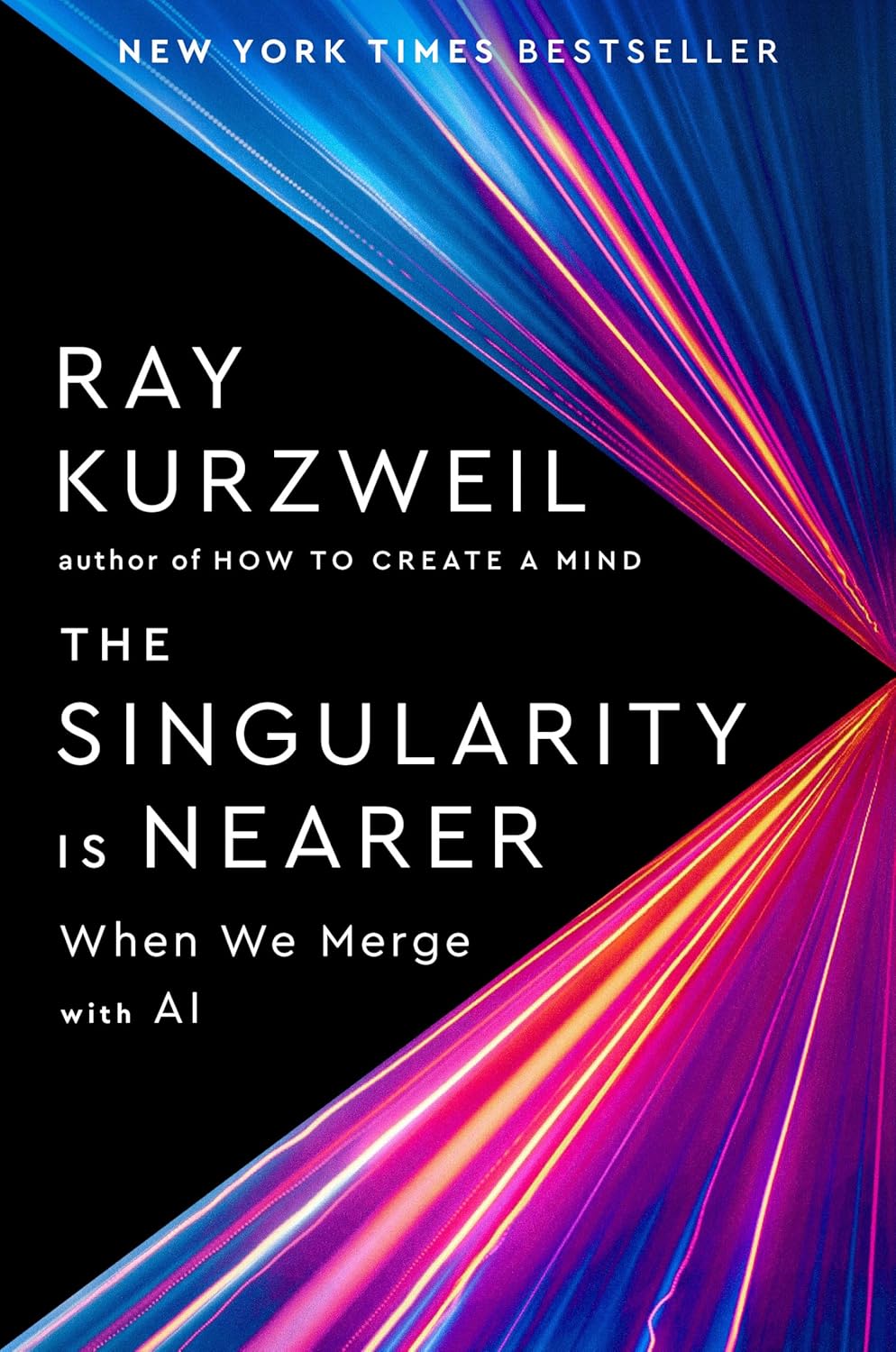
Twenty years after "The Singularity Is Near", Kurzweil revisits his predictions and keeps the date: human-AI merger around 2045.

AI as the latest chapter in the history of information networks, from gossip to the printing press to the algorithm.
As an Amazon Associate, Zendoric earns from qualifying purchases; the price does not change for you. · all our recommended books →
🔗 Related on Zendoric