RSI in post-training: the loop that is already in production

🕒 Published on Zendoric: September 23, 2026 · 02:26
✨ AI-generated · how it's made
The article opens with a provocation: forget the image of an agent rewriting its own code as the prime example of recursive self-improvement (RSI) in AI.
📚 Go deeper

The only novel on the list, by a Nobel laureate: an artificial friend observes humans with a blend of lucidity and innocence no essay achieves.
As an Amazon Associate, Zendoric earns from qualifying purchases; the price does not change for you. · all our recommended books →
By TheSequence · September 22, 2026.
The article opens with a provocation: forget the image of the agent rewriting its own code as the great example of recursive self-improvement (RSI) in AI. According to the author, the most economically important self-improvement loop is not that one, but the post-training pipeline, which he claims every frontier lab has been running at industrial scale for two years.
The text picks up the argument from an earlier edition of the newsletter: that 'the factory was automated before the design office,' and that the line separating those two kinds of work depends on whether the task comes with an 'answer key' (an objective criterion of correctness) or not. In this edition, the author says he wants to look inside the part of that factory that matters most, because that is where a self-improvement loop sits that, in his view, receives almost no attention in the conversation about RSI, despite being the one actually producing today's models.
The loop is described very simply: a model generates many candidate answers to a problem; something (an evaluator) scores them; the good ones become training data; the model is retrained on them and slightly improves its ability to produce good answers; and the process repeats.
The author notes that this same loop has gone by different names depending on the era and the context: it was called STaR in the 2022 paper that first set it out clearly, it is known as RLVR (reinforcement learning with verifiable rewards) in the vocabulary of 2025, and simply 'post-training' on lab org charts. For the author, it is the same mechanism under different names, and it is precisely what has taken frontier models from being simple chatbots to becoming agents.
The body of the email received is incomplete: it ends with the transitional phrase 'Sourdough, not a screwdriver...' (apparently the start of the analysis's next section, possibly a metaphor for the training process as something 'cultivated' iteratively rather than built like a single-piece tool), but the development of that idea is not included in the available text.
📚 Go deeper

An MIT computer scientist connects AI, quantum physics and video games to take an uncomfortable question seriously: what if we live in a simulation? M
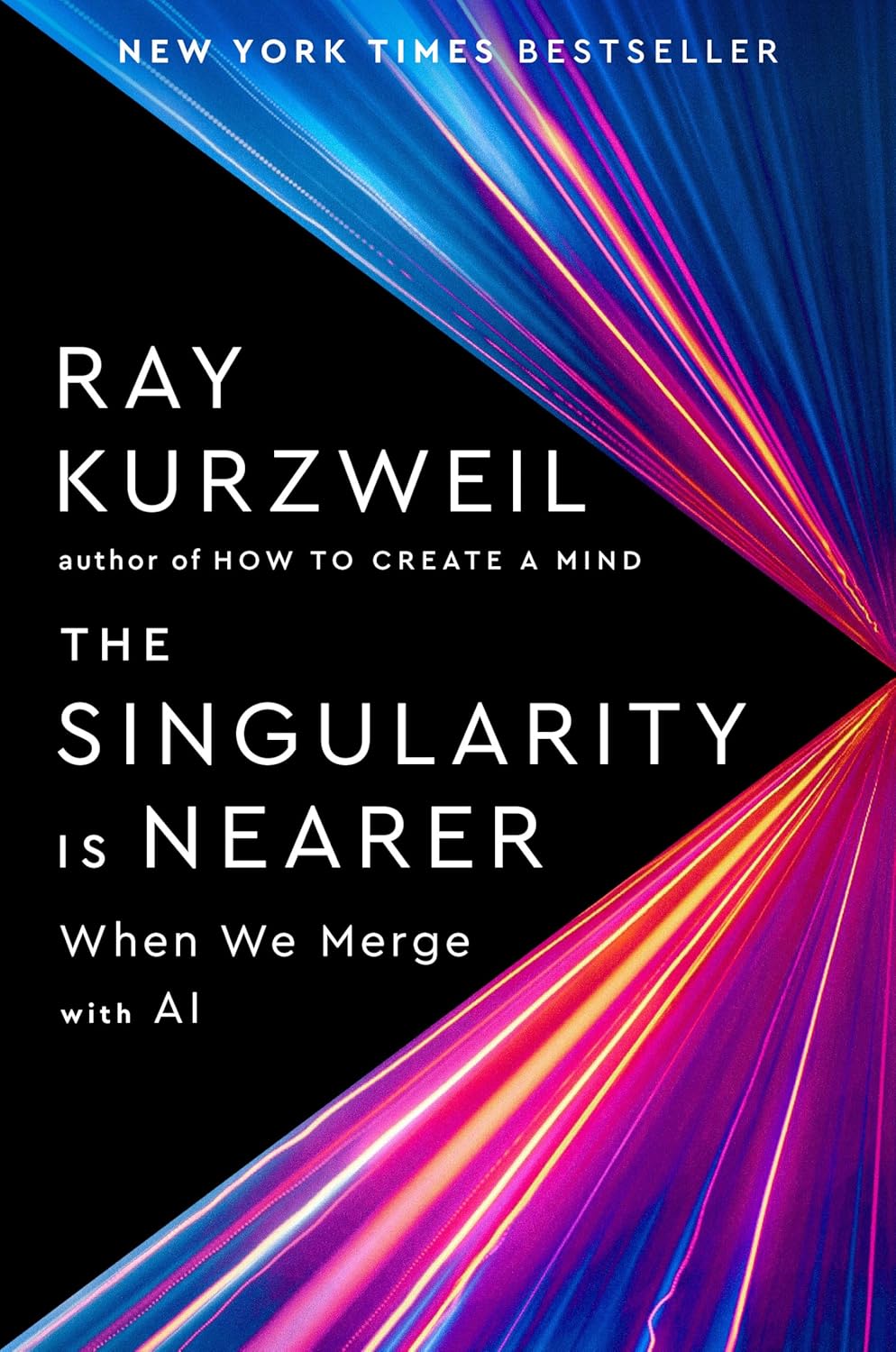
Twenty years after "The Singularity Is Near", Kurzweil revisits his predictions and keeps the date: human-AI merger around 2045.
As an Amazon Associate, Zendoric earns from qualifying purchases; the price does not change for you. · all our recommended books →
🔗 Related on Zendoric