Google opens preorders for its $899 Gemini AI laptop, the Googlebook
🕒 Published on Zendoric: September 23, 2026 · 02:26
✨ AI-generated · how it's made
Google has opened preorders for its new laptop, dubbed the Googlebook, first unveiled in May, with a starting price of $899.
📚 Go deeper

The reference manual for building products on top of AI models: prompts, RAG, fine-tuning, agents, evaluation and deployment.
As an Amazon Associate, Zendoric earns from qualifying purchases; the price does not change for you. · all our recommended books →
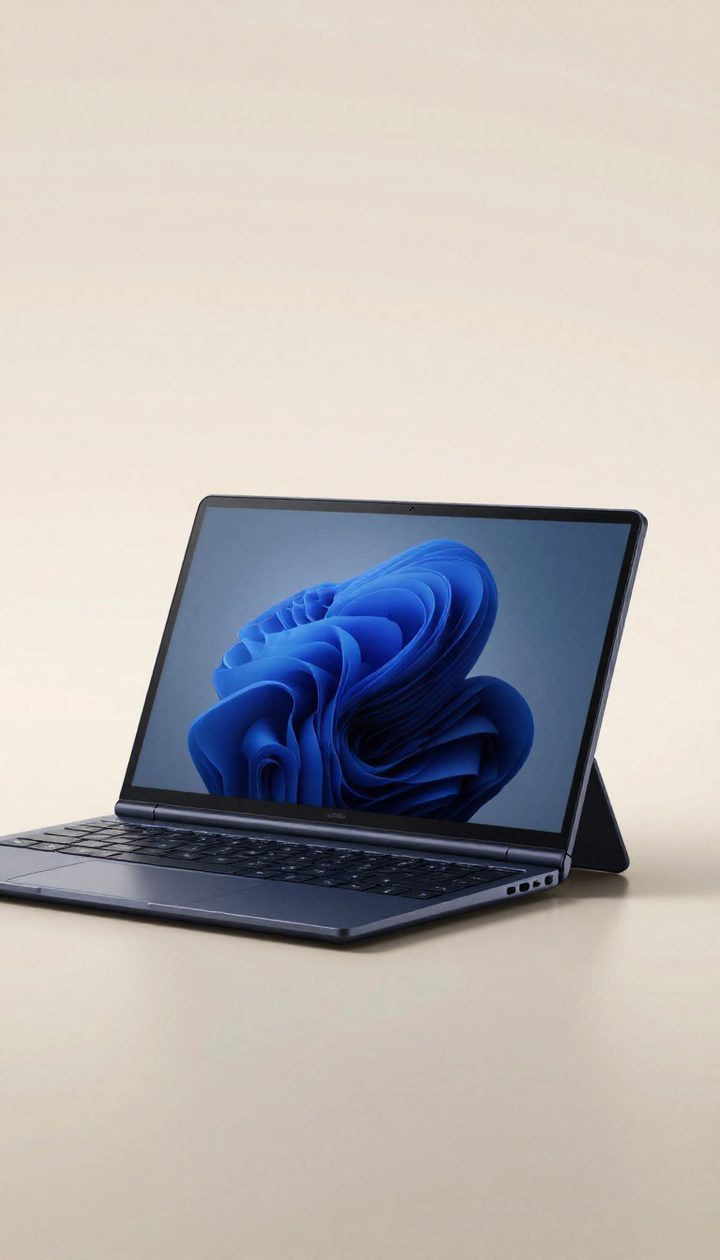
Google has opened preorders for its new laptop, dubbed the Googlebook, first unveiled in May, with a starting price of $899. The machines go on sale on October 4 in the United States and October 5 in Canada, the United Kingdom, Ireland, France, Germany and Australia, and can already be reserved at the Google Store, Best Buy and other retailers.
The Googlebook runs Android OS combined with a desktop version of the Chrome browser and other elements inherited from ChromeOS, positioning it a step above traditional Chromebooks. The device's real selling point, however, is not the operating system but the deep integration of Gemini's latest capabilities directly into the hardware.
Among the standout features is the so-called Magic Cursor, an AI-powered pointer that acts as a bridge to Gemini: it lets you select content from a web page for the AI to work with, ask Gemini whether an email you hover over looks suspicious, or pick several images and ask it to blend them visually. The article notes that this feature is strongly reminiscent of Android's “Circle to Search”, a gesture-based tool that likewise did not trigger a mass exodus to Google's mobile operating system, which casts doubt on whether Magic Cursor is, on its own, a compelling reason to buy the new laptop — all the more so now that AI agents already exist that can take control of the computer and the browser to carry out tasks.
Another new addition is Rambler, an AI-enhanced dictation feature that turns disorganized mental rambling into readable text. The piece calls it one of the device's best AI additions for covering a surprisingly useful need, though it qualifies that this too is not, by itself, sufficient reason to buy a new machine. On top of that come the so-called “vibe-coding” widgets, described as a minor addition, along with Gemini Spark and Gemini Live, features that, it is noted, do not actually require this specific hardware to work.
Beyond the specific features, what is most relevant is the underlying strategy: Google appears to be targeting the K-12 education market, where there are some 50 million Chromebooks in use by students and teachers. The company has indicated that current Chromebooks will continue to receive support, although many of them will be able to opt in the future to make the leap to the Googlebook experience, suggesting a long-term plan to move that vast installed base toward Gemini.
On the commercial side, the $899 price includes twelve months of Google AI Pro, with 5 TB of cloud storage, Gemini Advanced tools and three months of YouTube Premium and Adobe Photoshop, among other perks. Google has also announced that the devices will receive regular updates for up to ten years.
The flagship models in this new lineup will be built by Acer, ASUS, Dell, HP and Lenovo, using materials such as aluminum, magnesium alloy and carbon fiber. They will feature OLED displays of up to 2.8K, glass trackpads with haptic feedback and backlit keyboards. Inside, they will pack Intel and Qualcomm processors paired with dedicated NPUs, and Google promises up to 14 hours of battery life.
All told, the launch reads as a bet by Google that generative AI —and Gemini specifically— can be, on its own, enough of an incentive for users to switch laptops, rather than simply accessing those same capabilities through installed apps or the browser. The article's own analysis is skeptical that the flashiest features, taken individually, justify that purchase decision, and locates the move's real significance in Google's ambition to convert millions of Chromebook users, especially in education, into regular Gemini users.
📚 Go deeper

The story of NVIDIA and Jensen Huang: how a video-game card company ended up making the most coveted resource on the planet.

DeepMind co-founder on the dilemma of containing technologies that do not want to be contained.
As an Amazon Associate, Zendoric earns from qualifying purchases; the price does not change for you. · all our recommended books →
🔗 Related on Zendoric
- Google prioritizes efficiency with Gemini 3.6 Flash, 3.5 Flash-Lite and the specialized 3.5 Flash Cyber model · 2026-07-23
- Google launches Gemini 3.5 Flash Cyber, a lightweight model to find and patch vulnerabilities at scale · 2026-07-24
- Google bets on MrBeast instead of benchmarks: Gemini's survival stunt is a distribution play · 2026-09-02