Netflix buys 'Wingmom': the comedy turning the fear of AI replacing real love into a screenplay

🕒 Published on Zendoric: September 17, 2026 · 08:28
✨ AI-generated · how it's made
Netflix has picked up 'Wingmom,' a script by Sam Laybourne (Black-ish, Zoey's Extraordinary Playlist) in which a mother becomes her 25-year-old son's 'wingmom' to pull him away from an AI companion and back to real romance. Behind the joke, Hollywood puts a date on a social anxiety already circulating as data, not just fiction.
📚 Go deeper

The only novel on the list, by a Nobel laureate: an artificial friend observes humans with a blend of lucidity and innocence no essay achieves.
As an Amazon Associate, Zendoric earns from qualifying purchases; the price does not change for you. · all our recommended books →
By Zendoric · September 17, 2026. Netflix has bought 'Wingmom', an original spec script (that is, written without a prior commission and sold to a studio afterwards) by comedy writer and producer Sam Laybourne, whose credits include series such as Black-ish, Acapulco, DMV and Zoey's Extraordinary Playlist, according to finaldraft.com, the blog of the screenwriting software Laybourne uses to write. The premise: a single mother discovers that her 25-year-old son is thinking of giving up on real romance in favor of the company of an artificial intelligence, and decides to become his 'wingmom' —the figure who helps someone else flirt— to teach him how to fall in love the old-fashioned way.
Laybourne says the idea was born from observing how complicated it is to date today as a young man: social media, smartphones and an increasingly sophisticated AI make giving up entirely on human relationships, with all their awkwardness, no longer sound far-fetched. 'It feels like it was easier for us', he says of his own experience compared with that of his 17-year-old son, who is just starting to date. The project reached Netflix with a push from producers Jeff Robinov and Tabitha Shick, of Talking Pictures, who helped generate interest ahead of the sale.
That a family comedy turns the possibility of 'dating' an AI instead of a person into a joke is not a screenwriter's whim: it is the dramatization of an already documented phenomenon. Broadly speaking, recent years have seen the consolidation of a market of companion apps and chatbots explicitly designed to simulate emotional bonds, and various studies and reports have pointed to growing use among young adults, especially men, who find in those interactions an emotionally less costly alternative to real courtship. Laybourne is not inventing the problem: he picks it up from the atmosphere and carries it into fiction, which usually takes a couple of years to digest what is already happening out on the street (or on a phone screen).
Our reading is that this sale matters less as entertainment-industry news than as a cultural thermometer. When Hollywood turns a phenomenon into the premise of a mainstream comedy for a platform like Netflix, it is a sign that it has stopped being a niche anecdote and has become a topic the general public recognizes. And the angle Laybourne chose is revealing: it is not a horror story about machines replacing people, but a love story between mother and son about the cost of letting someone face real life, clumsily, on their own.
That distinction fits what we have been arguing about AI and human relationships: in the short term there is a genuine risk that artificial companionship —available, docile, frictionless— erodes a generation's tolerance for the discomfort inherent in bonding with another person, with a real social cost in isolation and loneliness that should not be minimized. But the cultural response 'Wingmom' proposes is not technological rejection, but a vindication of the human as something worth the effort, precisely because it is hard. It is a defense that does not need to demonize the tool: AI will remain useful in a thousand ways, including as company in real loneliness that does not always have an alternative; the nuance lies in not letting it replace, out of convenience, what does have a human substitute within reach. That this debate reaches Netflix in the form of a family comedy, and not only in psychology papers, is the best proof that it has taken hold in the collective imagination.
📚 Go deeper
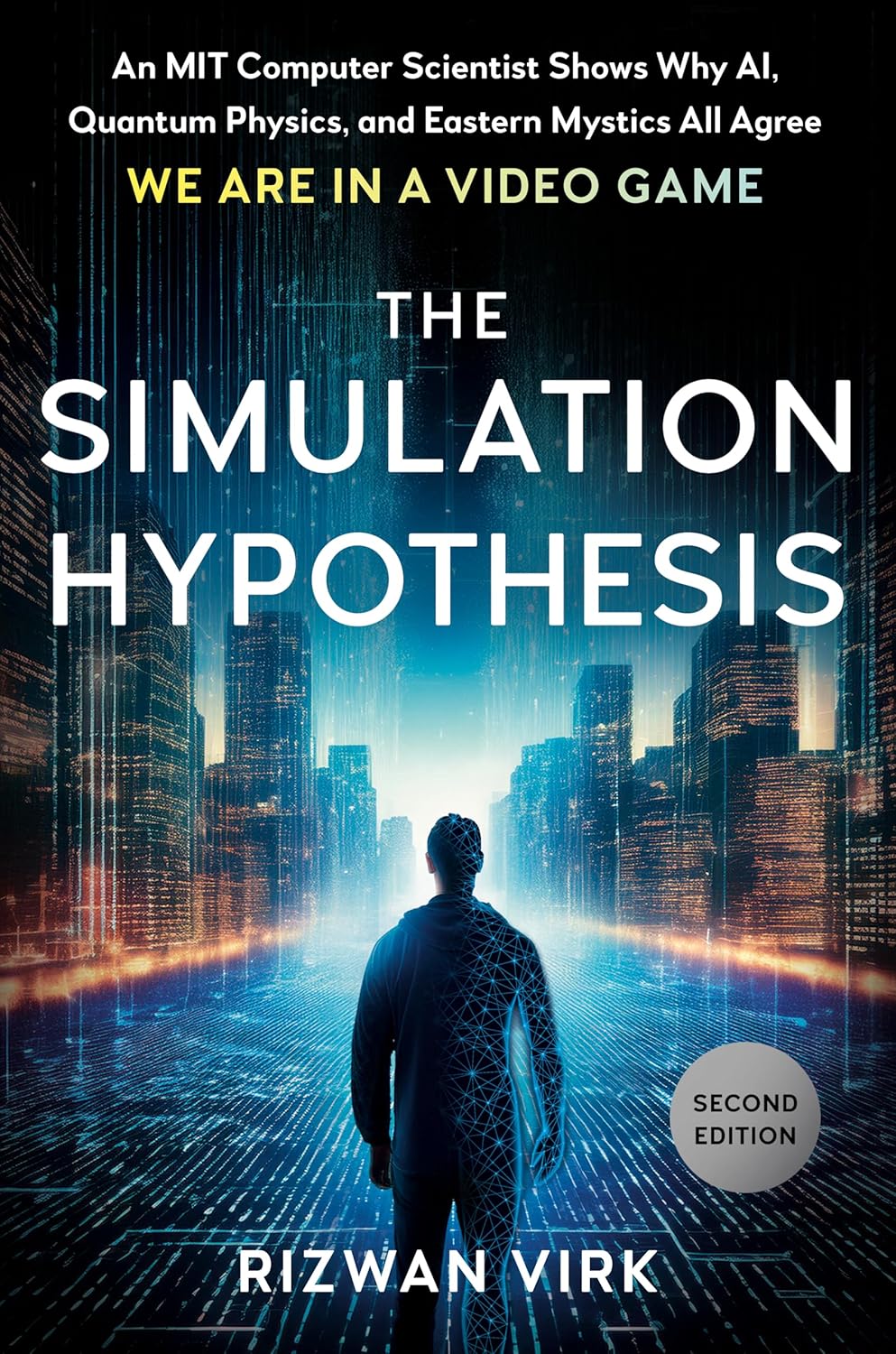
An MIT computer scientist connects AI, quantum physics and video games to take an uncomfortable question seriously: what if we live in a simulation? M

THE AI textbook: used by 1,500+ universities.
As an Amazon Associate, Zendoric earns from qualifying purchases; the price does not change for you. · all our recommended books →
🔗 Related on Zendoric
- Relationships with AI are already a real social phenomenon, not science fiction: the question is how to govern the risk · 2026-07-02
- When anxiety reaches AI engineers themselves: the fear of AI designing AI · 2026-07-20
- The ad becomes an agent: OpenAI tests sponsored chatbots in ChatGPT, and labeling is the only firewall · 2026-09-23