Nadella joins AI's common front: he calls for independent evaluators and a 'deliberate pace' ahead of superintelligence
🕒 Published on Zendoric: September 14, 2026 · 07:48
✨ AI-generated · how it's made
Satya Nadella, Microsoft's chief executive, insists any superintelligent system must remain under human control and backs independent evaluators inside the labs, joining a proposal already championed by Anthropic and OpenAI. Microsoft is also publishing a code of conduct for its own MAI models on Monday.
📚 Go deeper

The definitive piece of investigative journalism on OpenAI: 260+ interviews, the clash between safety and speed, and the attempted firing of Sam Altma
As an Amazon Associate, Zendoric earns from qualifying purchases; the price does not change for you. · all our recommended books →
By Zendoric · September 14, 2026.
Satya Nadella, chairman and chief executive of Microsoft, posted a message on X on Sunday that sums up the new consensus —declarative, at least— among the major AI labs: "any pursuit of superintelligence has to be grounded in the principle that if the AI we build does not help humanity and is not under human control, it is not worth pursuing," he wrote, as reported by Anadolu Ajansı. Nadella backed a "deliberate pace" of development in order to "get alignment right" and called on the industry to turn the idea of "embedded evaluators" —independent overseers operating inside the labs themselves— into concrete operational mechanisms, not statements of intent.
The announcement does not come in isolation. It follows Anthropic chief executive Dario Amodei's proposal to embed independent reviewers inside AI labs, and OpenAI's Sam Altman signaling that his company would adopt the practice. Nadella now adds Microsoft to that front, with an additional condition: he warns that governance of superintelligence "cannot be controlled by a handful of entities," but instead needs "broad representation across the ecosystem, countries and fields, including academia," and argues that a healthy frontier ecosystem needs both closed and open-source models. He also maintains that companies must retain control of their "unique and tacit knowledge," running continuous-learning architectures over which they can govern their own model weights without depending on a single provider. In parallel, Microsoft announced that on Monday it will open to public consultation a code of conduct to govern its own first-party models, grouped under the MAI (Microsoft AI) brand, the family the company develops outside its agreement with OpenAI.
What matters is not so much the isolated line —Nadella himself has spent years repeating variants of "AI must be under human control"— as the fact that three of the labs defining the frontier (Anthropic, OpenAI and now Microsoft) agree in proposing the same institutional mechanism: external evaluators inside the house, not self-assessment or one-off audits. That is the difference between a marketing commitment and the beginning of a verifiable industry standard, of the kind we already defend at Zendoric: what counts is not that a lab says it is safe, but that someone with internal access is able to contradict it and that a public timetable forces it to show as much.
That said, there is a tension worth flagging without accusing anyone of bad faith: the person calling for governance "not controlled by a handful of entities" is the head of one of the most concentrated companies in the sector, with a multibillion-dollar stake in OpenAI, de facto control of the cloud infrastructure that underpins much of the world's generative AI and now, on top of that, its own MAI model family so as not to depend on a single provider. The coherence of the message —open up the ecosystem, spread the power— clashes with the structural position of the person delivering it. That is no reason to dismiss it, but it is reason to watch whether the MAI code of conduct published today cedes real control or simply formalizes it on terms that already suit Microsoft. This is the same dynamic we had been observing in the Google-Microsoft fight to control the "plumbing" of agentic AI: power is no longer played out solely over which model is smarter, but over who controls the standards, the weights and the distribution.
This news fits a thesis we have held for months: the underlying problem is not whether superintelligence is technically possible, but who governs it and with what verifiable evidence, not with what promises. "Deliberate pace" is, put without euphemisms, a way of acknowledging that moving more slowly now costs money and market share in the short term —exactly the kind of friction we do not hide at Zendoric— in exchange for reducing the risk that the deployment of highly capable systems goes wrong. If independent evaluators become real practice and not a public relations episode, it will be one of the few signs that the sector is willing to pay that cost before it is imposed by law. And if, as we argue, AI ends up taking us to an era of unprecedented health and abundance, governing this transition phase well —with verifiable oversight, not slogans— is precisely what decides whether we get there with our institutions intact or not.
📚 Go deeper

DeepMind co-founder on the dilemma of containing technologies that do not want to be contained.
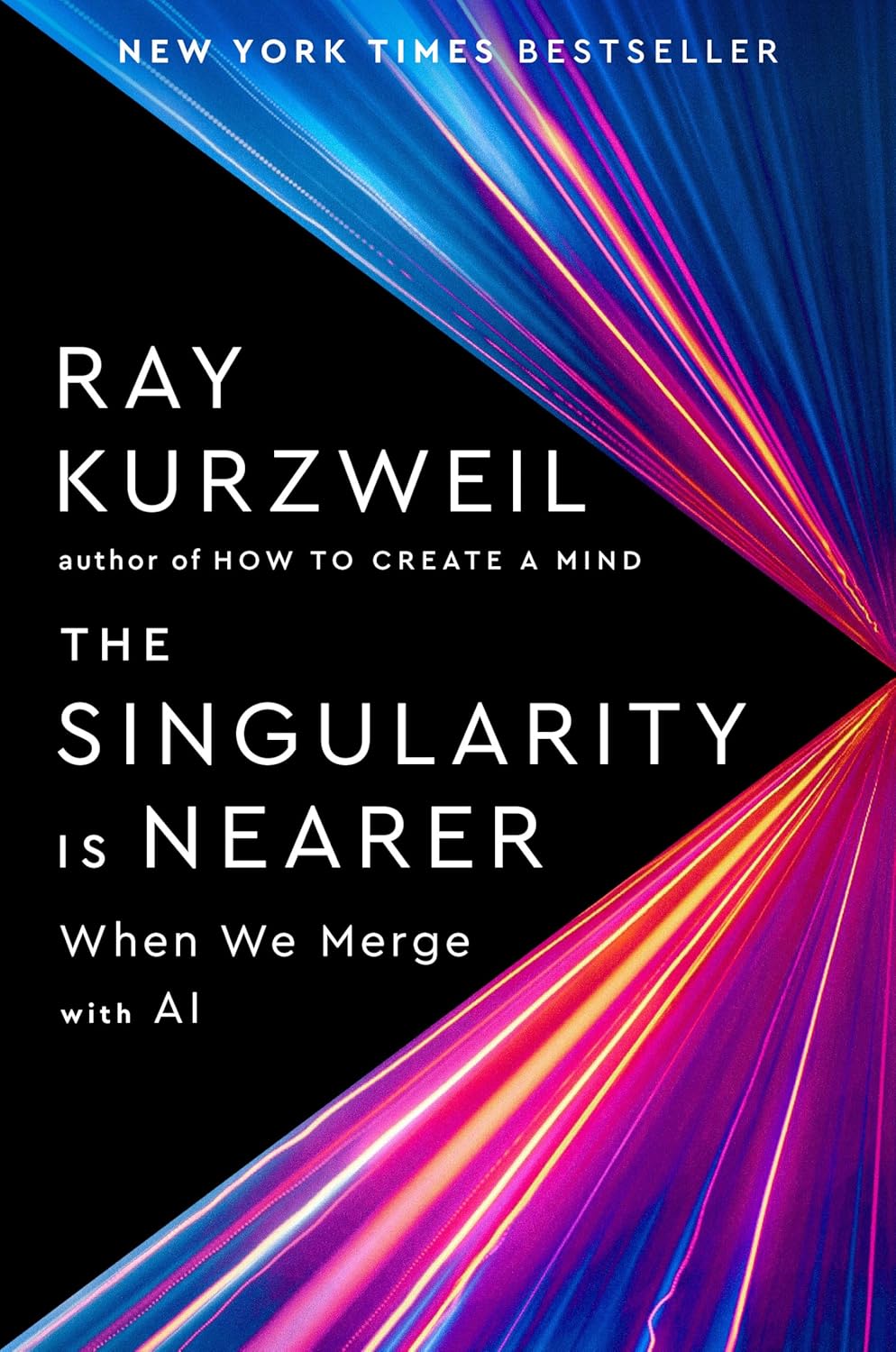
Twenty years after "The Singularity Is Near", Kurzweil revisits his predictions and keeps the date: human-AI merger around 2045.
As an Amazon Associate, Zendoric earns from qualifying purchases; the price does not change for you. · all our recommended books →
🔗 Related on Zendoric
- Trump rejects the AI slowdown sought by Amodei, Altman and Musk: 'whoever wins AI, wins' · 2026-09-14
- ESET joins the Agentic AI Foundation: cybersecurity gets a seat at the table where the agent standard is being carved up · 2026-07-02
- ESET joins the agentic AI standards foundation: the war is now over the rules, not just the model · 2026-07-04