John Ternus, Apple's new CEO, argues the iPhone is already "the best AI device" and invokes privacy against its rivals
🕒 Published on Zendoric: September 11, 2026 · 03:15
✨ AI-generated · how it's made
Apple used the presentation of its "Surprise and Shine" event (held last Wednesday) to publicly set out its artificial intelligence roadmap, delivered by John Ternus, who recently took over as CEO after Tim Cook moved to executive chairman of the company.
📚 Go deeper

DeepMind co-founder on the dilemma of containing technologies that do not want to be contained.
As an Amazon Associate, Zendoric earns from qualifying purchases; the price does not change for you. · all our recommended books →
Apple has used the presentation of its "Surprise and Shine" event (held last Wednesday) to publicly set out its artificial intelligence roadmap, and it did so through John Ternus, who recently took over as CEO after Tim Cook moved to executive chairman of the company. Ternus's central message was clear: Apple has no intention of launching a new type of hardware dedicated to AI, but is instead betting on consolidating the iPhone as users' main entry point to this technology.
To justify this, Ternus described what he considers the ideal device for AI, which he called an "intelligent personal hub". In his words, that hub should have broad knowledge of the user's personal context, accompany them at all times, have a powerful processor capable of running AI models on the device itself and, at the same time, have an internet connection to access models in the cloud. To that he added a large screen, quality cameras and microphones to be able to "see" and "hear" its surroundings, and a long-lasting battery. He closed the list with two further requirements: that it be very easy to use, without a steep learning curve, and that it integrate seamlessly with the user's other devices, applications and services, so that the experience feels unified.
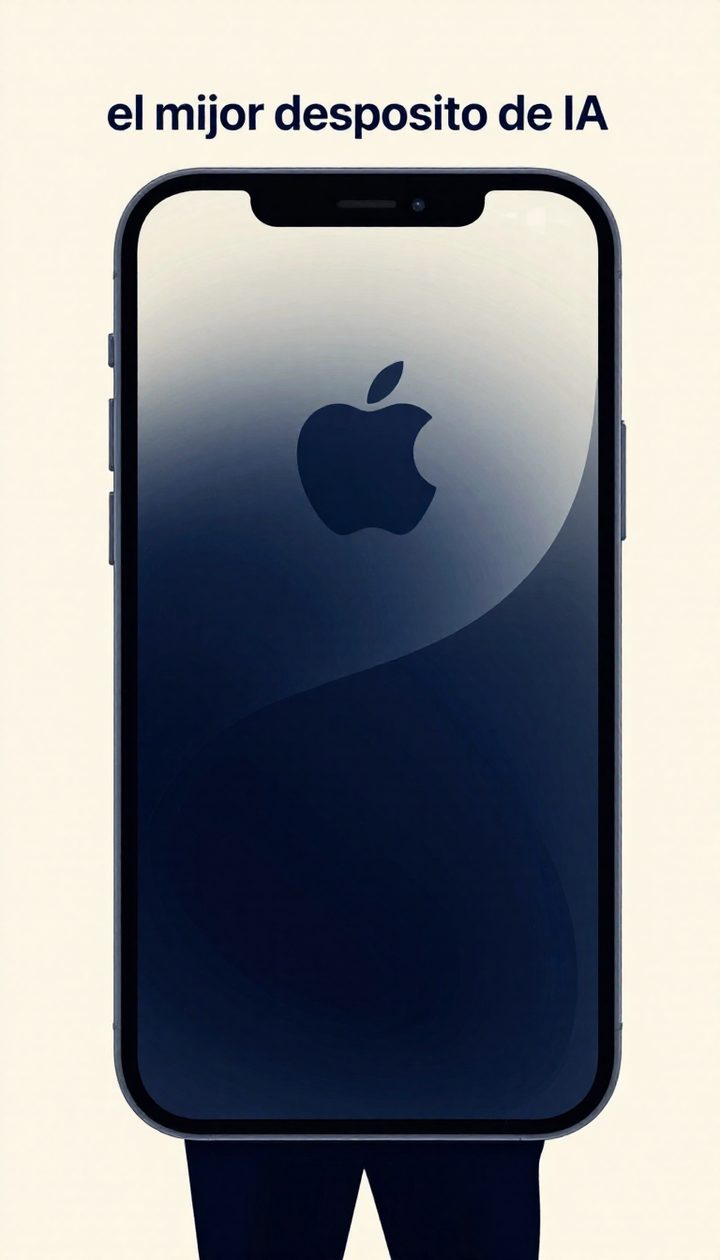
The conclusion he reached, after listing those features, was that this product already exists and is "surprisingly familiar": the iPhone itself. In his words, there is no product in the world better designed to be that intelligent personal hub. It is a form of strategic messaging that seeks to defuse the perception that Apple is late to the AI race for not having unveiled a new device specifically for it, and instead recasts the iPhone itself as the culmination of those requirements.
The second pillar of Ternus's remarks was privacy, presented as the differentiating factor against the competition. He stated that "others see [users' personal data] as something to collect and store", in what amounts to one of the most direct criticisms Apple has made so far about how it approaches its AI platform compared with those of other players in the sector. Ternus capped the idea with a line that sums up Apple Intelligence's value proposition: trust has a limit when data is no longer under the user's own control, and that is why Apple Intelligence runs on the device whenever possible, instead of relying by default on cloud processing.
Taken together, the appearance works as a positioning statement at a moment of leadership change at Apple: it is one of the first occasions on which Ternus, now as CEO, has publicly laid out the company's AI strategy, and he does so leaning on two ideas already familiar from Apple's messaging —ecosystem integration and privacy as a brand value— rather than announcing new products or features. The original article, a brief one, offers no further technical details, adoption figures or launch dates, nor does it explicitly name the competitors Ternus was referring to, so any reading of which specific companies his comment on data collection was aimed at remains, with the information available, a matter of interpretation.
📚 Go deeper

The definitive piece of investigative journalism on OpenAI: 260+ interviews, the clash between safety and speed, and the attempted firing of Sam Altma

AI as the latest chapter in the history of information networks, from gossip to the printing press to the algorithm.
As an Amazon Associate, Zendoric earns from qualifying purchases; the price does not change for you. · all our recommended books →
🔗 Related on Zendoric
- Apple sues OpenAI over alleged theft of trade secrets for its hardware project · 2026-07-14
- Enterprise AI is still waiting for its 'iPhone moment': hiding complexity, not better models · 2026-09-13
- AI surveillance catches 44 impersonators at a public exam in India: the double-edged sword of biometric control · 2026-07-05