AI surveillance catches 44 impersonators at a public exam in India: the double-edged sword of biometric control
🕒 Published on Zendoric: July 5, 2026 · 04:36
✨ AI-generated · how it's made
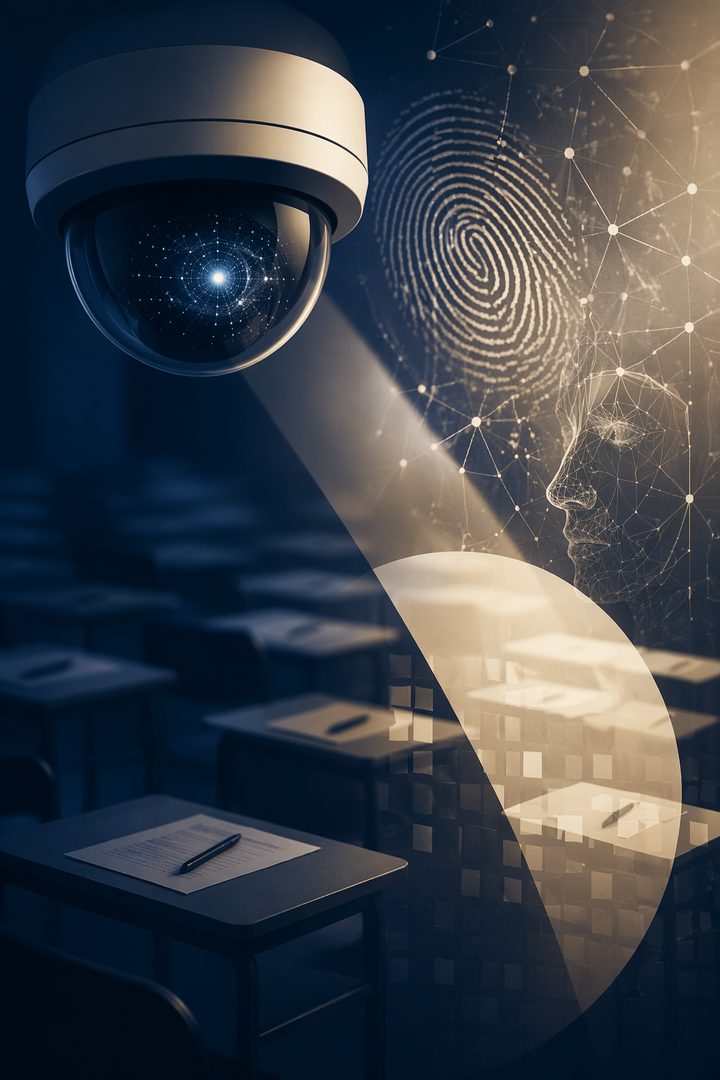
A teacher-recruitment entrance exam in Uttar Pradesh (India) used artificial intelligence surveillance to identify 44 people posing as other candidates, who were then handed over to police. The case illustrates how AI is already control infrastructure in mass processes, with clear benefits and open questions about privacy and scale.
📚 Go deeper
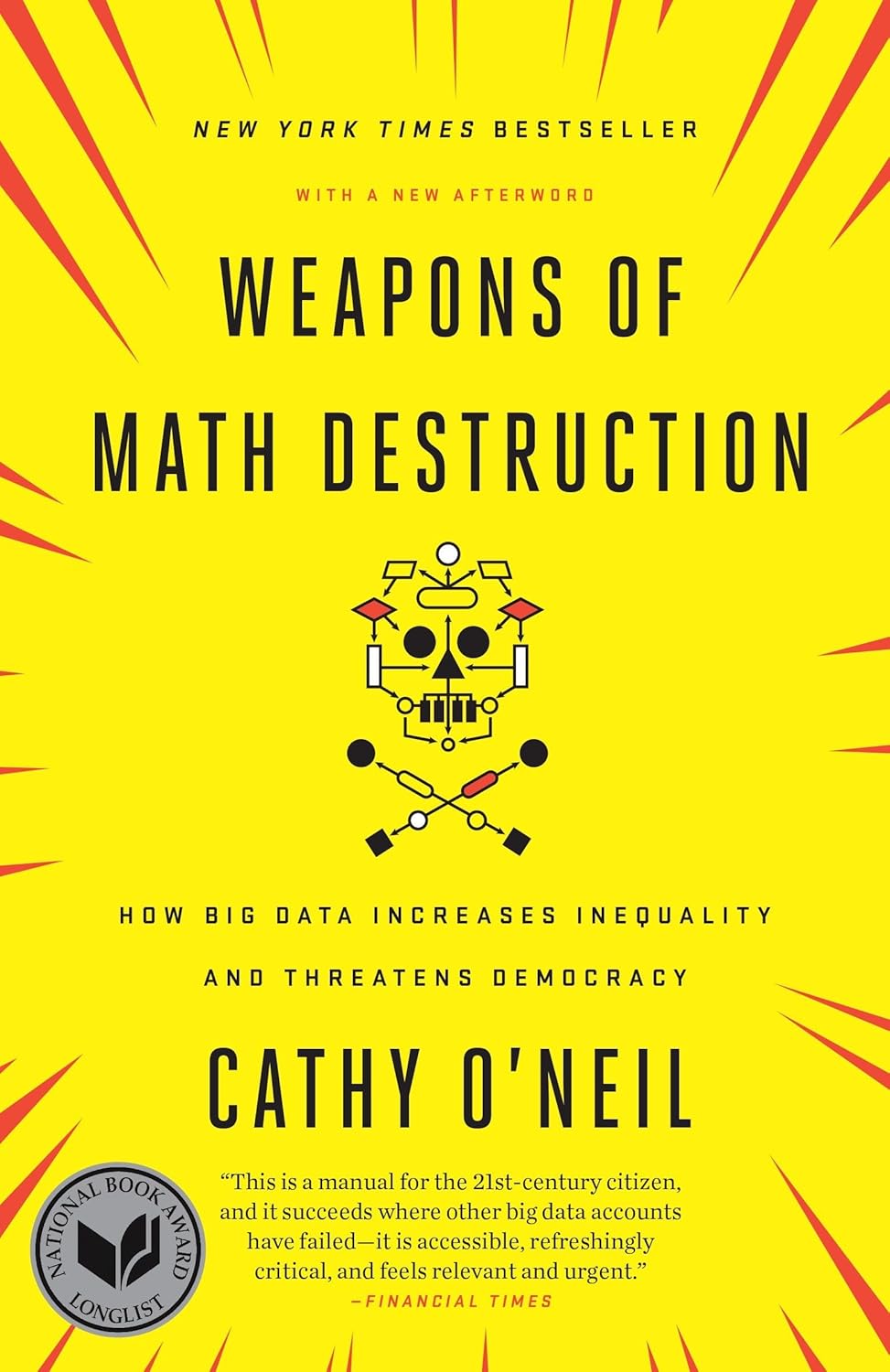
How opaque algorithms decide who gets credit, a job or parole — and why they tend to punish the same people.
As an Amazon Associate, Zendoric earns from qualifying purchases; the price does not change for you. · all our recommended books →
By Inshorts · July 4, 2026. According to the reported information, authorities in Uttar Pradesh (India) used AI-based surveillance systems during a state exam to select teachers, and managed to identify 44 people who impersonated other applicants. All of them were handed over to the police, according to the source. The available material does not detail the specific technologies used (facial recognition, biometrics, behavioral analysis or others), nor the total number of examinees or the scale of the operation, so these figures should be treated with the caution a brief note demands.
The event, though modest in appearance, is representative of a much broader trend: the application of surveillance AI to massive administrative processes in countries with enormous volumes of candidates, where impersonation in exams has been a structural problem for years that is hard to tackle with manual methods. India, with public exams that can summon millions of applicants, is a natural use case for these tools: fraud in civil-service exams and entrance tests is not an anecdote but a phenomenon with a history of scandals, leaks and organized impersonation rings across the subcontinent.
Our reading is that this kind of deployment neatly embodies the underlying tension running through the entire conversation about AI and surveillance: the same technology that makes it possible to guarantee fairness in a public selection process—preventing someone who hasn't prepared from taking, through impersonation, the place of someone who has—is essentially identical to the one that makes it possible to build infrastructure for the biometric control of the population. There is no clear technical border between 'detecting fraud in an exam' and 'monitoring and identifying people at scale' except the one decided, precisely, in the arena of government and the regulation of these systems, not in the algorithm itself.
In general, the AI surveillance industry is growing driven by legitimate and defensible use cases like this one—exams, borders, public safety—that at the same time normalize the infrastructure and the institutional appetite for mass biometric recognition. That is the pattern we've seen repeat across different countries: the technology is introduced to solve a concrete, bounded problem, and over time its reach expands without there necessarily having been a public debate proportional to that expansion. This is not a judgment on the specific Uttar Pradesh case, of which we lack sufficient detail to assess safeguards, but a warning about the structural direction of the sector.
In the short term, it's reasonable to expect more episodes like this one: governments and public administrations, especially in countries with massive selection processes and high demographic pressure on public employment, will adopt surveillance AI to protect the integrity of their exams and competitions. The real challenge is not whether the technology works—it's increasingly clear that it does, and cases like this prove it—but whether there are oversight mechanisms, limits on use and transparency that prevent the same infrastructure from drifting toward generalized surveillance. The abundance and the tools that AI can bring in the medium term, including more efficient and fairer public management, depend precisely on us getting that governance question right now, not later.
📚 Go deeper

Algorithms in justice, medicine, cars and art, explained with British humor and mathematical honesty.

The definitive piece of investigative journalism on OpenAI: 260+ interviews, the clash between safety and speed, and the attempted firing of Sam Altma
As an Amazon Associate, Zendoric earns from qualifying purchases; the price does not change for you. · all our recommended books →
🔗 Related on Zendoric
- Hartford bets on teaching AI to its young people before the job market leaves them behind · 2026-07-01
- AI cameras solved a shooting in Hilton Head in five minutes: the price is permanent surveillance · 2026-07-07
- Meta pulls its controversial Instagram AI feature that let users generate images from other people's public accounts · 2026-07-14